
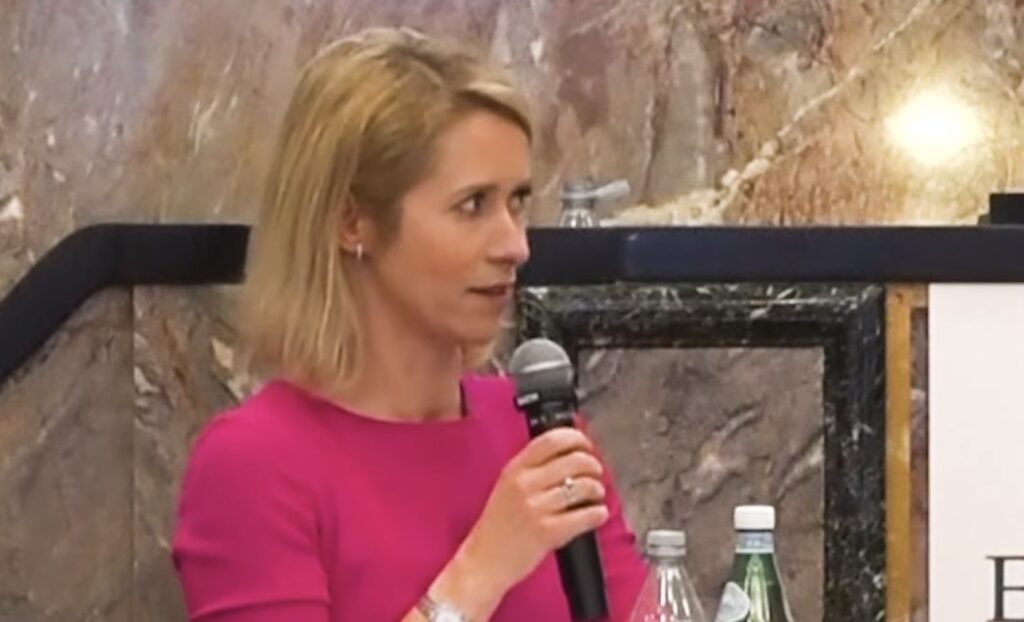
If we want lasting peace, we cannot reward aggression. Because if aggression pays off, then aggression will continue, reminded, EU High Representative for Foreign Affairs and Security Policy Kaja Kallas in Zurich. Historically, empires change only when they lose their final colonial war, she said.
In an interview in Zurich, discussing Russia’s negotiating tactics and historical behaviour, EU High Representative for Foreign Affairs and Security Policy Kaja Kallas argued that Moscow’s approach to diplomacy follows a well-established pattern and that Europe must understand it if it wants a lasting peace.
Kallas began by placing the Ukraine war in a longer historical context.
“In the last 100 years, Russia has attacked or invaded at least 19 countries, many of them several times. None of these countries has attacked Russia.”
According to her, this historical pattern should shape how Europe interprets Russia’s behaviour in negotiations. She said Moscow’s diplomats and political leadership follow a method that has been used repeatedly in past crises.
“They have very good negotiation tactics.”
Kallas explained that the tactic typically unfolds in several stages.
First, Russia opens negotiations with maximal demands that are deliberately extreme.
“They ask for something they never had or something that is completely unacceptable.”
These demands are designed to shift the starting point of the discussion.
Next comes pressure. Moscow reinforces the demand through military threats, escalation, or political pressure designed to make the demand appear credible and urgent.
Finally, Russia retreats slightly and presents that move as a compromise.
“Then they take a small step back and present it as a compromise. And then people say, well, maybe we should accept this compromise.”
Kallas warned that this technique works because Western negotiators instinctively try to split the difference between two positions. When one side starts from an extreme position, the middle ground moves in that direction.
She argued that accepting such dynamics risks rewarding aggression and encouraging future conflicts.
The interview then turned to Russia’s imperial legacy. Kallas said she had been reflecting on the historical behaviour of empires and how they eventually change.
“I have been reading a lot about this, trying to understand how this cycle could be broken.”
Her conclusion was simple.
“Historically, empires change their behaviour only when they lose their last colonial war.”
In her view, Russia has not yet gone through that transformation.
“Russia has to lose its last colonial war.”
For Kallas, that lesson carries clear implications for Europe’s approach to the war in Ukraine. A settlement that rewards aggression would only encourage further attempts to redraw borders by force.
Instead, she argued, the international community must ensure that Russia understands military expansion cannot bring political gains.
“Only then can we have real peace and security in Europe.”
Read More:
- European External Action Service: Informal Foreign Affairs Council – Press conference by High Representative Kaja Kallas
- Facebook video interview excerpt: The classic Russian negotiating tactic works in three stages