
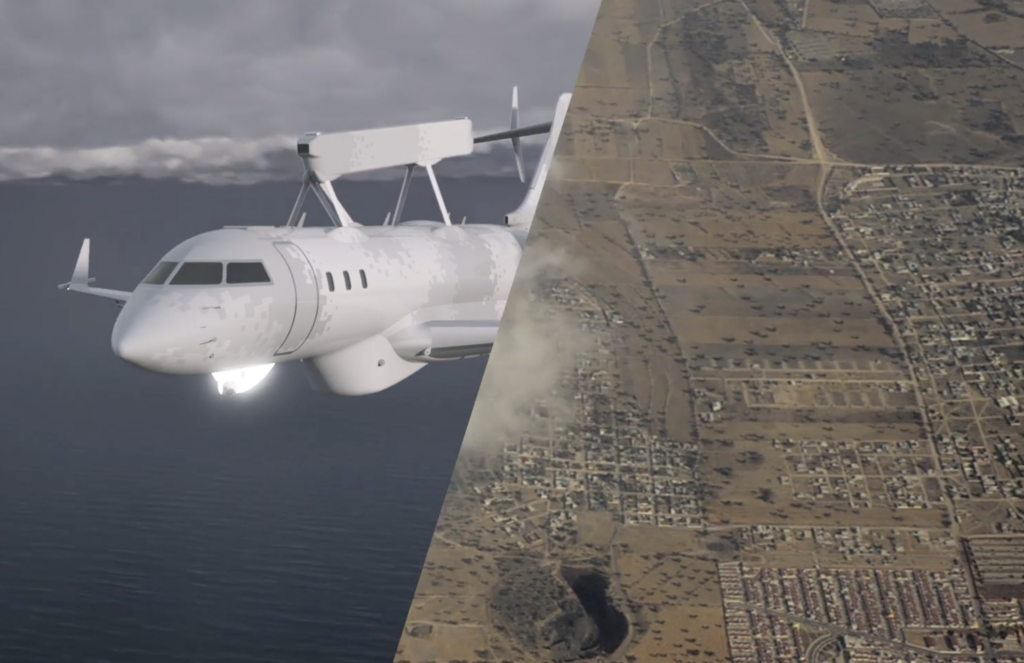
Saab’s second quarter established that the Swedish group could turn Europe’s defence boom into revenue and profit. The three months since the end of June have strengthened the case. At least SEK 47.5 billion of identifiable orders have either arrived during the third quarter or were explicitly scheduled for Q3 booking, while GlobalEye has moved from a promising export programme to one of Saab’s most important growth businesses. The constraint increasingly looks industrial: How quickly can Saab build what customers now want?
Saab’s second-quarter figures already looked formidable when they were published on 17 July. Order bookings reached SEK 68.4 billion (EUR 6.1 billion), sales SEK 25.5 billion (EUR 2.3 billion), and organic sales growth 29.8 per cent. EBIT rose 41 per cent to SEK 2.79 billion (248 million), lifting the operating margin from 10.0 to 11.0 per cent. Net income increased to SEK 2.17 billion (193 million),. The order backlog reached SEK 317.7 billion (EUR 28.2 billion).
Two months later, those figures already look like the opening chapter rather than the conclusion.
The important development since Q2 is the breadth of the new business. Saab has received another large GlobalEye order, a major German naval contract, Finland’s new short-range air-defence order and a substantial Swedish future-fighter technology contract. It has also signed a long-term camouflage agreement with the Netherlands, while the Netherlands has formally declared its intention to buy GlobalEye. Brazil has moved from Gripen industrialisation to increased production capacity, Gripen F has flown for the first time, and Sweden has funded another stage of Saab’s work on crewed and uncrewed future combat aircraft.
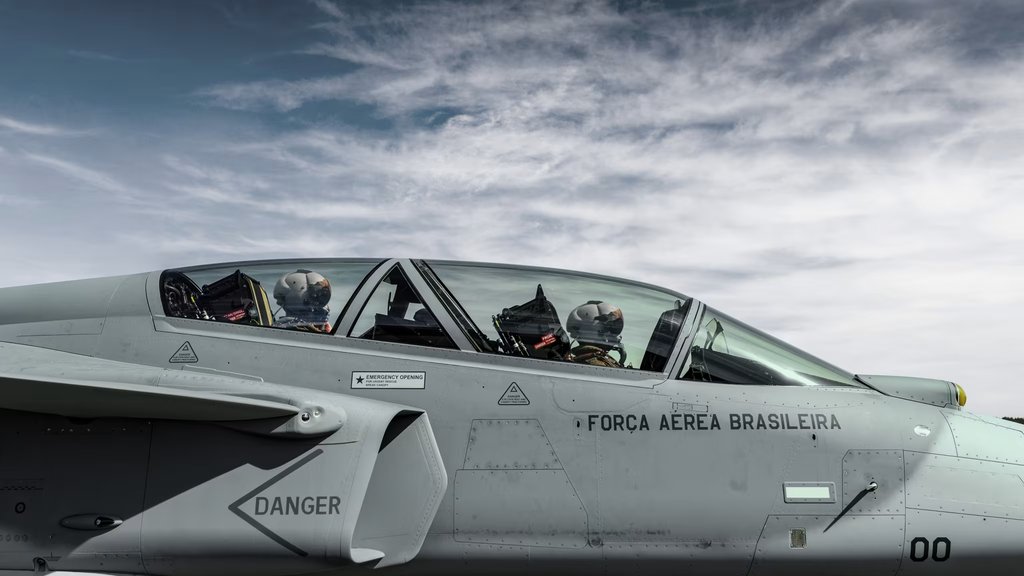
Most importantly for the coming quarterly numbers, Saab’s SEK 24.6 billion (EUR 2.2 billion) contract for 16 Gripen E fighters for Ukraine was signed on 30 June but specifically scheduled to be booked in the third quarter. Add the SEK 8.7 billion (EUR 774 million) German frigate order announced on 16 July, the SEK 10.1 billion (EUR 899 million) Middle Eastern GlobalEye order of 27 July, Finland’s SEK 1.2 billion (EUR 107 million) RBS 70 NG order and Sweden’s SEK 2.9 billion (EUR 258 million) future-fighter contract, and disclosed orders identifiable with Q3 already total at least SEK 47.5 billion (EUR 4.2 billion).
That calculation excludes the value of the first Barracuda camouflage order from the Netherlands, which Saab has not disclosed, and smaller civil aviation contracts announced during September. It also excludes customer selections that have yet to become contracts, particularly NATO, Canada and the Netherlands for GlobalEye.
For comparison, Saab booked SEK 68.4 billion (EUR 6.1 billion).of orders in the whole of Q2. Q3 therefore already has disclosed business equivalent to almost 70 per cent of that unusually strong quarter before Saab has published the complete order intake.
The Q3 report comes on 23 October.
Finally Converting Demand into Volume
The defence industry has had little difficulty finding customers since Russia’s full-scale invasion of Ukraine. The harder question has been whether European manufacturers can convert political promises and procurement decisions into production.
Saab’s Q2 numbers suggest that years of investment are beginning to show through.
Sales growth of almost 30 per cent in a company producing fighters, submarines, radars and missile systems is unusually rapid. These are complicated products with long supply chains, specialist labour and certification requirements. Revenue cannot simply be increased by running an assembly line for another shift.
The improvement in profitability matters almost as much. EBIT rose faster than sales, producing an operating margin of 11 per cent. Saab said the business mix benefited particularly from Surveillance and Dynamics, where rising volumes currently generate attractive profitability.
Surveillance sales increased sharply as Giraffe radar deliveries accelerated. Dynamics benefited from high deliveries across weapons businesses. Aeronautics grew as Gripen production increased. Naval gained the enormous Polish submarine order, although the division also carries costs associated with Sweden’s future frigate programme. Independent analyst Inderes identified Naval as the weak point in an otherwise strong quarter, because those programme costs held its margin down.
That gives the Q2 results an unusually useful quality. Saab is producing rapid growth without relying on one programme.
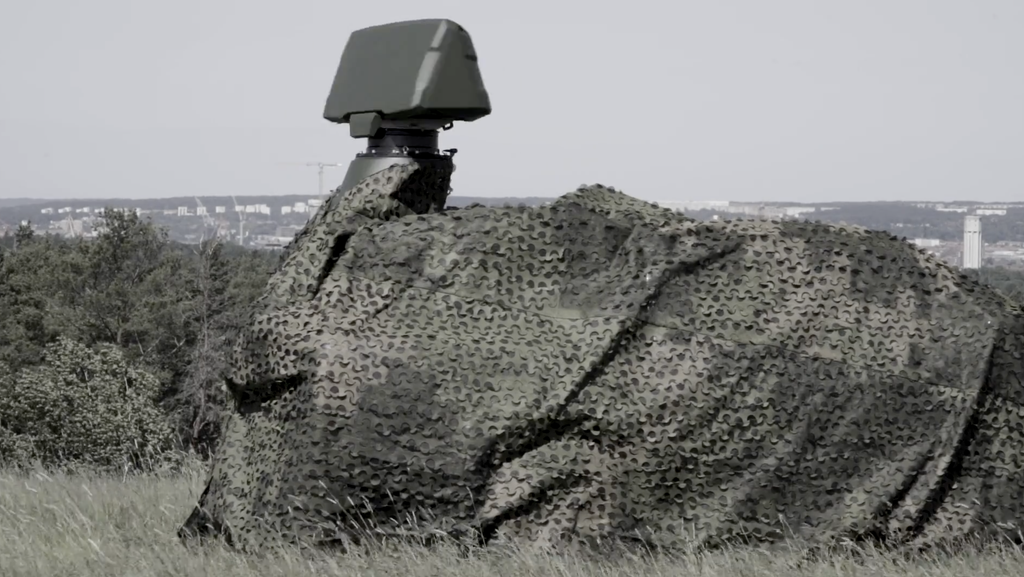
The business increasingly resembles a portfolio of several defence bottlenecks at once: short-range air defence, anti-armour weapons, battlefield radar, electronic warfare, airborne surveillance, combat aircraft, naval combat systems and submarines.
That breadth reduces dependence on any one procurement cycle.
GlobalEye Has Changed Category
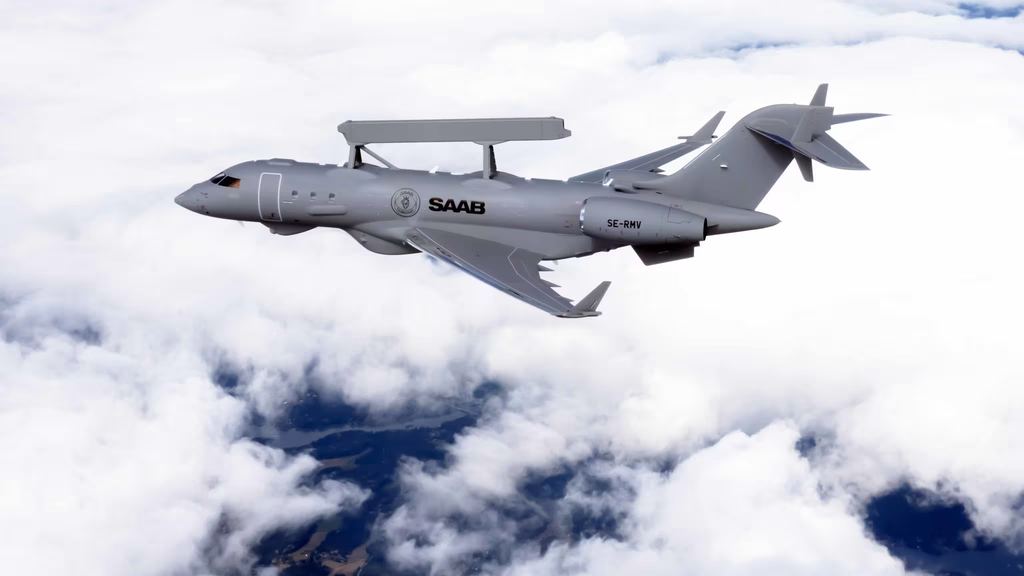
By July, Canada had selected Saab as preferred supplier for its future airborne early warning and control requirement, while NATO had selected GlobalEye as the basis for its future AEW&C capability and entered the formal negotiation stage for as many as ten aircraft. Saab had received no order from either customer at that point.
Then came an actual contract. On 27 July, Saab received an order worth SEK 10.1 billion (EUR 899 million) for two GlobalEye aircraft from an undisclosed Middle Eastern customer. Deliveries are scheduled for 2030.
GlobalEye now has simultaneous momentum among national customers, NATO and the Middle East. France already has two aircraft on order, Sweden is acquiring three, Canada is negotiating, NATO has selected the aircraft for a requirement of up to ten, and the Netherlands added another prospective customer on 10 September by signing a letter of intent with Sweden for a GlobalEye aircraft. Saab stressed that the Dutch announcement is not yet a contract.
The industrial implications are becoming almost as important as the orders themselves.
During the Q2 results presentation, chief executive Micael Johansson said Saab had previously been considering raising GlobalEye output to about four aircraft annually. He now wants capacity capable of reaching six aircraft a year around 2030, compared with roughly two today. Saab is expanding the Linköping operation and considering additional capacity through Canada and potentially another European location.
That is an unusually revealing: a company does not prepare to triple production of a highly specialised airborne surveillance platform merely because of one contract. Saab is planning industrial capacity around a market that management believes is considerably larger than the orders presently signed.
The Dutch announcement reinforces the argument. It came after NATO’s selection and suggests that GlobalEye could develop two partly overlapping markets: NATO’s common fleet and nationally controlled aircraft purchased by individual allies. Countries do not necessarily regard a NATO-owned capability and a sovereign national capability as interchangeable. A national GlobalEye can be available for national airspace surveillance, maritime monitoring and crisis management even when alliance assets are committed elsewhere. For Saab, this potentially creates repeat demand inside the same alliance.
Gripen Has Acquired Volume
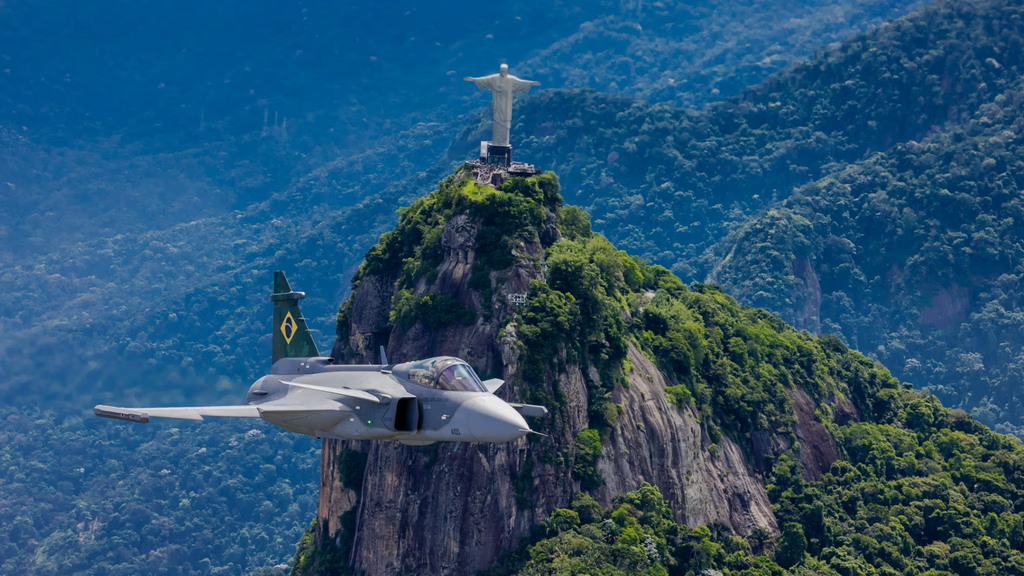
Gripen has often been technologically respected while struggling to achieve the export volumes enjoyed by the F-16, F-35 and Rafale.
Saab signed a SEK 24.6 billion (EUR 2.2 billion) contract with Sweden’s Defence Materiel Administration on 30 June for 16 Gripen E aircraft intended for Ukraine. The contract includes spare parts and associated equipment, with deliveries scheduled for 2029 and 2030. Saab explicitly stated that the order would enter its books in Q3.
The contract belongs to the June newsflow, yet its financial effect on order intake belongs to the September quarter.
Ukraine also changes Gripen’s strategic position. Operational experience against a sophisticated Russian threat environment would inevitably influence how potential customers assess the aircraft. Gripen was designed around dispersed operations, relatively small ground crews and the ability to operate from short or improvised runways. Those characteristics have acquired far greater relevance since 2022. Reuters reported in June that Saab was considering an increase in Gripen production from roughly 15 aircraft annually towards as many as 30.
Brazil provides part of the answer to that capacity problem. On 21 July Saab and Embraer signed a heads of agreement covering potential production of another 20 Gripen aircraft at Embraer’s Gavião Peixoto facility. The Brazilian line would complement Saab’s Linköping production rather than simply serve Brazil. The stated purpose is to increase global delivery capacity.
Gripen is thus becoming a genuinely multinational production programme. Brazil is turning from export customer into industrial partner and potential production hub. That gives Saab greater flexibility if the Ukrainian programme expands, existing customers exercise further requirements or new export campaigns succeed.
The Brazilian programme also passed a technical milestone on 28 August, when the two-seat Gripen F made its first flight from Linköping. The test aircraft flew for 40 minutes and entered the airborne phase of its certification programme. Brazil is the launch customer for the F model, and more than 350 Brazilian engineers, technicians and pilots have participated in the wider Gripen programme.
A two-seat version matters commercially because it broadens training and operational options. Saab already has Gripen F orders associated with customers beyond Brazil.
Building the Aircraft After Gripen
The most interesting September order may be the least immediate commercially. On 9 September Sweden’s FMV awarded Saab approximately SEK 2.9 billion (EUR 256 million) for continued development and demonstration work on a future fighter system. The contract runs from 2026 to 2028, with options covering 2029 and 2030. It includes flying and ground demonstrators, autonomy, low-observable technologies, propulsion, systems integration, digital development and concepts for both crewed and uncrewed aircraft.
Three weeks earlier Saab had shown the A3-001, a full-scale concept for an uncrewed combat aircraft intended to operate alongside crewed platforms.
Saab describes possible missions including electronic warfare, suppression of enemy air defences and precision strike in heavily defended airspace. The company intends to fly unmanned demonstrators with fighter-like characteristics before 2030.
Europe’s future combat-air landscape is unsettled. Large multinational programmes have repeatedly encountered disagreements over leadership, intellectual property, industrial workshare and national requirements. Saab now has continuing Swedish government funding to preserve its own systems-integration knowledge and explore alternatives.
The SEK 2.9 billion (EUR 256 million) contract therefore buys more than research. It preserves Sweden’s freedom of manoeuvre.
It also ensures Saab remains relevant if future European fighter programmes are reorganised or new partnerships emerge. The company brings several technologies that any future combat-air system will need: fighter integration, electronic warfare, airborne radar, command-and-control, data fusion and increasingly autonomous aircraft.
GlobalEye and Gripen make that position considerably stronger than it looked only a few years ago.
Naval is No Longer a Side Business
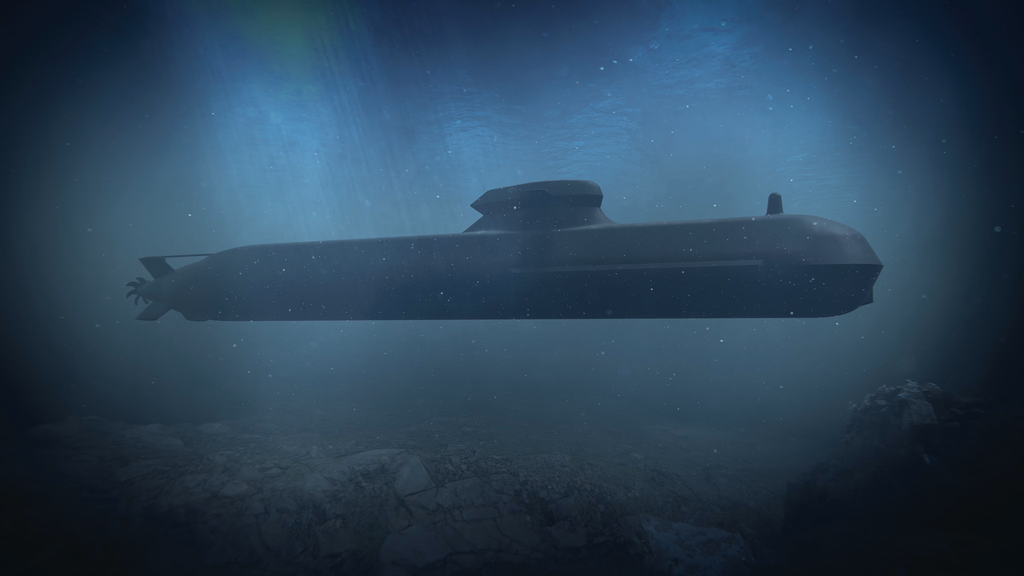
The second major structural change is at sea. Saab formally separated Naval into its own business area during Q2. Poland then awarded Saab an order worth about SEK 47 billion (EUR 4.2 billion) for three A26 submarines, including weapons, training and support. That single contract drove much of Q2’s extraordinary order intake.
Then Germany followed. On 16 July Saab announced a SEK 8.7 billion (EUR 772 million) contract with TKMS to provide combat systems, sensors and composite structures for four new German Navy MEKO A-200 DEU frigates. Deliveries are scheduled between 2029 and 2032, and the agreement includes options covering further ships.
The package is broad. Saab will supply the 9LV combat management and fire-control systems, Sea Giraffe 4A Fixed Face radar, Sea Giraffe 1X and passive sensors, together with composite superstructures.
Now, Saab is participating in a German naval construction programme without needing to be prime contractor for the ship itself. That demonstrates the exportability of the company’s sensors and combat-management architecture across shipbuilders and platforms.
Also, the contract places several Saab products on one vessel. The commercial model increasingly resembles systems integration rather than isolated equipment sales.
That has consequences for lifecycle revenue. Radar, combat-management systems, software and electronic sensors require upgrades and support over decades. A frigate contract therefore creates an installed base from which later modernisation orders can emerge.
The challenge is execution. Naval’s Q2 profitability was weakened by costs in the Swedish frigate programme. Building submarines for Poland while expanding other naval work will increase the load on engineering, shipyard capacity and the supplier network.
The opportunity is large, and so is the industrial burden.
Dynamics Keeps Accumulating Smaller Orders
The largest contracts naturally dominate Saab’s headlines. Dynamics may prove equally important to earnings because European militaries need weapons in quantity. Finland supplied the clearest post-Q2 example.
On 28 August the Finnish Defence Forces Logistics Command placed an initial SEK 1.2 billion (EUR 106 million) order for RBS 70 NG short-range air defence. The agreement creates a mechanism for further orders covering systems, training, spares and maintenance equipment. Finland has operated the earlier RBS 70 since 2008.
This follows a series of European orders for Saab’s ground-combat and air-defence portfolio, including NLAW, Carl-Gustaf and Giraffe systems.
The attractions are straightforward. European governments are rebuilding inventories depleted by decades of low procurement and transfers to Ukraine. At the same time, drone warfare has expanded demand for short-range air defence, sensors and relatively inexpensive interceptors.
The market increasingly rewards companies that can combine detection and effectors.
Saab sits in an unusually strong position because Giraffe radars, command systems and RBS 70 NG can become parts of the same short-range air-defence architecture.
The management change announced on 10 September is worth viewing in that context. Deputy chief executive Anders Carp takes over Dynamics from 1 October, while long-serving division head Görgen Johansson becomes strategic adviser for global operational growth and expansion. Saab specifically linked the change to Dynamics’ strong growth, deliveries and the division’s next development phase.
That sounds less like routine rotation than management preparing a rapidly expanding business for another production step.
Even Camouflage is Becoming a Growth Business
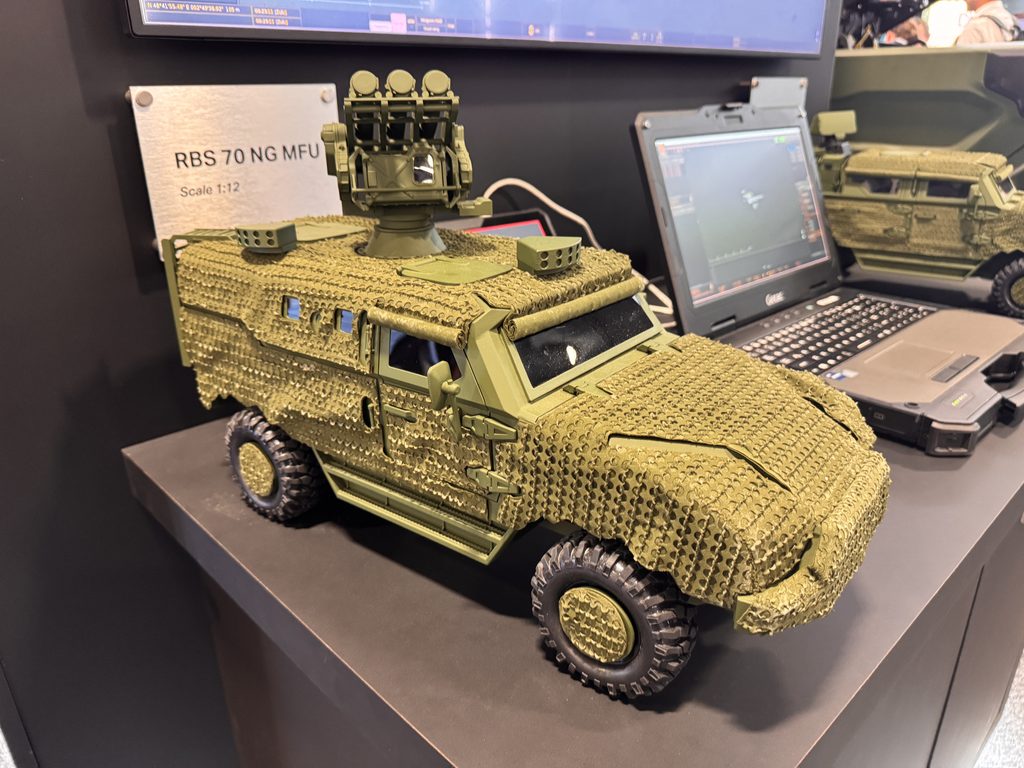
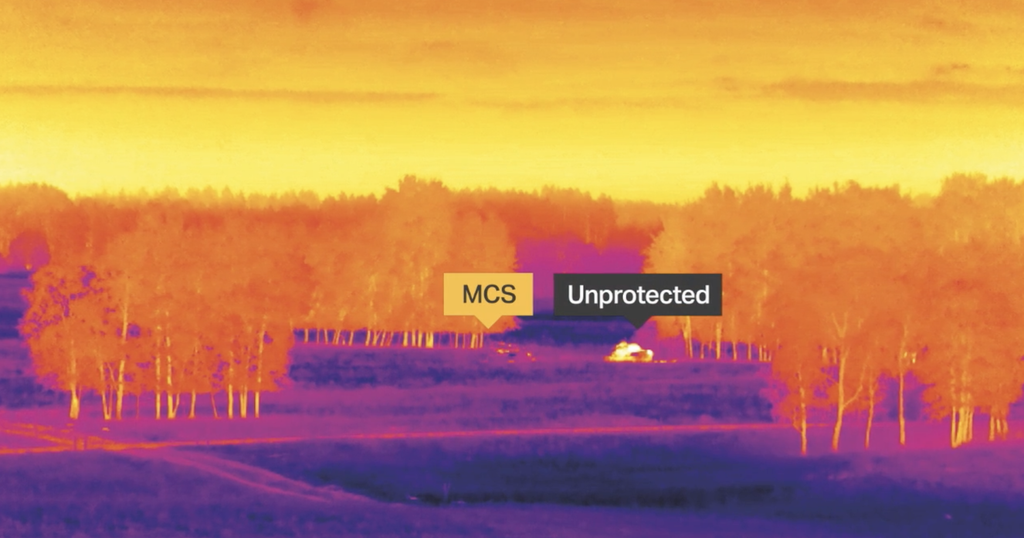
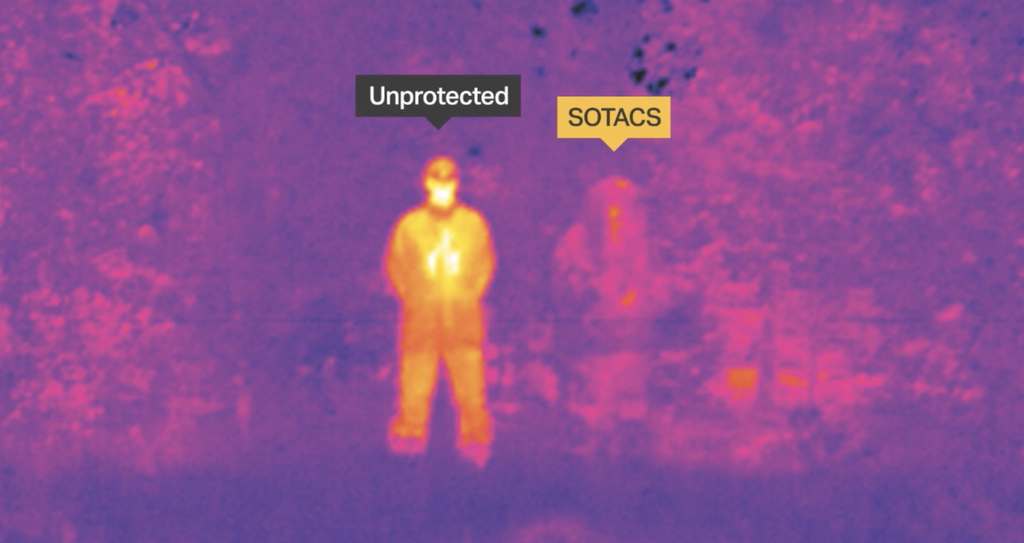
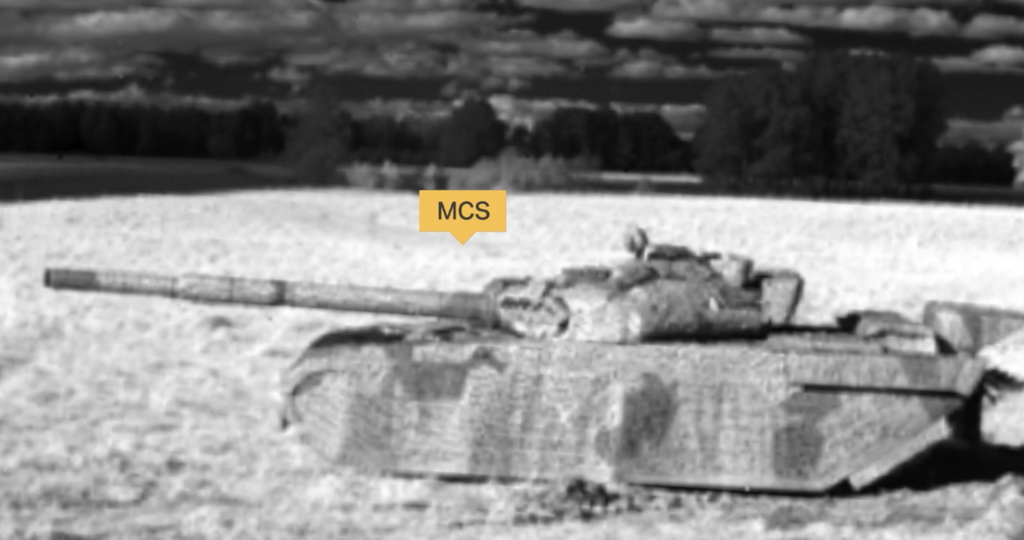
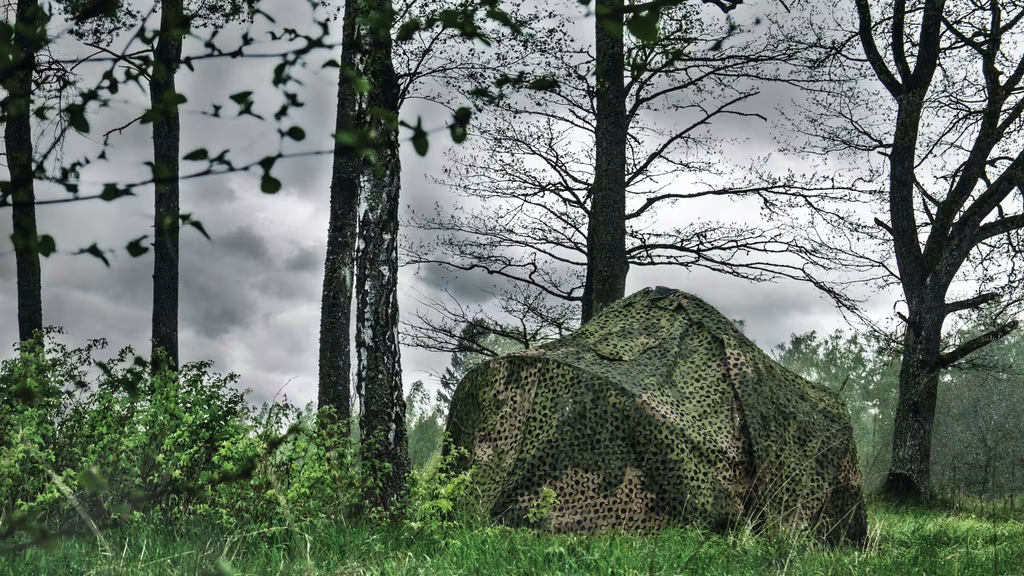
Saab signed a multi-year agreement with the Dutch Ministry of Defence for its Mobile Camouflage System and received an initial order covering Fennek reconnaissance vehicles and Panzerhaubitz self-propelled artillery. The framework allows the Netherlands to add other vehicle types later. Saab did not disclose the order value.
Camouflage sounds almost low-tech beside airborne radars and fighters. Modern multispectral camouflage is anything but.
Battlefield surveillance now combines visual, thermal, radar and electronic sensors. Vehicles that previously worried mainly about being seen by soldiers increasingly need protection against drones, thermal cameras and sensor networks.
Ukraine has consequently restored camouflage, deception and signature management to the procurement agenda.
For Saab, Barracuda is useful because it participates in that trend without requiring billion-krona platforms or decades-long development programmes. It broadens the portfolio of repeatable, scalable products beneath the headline programmes.
Still in Civil Technology Business
The defence boom can obscure another part of the group. In September Saab secured air-traffic-management work in Bulgaria and Sweden. Bulgaria’s BULATSA contracted Saab to deploy its I-ATS integrated air-traffic-control suite at Sofia, Varna and Burgas airports. On 21 September Stockholm-Västerås Airport selected Saab to install and operate remote air traffic control from Saab’s Remote Tower Center in Sundsvall under a 15-year arrangement starting in 2028.
The financial scale is small beside A26, Gripen or GlobalEye, and contract values were not disclosed.
The business remains strategically interesting. Remote towers, sensor fusion and digital air-traffic management draw on technologies adjacent to Saab’s defence expertise. Long service contracts also produce a different revenue profile from major military programmes.
It is a reminder that Saab remains an aerospace and security technology group rather than a collection of weapons programmes.
The Main Risk: From Demand to Execution
Saab’s customer demand is visible, funding is increasingly visible, and the backlog is already enormous. Additional programmes keep arriving. Factories, skilled labour, suppliers, working capital and programme management now determine how much of that demand Saab can turn into profitable revenue.
The company ended June with SEK 317.7 billion (EUR 28.2 billion) of backlog. Since then it has announced billions more in orders. The backlog cannot simply be increased by SEK 47.5 billion (EUR 4.2 billion) to produce a September estimate because Saab is simultaneously recognising sales and delivering against existing contracts. The exact figure will only become clear with Q3.
Capacity expansion meanwhile consumes cash before the resulting products generate revenue.
Saab is investing in production sites, equipment, inventory and labour while multiple businesses accelerate simultaneously. Gripen wants more aircraft. GlobalEye wants a tripling of eventual production capability. Dynamics needs more weapons. Naval must accommodate Poland and Germany while handling Swedish programmes.
Supplier capacity can become the weak link even when Saab’s own factories are ready. This is particularly important for defence electronics, propulsion, energetic materials and specialised components where there may be few qualified suppliers. Defence production cannot always substitute components as rapidly as ordinary commercial manufacturing because certification and military requirements restrict alternatives.
Programme risk also remains. Naval is already showing cost pressure around the Swedish frigate programme. Aeronautics continues to carry the economic legacy of programmes such as the T-7A. GlobalEye’s largest future opportunities still include contracts that have yet to be signed. NATO has selected it, Canada has selected Saab as preferred supplier and the Netherlands has signed a letter of intent. Those are powerful commercial signals. They remain different from order bookings.
Investors face another risk: expectations. Saab’s operational performance can remain excellent while the share price performs less spectacularly if the valuation already assumes years of exceptional growth. Inderes argued after Q2 that the company’s execution was strong but the valuation continued to demand a great deal from future performance. Market data in September still showed Saab trading on unusually high forward earnings multiples for an industrial company.
This makes the 23 October report unusually interesting. Another large order quarter is already substantially visible. The questions are more likely to concern sales conversion, margins, cash flow, capital expenditure and management’s ability to increase output.
GlobalEye May Become the Programme that Changes Saab
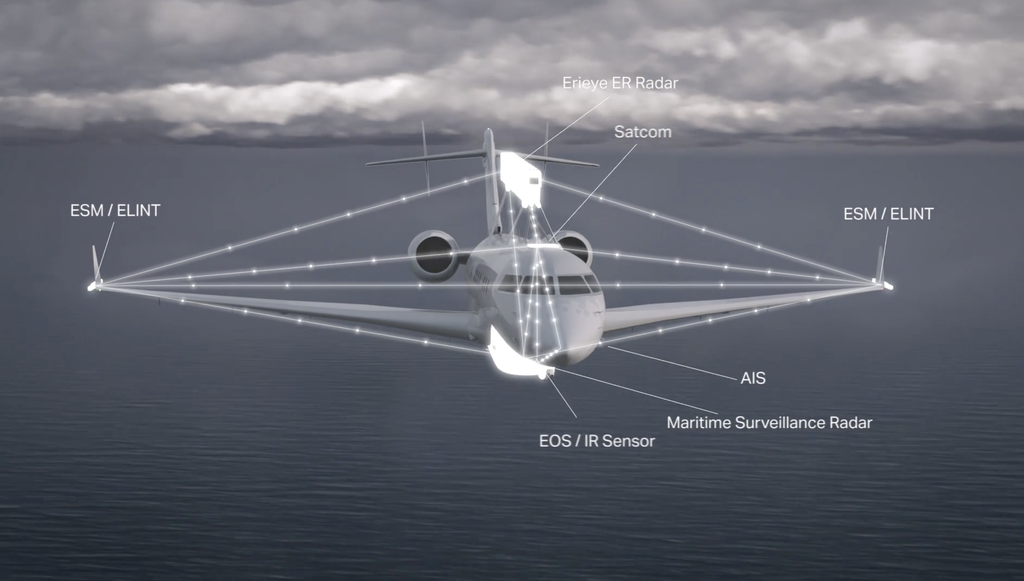
Gripen is Saab’s most famous product and A26 has given Naval one of the group’s biggest contracts. Yet GlobalEye increasingly looks like the programme capable of changing Saab’s position within the international defence industry.
There are several reasons. The first is scarcity. Modern airborne early warning is one of the areas where very few manufacturers can offer an operational system.
The second is timing. NATO and European governments are rebuilding high-end surveillance and command capability precisely when GlobalEye is already in production.
The third is architecture. GlobalEye is more than an aircraft carrying radar. It is a node within a much larger network connecting air, maritime and land sensors and forces. That gives Saab opportunities in software, command-and-control, communications and upgrades around the platform.
The fourth is industrial scalability. Johansson’s ambition to move from two aircraft a year towards six suggests Saab sees enough prospective demand to justify turning GlobalEye from a specialist programme into something closer to serial production.
And the fifth is NATO itself. Selection as the alliance’s future AEW&C solution gives GlobalEye a reference customer that few export campaigns can replicate. Every NATO air force considering airborne surveillance will evaluate its own requirements in an environment where interoperability with the alliance fleet matters. The Netherlands may already be an example of that dynamic.
The question now is how large Saab can become without allowing the speed of its expansion to erode the engineering discipline and programme execution that created the opportunity in the first place. On 23 October, Q3 should provide the first hard evidence.
Read More
- Saab: Saab Q2 results 2026: Strong order bookings reinforce market position
- Saab: Saab signs contract for Gripen E for Ukraine
- Saab: Saab receives order to equip the German Navy´s new frigates
- Saab: Saab receives order for GlobalEye
- Saab: The Netherlands announces intention to procure GlobalEye
- Saab: NATO selects Saab’s GlobalEye
- Saab: Saab and Embraer strengthen partnership with agreement to expand Gripen production capacity
- Saab: Gripen F completes its first flight
- Saab: Saab showcases full-scale uncrewed aircraft concept
- Saab: Saab receives order from FMV for further work on future concept
- Saab: Saab receives order for RBS 70 NG from Finland
- Saab: Saab signs long-term agreement for camouflage systems with the Netherlands
- Saab: Changes to the Saab Group Management team
- Saab: Saab to deliver I-ATS to three airports in Bulgaria
- Saab: Saab is digitalizing Stockholm-Västerås Airport with remote air traffic control services
- Saab: Q3 Interim Report 2026
- Aviation Week: Saab Considers Extra GlobalEye Sites As Orders Drive Production Higher
- Reuters: Saab profit beats forecast as defence boom spurs surge in orders
- Reuters: Sweden’s Gripen faces moment of truth in Ukraine’s air war with Russia
- Inderes: Saab Q2’26: The warship earns its premium