
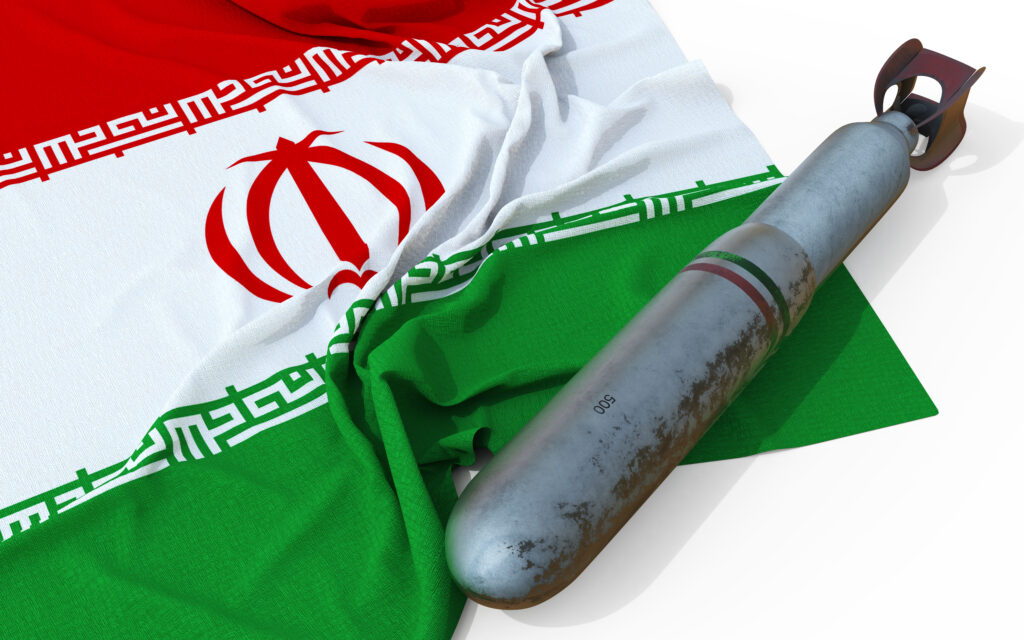
The killing of Iran’s Supreme Leader, Ali Khamenei, in a joint US–Israeli strike has pushed the region out of the long shadow war and into open, state-to-state coercion. Tehran’s response, ballistic missiles, drones, and sustained pressure against Israel and US-linked targets across the Gulf, signals a new baseline. Now, it is about regime survival, alliance credibility, and whether the region slips into an attritional air and missile campaign that becomes normal.
Decapitation changes incentives. It does not automatically collapse a system. The Iranian state is built to survive leadership shocks through redundancy, coercion, and institutional continuity, especially via the Islamic Revolutionary Guard Corps (IRGC). If the security apparatus holds, the probability of rapid regime change remains low. A popular uprising without armed fracture inside the state tends to lose against cohesive internal security forces, and Iran has spent decades preventing exactly that fracture.
What has changed is the logic of retaliation. Iran’s strikes are no longer confined to messaging against Israel or to proxy theatres that allow plausible deniability. They have hit the geography of American power, the bases, logistics nodes, and partner infrastructure that make the US posture in the Middle East real.
The Gulf is Now Inside the War

The most consequential operational development since the strike has been Iran’s widening target set across US-hosting allies. Reports and official briefings indicate missile and drone activity affecting the United Arab Emirates, Qatar, Bahrain, Kuwait, Saudi Arabia, Jordan, and, on the second day, Oman as well. In the UAE, debris from interceptions caused damage and injuries, and commercial nodes were disrupted, including ports and airports. Reuters reporting described damage in Dubai and Abu Dhabi, including incidents near major landmarks and a temporary pause in operations at Jebel Ali port, a reminder that Gulf Security Incidents quickly become global trade incidents.
The strategic meaning is larger than the physical damage. These states host US assets for deterrence and protection. They now pay the domestic political price of being seen as launchpads or enablers, even when they did not choose the escalation. That forces Gulf governments into a tightrope act. They want the US shield, and they want distance from decisions that make them targets. Washington will have to spend diplomatic capital to keep basing access, overflight permissions, and rotational posture stable. This is an alliance-management fight conducted under missile warning sirens.
Four Escalation Paths from Here
The most plausible trajectory is a managed regional war of attrition. Tehran can keep missile and drone pressure on US facilities and allied infrastructure, choose symbolic targets to impose friction, and accept that many projectiles will be intercepted. Attrition does not require decisive battlefield success. It requires persistence, political pressure, and the slow grind of cost. Maritime harassment, cyber disruption, and insurance shock fit this model. A full closure of the Strait of Hormuz remains the escalatory Nuclear Option in economic terms because it risks unified international intervention. Iran is more likely to squeeze below the threshold, mining rumours, harassment, sporadic strikes, and uncertainty that makes insurers and shipowners do the constraining for Tehran.
A second path is internal consolidation into a harder IRGC-tilted state. Early reporting and many pre-crisis assessments point towards a succession process managed through coercion rather than consent. In that scenario, the regime tightens at home, accepts deeper economic pain, and leans into asymmetric retaliation abroad precisely because it looks controllable and deniable. This is the scenario in which popular protests may continue yet fail to translate into revolution because the coercive apparatus stays intact. The state survives but becomes more paranoid and more aggressive.
A third path is de-escalation under external pressure. There is a narrow diplomatic window because two actors with leverage over Iran, China and Russia, have strong reasons to prevent an uncontrolled regional war. China is structurally exposed to Gulf energy flows, and it has an interest in keeping Hormuz open even if it enjoys seeing US dominance challenged. Russia benefits from chaos that distracts the West, yet it also risks secondary fallout, and sanction cascades it cannot manage. The best-case version of this path is a Pause at High Temperature. Negotiations reopen indirectly via Muscat or other channels, sanctions relief is traded for maritime guarantees, missile restraint, and nuclear transparency. It is a stopgap. The precedent of short-lived ceasefires is the point. Deterrence without trust produces pauses, not settlements.
The least likely but most consequential path is major war with nuclear brinkmanship. Sustained, overt attempts to shut Hormuz would trigger multinational military response. The nuclear dimension is the ultimate uncertainty. The IAEA has repeatedly reported the scale of Iran’s enrichment activities and the verification challenge. There is no confirmed deployed weapon in public reporting yet concern about breakout timelines persists. A cornered leadership can gamble on ambiguity to rebuild deterrence. That would not be a stable strategy. It would be a survival bet, and it would compress decision time for everyone else.
NATO and the EU Are Already Adjusting to the New Baseline
European and transatlantic messaging has been fast and revealing. NATO has publicly said it is closely following developments in Iran and the region, a signal that the Alliance is watching force protection and spillover risks even if the conflict is not a NATO operation. The bigger point for NATO is practical, not rhetorical. Missile and drone warfare in the Gulf is a live demonstration of what happens when bases sit inside a modern strike envelope. That lesson travels, it will shape air and missile defence planning, stockpile assumptions, and base hardening across the Alliance.
The EU has responded with a mix of strategic anxiety and cautious political framing. EU leaders have emphasised regional stability, nuclear safety, and de-escalation, while the EU’s foreign policy chief Kaja Kallas has described the moment as potentially opening a path to a different Iran, while warning of escalation dynamics and the need for contacts with regional partners. Europe’s problem is exposure. Energy prices, insurance costs, maritime chokepoints, inflation, and internal security are all vulnerable to Gulf escalation.
Canada’s position has been unusually direct. Prime Minister Mark Carney’s statement explicitly said Canada supports the United States acting to prevent Iran from obtaining a nuclear weapon and to prevent the regime from further threatening international peace and security, while reaffirming Israel’s right to defend itself. That aligns Canada politically with the US framing even if it avoids direct military involvement.

Financial Markets as Part of the Battlefield
This conflict is already repricing risk through energy and insurance. Even without a declared Hormuz blockade, markets behave as if disruption is plausible. That is enough to move prices. The IEA has long warned how quickly even partial impairment in Gulf flows can move global oil benchmarks.
The sharpest signal so far has come from the UAE itself. Reuters reported that the UAE ordered its stock exchanges closed for two days after strikes, citing the need to assess disruption and maintain orderly markets. That is not a routine decision. It reflects an official judgement that uncertainty is acute and that market structure can amplify panic. Regional indices that remained open reportedly sold off sharply, and some markets suspended trading. In other words, even limited physical damage can generate outsized financial reaction when it hits perceived safe hubs, ports, airports, and capital markets infrastructure.
The longer this drags on, the more macro effects accumulate. Higher oil feeds inflation, inflation tightens central bank options, and tighter monetary space lowers growth forecasts. For Europe, this is a direct channel from Middle East escalation into domestic politics.
Procurement Will Follow
The operational lesson of the latest escalation in Iran is that air and missile defence has become the centre of gravity. The Gulf is a base network inside missile range, and Iran is proving it can generate repeated salvos. Even when damage is limited, the requirement to intercept, to keep sorties flowing, to protect personnel, and to keep logistics running forces a Defend the Base posture that consumes attention and munitions.
This pushes procurement in specific directions. Demand rises for integrated air and missile defence architecture, sensors, battle management, and interceptors. The limiting factor quickly becomes stockpile depth and production capacity. Interceptors are consumed faster than they can be replenished under current Western industrial rhythms. This creates pressure for surge manufacturing, multi-year procurement, and more joint buys.
The second procurement shift is towards cheap defeat mechanisms. Drone warfare is financially asymmetric. Shooting down low-cost drones with high-cost interceptors is a losing economic equation over time. That drives investment into electronic warfare, directed energy, and low-cost kinetic solutions, plus layered point defence that matches the cost curve to the threat curve.
Third, intelligence, surveillance, and reconnaissance become more privileged. A war shaped by leadership targeting and rapid retaliation makes persistent ISR, space-based sensing, cyber access, and fusion more valuable. It also increases the incentive for Iran and other actors to improve concealment, deception, redundancy, and decoys. This becomes an ongoing contest between sensing and survivability, and it will generate steady demand for resilient architectures, not just exquisite platforms. Finally, base hardening returns as a serious budget line. Hardened aircraft shelters, redundant runway operations, dispersal planning, and passive defence are no longer relics. They are the price of operating forward in a missile age.
The Terrorism Risk Shifts
Iran’s core toolkit remains state and proxy warfare, missiles, drones, and maritime disruption. That differs from al-Qaeda’s transnational jihadist model. Yet geopolitical shock can still act as a grievance amplifier for broader extremist ecosystems, especially for lone actors and small cells that do not require command-and-control. The most plausible near-term pattern is not a centrally planned 9/11-scale operation. It is more dispersed, lower-complexity plots aimed at soft targets, embassies, aviation, and perceived Complicit States, including US allies.
Towards Regional Attrition Campaign
The most probable path is a prolonged, managed regional attrition campaign under a hardened Iranian security state, with intermittent spikes and periodic attempts at de-escalation. Regime collapse remains possible, but it is not the default outcome. Nuclear brinkmanship remains unlikely, but it is the scenario that would rapidly compress decision time and widen the war.
The structural change is already visible. The Middle East has moved from shadow deterrence to overt kinetic contestation, and that will reorder NATO force protection assumptions, European energy security policy, and the defence industrial agenda, whether the campaign expands or freezes.
Read More:
- The Guardian: Iran state media confirms killing of Ayatollah Ali Khamenei after US-Israeli missile strikes
- AP News: OPEC+ boosts oil production after attacks on Iran and throughout region
- Times of India: Dubai, Abu Dhabi, Bahrain, Kuwait: Gulf countries targeted by Iran after US-Israel strikes
- The Guardian: Iran vows ‘no leniency’ as it launches reprisal attacks on Israel and US air bases
- Le Monde: Iran: A day of strikes in the Middle East, explained in maps
- Euronews: Qatar says ‘situation secure’ after Iranian attacks foiled, urges vigilance
- The National: Israel to ‘escalate’ Iran attacks as war engulfs region
- Reuters: Abu Dhabi complex housing embassies damaged as retaliatory strikes widen in Gulf
- Reuters: UAE halts stock markets for two days after Iran strikes
- Reuters: NATO closely following developments in Iran and region, spokesperson says
- Reuters: There is now an open path to a different Iran, EU’s Kallas says
- European Council, Council of the European Union: Joint Statement by President Costa and President von der Leyen on developments in Iran
- Prime Minister of Canada: Statement by Prime Minister Carney and Minister Anand on the situation in the Middle East
- International Energy Agency: Oil Market Report
- RAND Corporation: Iran (topic portal, escalation and deterrence research)
- RUSI: Rapid Reaction to US-Israeli Joint Strikes on Iran
- International Atomic Energy Agency: Iran
- International Energy Agency: Oil Market Report
- RUSI: Rapid Reaction to US-Israeli Joint Strikes on Iran
- Atlantic Council: Experts React: What’s Next After Strikes on Iran
- RAND Corporation: Escalation Dynamics in the Gulf
- International Atomic Energy Agency: Verification and Monitoring in Iran
- CSIS: Global Terrorism Threat Assessment
- Institute for the Study of War: Iran Update, Special Report
- The Washington Institute: U.S. Military Options in Iran
- Reuters: Israel, US launched strikes as Iranian leader met with inner circle
- Seatrade Maritime News: Shipping security risk increases dramatically in Persian Gulf