

Russian influence operations against the United States are not a relic of the 2016 election cycle, nor a closed chapter in the history of hybrid warfare. They are active, adaptive and, in the view of Finnish investigative journalist Jessikka Aro, increasingly enabled by political decisions inside Washington itself.
Speaking at her book launch of her latest book, Putinin USA (Putin’s USA), Aro described what she sees as a sustained Kremlin campaign aimed at shaping American politics, weakening democratic institutions and exploiting social fractures — with consequences that are no longer abstract.
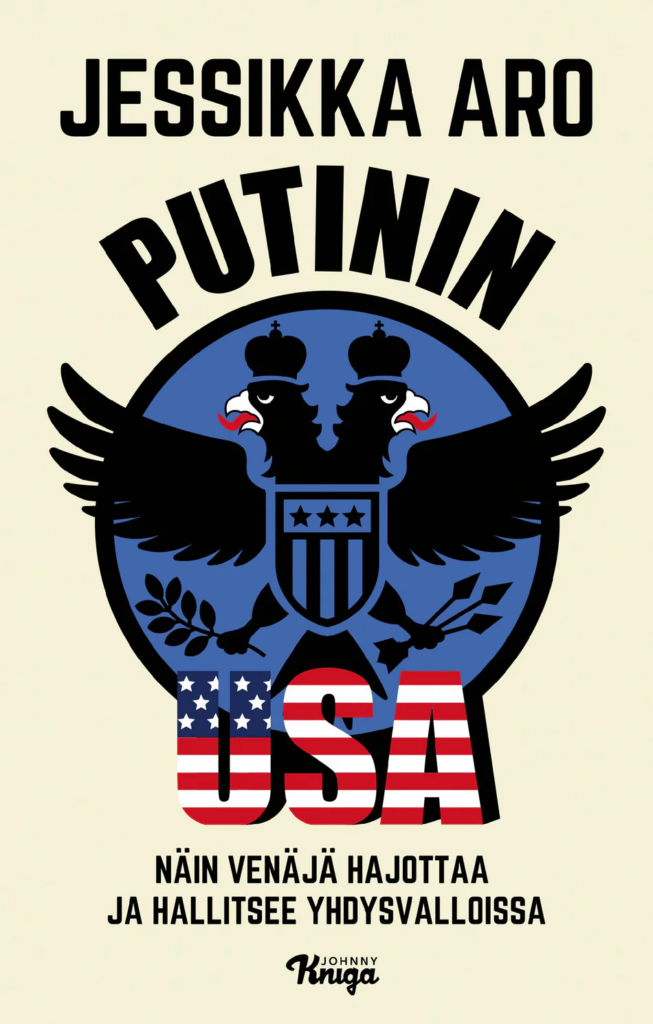
“What worries me the most right now is what is happening inside the US intelligence and security system,” Aro said, pointing to leadership changes and policy decisions following Donald Trump’s return to power.
“I cannot even imagine what the US cyberspace looks like if those defences are taken down.”
Aro singled out the reported decision to scale back US Cyber Command’s defensive operations against Russia — a move she said risks dismantling protections that previously helped block Russian interference during the 2018 midterm elections. “Those operations were protecting ordinary Americans,” she said. “What happens when that shield is removed?”
A Book Born From a Decade of Signals
Putin’s USA, published in Finnish, is the latest instalment in Aro’s long-running investigation into Russian information warfare. Her earlier book, Putinin trollit (Putin’s Trolls), documented the Kremlin’s online influence machinery and was translated into several languages. The new book narrows the focus to the United States — but the story, Aro argues, has been unfolding in plain sight for more than a decade.
The project began, she said, as a side effect of her reporting on Russian troll factories. As early as 2014, she noticed coordinated activity in English-language social media spaces that appeared designed not for domestic Russian audiences, but for foreign targets.
“They were recruiting people who spoke English. That alone told us the audience was not Russian,” she said.
By 2015 and 2016, those signals intensified. Aro recalls seeing Russia Today (RT) content circulating freely among American social media users, including stories attacking Hillary Clinton during the presidential campaign.
At the time, she did not yet know about the GRU’s hack-and-leak operation targeting the Democratic National Committee. But she recognised the strategic pattern.
“RT was not journalism. It was a state-sponsored information warfare machine,” she said, citing RT editor-in-chief Margarita Simonyan’s own descriptions of the outlet’s mission.
Subsequent US investigations — including the Senate Intelligence Committee inquiry, Special Counsel Robert Mueller’s probe and assessments by the Office of the Director of National Intelligence — later confirmed what Aro had been observing: Russian military intelligence had hacked Democratic networks, stolen documents, laundered them through fabricated online personas and fed the material to journalists and activists inside the United States.
“Those twelve GRU officers are still on the FBI’s most wanted list,” Aro noted. “Do we really think they just stopped after 2016?”
Information as a Weapon by Doctrine
A central argument of Putin’s USA is that Russian information warfare is not improvised chaos, but doctrine-driven statecraft.
Aro points to Russia’s Information Security Doctrine, signed by Vladimir Putin, which frames the information and cyber domains as arenas of warfare. Former defence minister Sergei Shoigu made the logic explicit more than a decade ago, declaring that “mass media is a weapon”.
“To Russians, information space is a battlefield,” Aro said. “They are not joking.”
In her lecture, she described how Kremlin narratives have increasingly targeted emotional fault lines within American society — particularly grievance, discrimination and identity politics. She tracked pro-Kremlin trolls, US far-right activists and conspiracy networks dominating online spaces ahead of the 2024 election, pushing content laced with racism, misogyny and fabricated moral panics.
“This is not happening on some obscure website nobody reads,” she said. “It is affecting real people. It is changing real people. It is directing real people.”
Aro stressed that her analysis is not partisan. She describes herself as apolitical and says her concern is institutional resilience, not party politics.
“Hybrid warfare is violent at its core,” she said. “It weaponises people.”
Gamified Manipulation and Alternative Realities
One of the book’s more unsettling themes is what Aro calls “gamified manipulation”, the use of conspiracy movements and online narratives that function like alternative reality games, drawing participants deeper through reward, repetition and social reinforcement.
Drawing on research by Finnish filmmaker and manipulation expert Arto Halonen, Aro argues that movements such as QAnon mirror scripted gaming environments, where users are nudged into actions and beliefs that contradict their own ethical frameworks.
“People can be manipulated into acting against their own values,” she said. “History shows this again and again.”
The Kremlin, she argues, has industrialised this process — staging opposing protests, amplifying contradictory messages and engineering social conflict from afar. “They organised protests in American streets from St Petersburg,” she said. “One pro-immigration protest, another against immigration — playing people against each other like pieces in a game.”
From Influence to Physical Harm
Putin’s USA also ventures beyond information warfare into allegations of physical sabotage. One chapter examines the so-called Havana Syndrome, a mysterious pattern of injuries among US diplomats and intelligence personnel.
Aro cites the work of investigative journalist Christo Grozev and Bellingcat, who have linked the incidents to units of Russian military intelligence.
“Many of the victims are severely injured,” she said. “This is not psychological speculation.”
‘You Are Already at War’
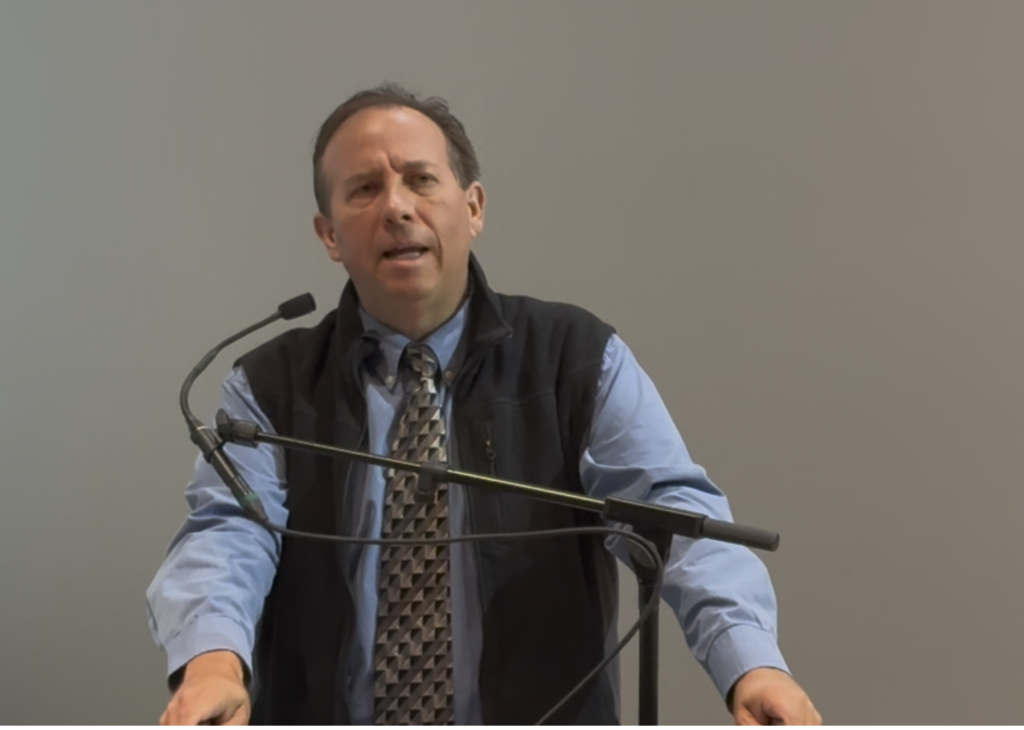
Those concerns were echoed and sharpened by Sean Wiswesser, a former CIA case officer with 30 years’ experience in US intelligence, who spoke after Aro at the launch event.
Weswisser did not hedge his language.
“Finland is at war,” he told the audience. “You were at war before you joined NATO.”
He argued that Russia’s security services, the FSB, SVR and GRU, see democracies on their borders as existential threats.
“They are not accountable to a party anymore. They answer to one man: Putin,” he said.
Tracing the lineage of Russian intelligence from the Cheka through the KGB to today’s services, Wiswesser said the institutions take pride in repression and have never been more powerful.
“They call themselves Chekists. They celebrate it,” he said. “They know their history, and they don’t care.”
According to Wiswesser, the West has misunderstood Russian priorities for decades. Even during the post-9/11 “war on terror”, Russian intelligence viewed the United States and NATO as its primary enemy.
“Forget terrorism,” a Russian intelligence officer once told him. “You are the main enemy. You always will be.”
Hybrid War is Not New – And Not Accidental
Wiswesser pushed back against the idea that hybrid warfare is a recent innovation. Russian military thinkers were writing about it in the early 2000s, he said, arguing that Russia would not survive unless it mastered non-linear warfare combining cyber operations, influence campaigns and sabotage.
That logic, he argued, explains both Russia’s initial miscalculations in Ukraine and its ongoing operations across Europe, from cyber attacks and airspace incursions to cable cuts in the Baltic Sea.
“Where else in the world do you see this many ‘accidental’ anchor draggings?” he asked. “Nowhere.”
A Warning, Not a Conclusion
Both speakers framed Putin’s USA not as a definitive account, but as a warning.
“This book is a microscopic tip of the iceberg,” Aro said. “Most of these operations are still hidden.”
Wiswesser was blunter.
“If we do not recognise the threat and present credible deterrence, we are repeating the mistakes of the 1930s,” he said.
The message, from Helsinki to Washington, was clear: Russian hybrid warfare is not a past scandal or a future risk. It is an ongoing campaign, and democracies are already inside it.