
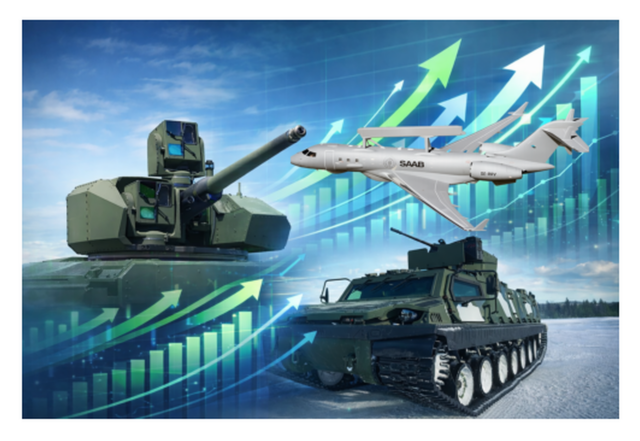
Sweden’s Saab AB, Norway’s Kongsberg Gruppen and Finland’s Patria each delivered outstanding results in 2025, reflecting a historic surge in European defence demand. All three reported double-digit revenue growth and record order backlogs. Together, they captured numerous major contracts and invested heavily to expand capacity.
All three Nordic firms are clear beneficiaries of the unprecedented rise in defence spending after Russia’s invasion of Ukraine. Each reported record-high backlogs – Saab’s SEK 274.5 billions is largest by absolute value (reflecting major aircraft and submarine projects), Kongsberg’s NOK 157.4 billion (~€14B) is remarkably high for its size (mostly in air/missile defence), and Patria’s €3.53 billion is smaller but massive relative to its revenue. Notably, exports now dominate their order books (Saab ~72% foreign, Kongsberg ~50–80%, Patria mainly EU/NATO), underscoring their global reach. They also leverage Nordic synergies – for example Patria’s vehicles paired with Kongsberg’s missiles and turrets – to offer integrated solutions.
Patria’s net sales surpassed €1.087 billion (up 32% year-on-year), Saab’s sales jumped 24% to SEK 79.15 billion (≈€7.9 billion), and Kongsberg’s revenues reached NOK 58.6 billion (≈€5.3 billion, +17%). Each also saw improving profitability – for example, Saab’s EBIT margin rose to about 10.2%, and Kongsberg’s Q4 EBIT margin hit 14.7% – underpinning robust cash flows and enabling generous dividends.
Each company is rapidly expanding capacity for 2026 production. Patria is enlarging factories in Finland and Latvia; Saab has hired thousands of staff and is opening new production lines (Gripen assembly, GlobalEye manufacture) while securing a deeper supply chain; Kongsberg is building factories in the US/Australia and spinning off non-core operations. All are boosting R&D for future tech, from Saab’s unmanned fighter concept to Kongsberg’s missile innovation and Patria’s AI-enabled drone swarm projects. Geopolitical shifts are also opening new markets: many countries want to diversify suppliers away from reliance on US-only systems. Saab, for example, is marketing Gripen/GlobalEye to nations like Canada (as a complement to F-35) and has signalled willingness to help equip Ukraine if financing allows.
With these orders and investments, Saab, Kongsberg and Patria enter 2026 with unprecedented visibility and momentum. Early 2026 contracts – such as Kongsberg’s Polish counter-drone system (NOK 16B) – show that their strong performance is continuing. Challenges remain (scaling production, export controls, supply-chain constraints), but their solid 2025 results and strategic initiatives have built a robust foundation. These Nordic defence leaders appear well-positioned for sustained growth as Europe rebuilds its armed forces.
Saab 2025: Unprecedented Orders and Global Expansion
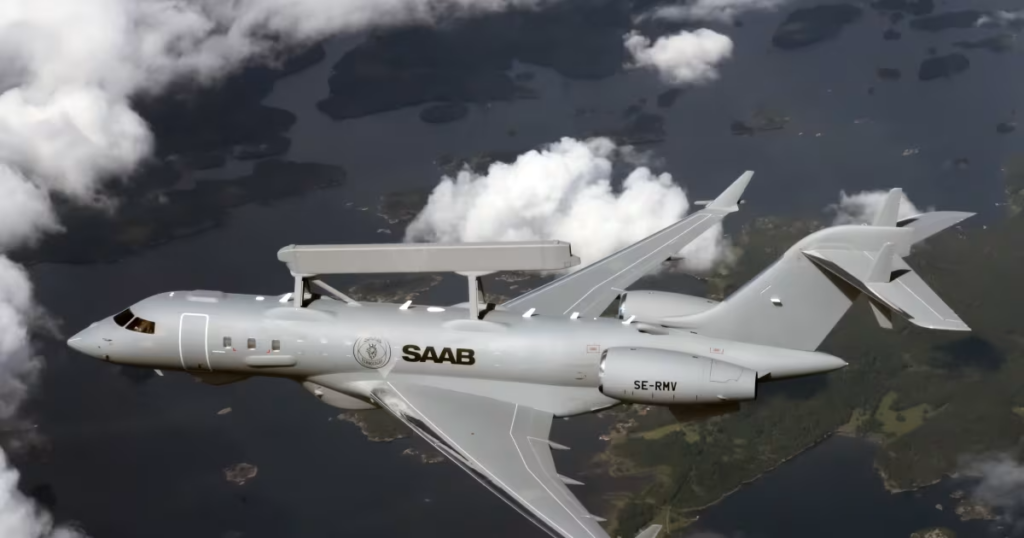
Saab AB achieved a record-breaking 2025. Order bookings for the year totalled SEK 168.5 billion (≈€16.9 billion), a 74% jump from 2024, driven by several colossal Q4 contracts. These included a €3.1 billion sale of 17 Gripen E/F fighters to Colombia, two GlobalEye AWACS for France (SEK 12.3 billion), four additional Gripen Es to Thailand, and a SEK 9.6 billion order to complete two A26 Blekinge-class submarines for Sweden. By year-end Saab’s backlog swelled to SEK 274.5 billion (≈€27.5 billion), about 72% of which is for export customers.
Saab’s full-year revenue rose 24% to SEK 79.15 billion. All business areas grew, especially Aeronautics (Gripen jets) and Dynamics (missiles and AT missiles). Q4 operating income was SEK 3.26 billion (+67% YoY), lifting full-year EBIT to SEK 8.07 billion (+42%, 10.2% margin). Net income also jumped (Q4 net profit SEK 2.57 billion, +78%). Strong operating cash flow (SEK 6.28 billion in Q4) has bolstered Saab’s net cash to SEK 3.99 billion. The board raised the dividend to SEK 2.40 per share and upgraded Saab’s medium-term organic growth target to 22% per year (from 18%), citing the massive backlog.
Looking ahead, Saab is expanding production and R&D to deliver these orders and invest for the future. Key programmes include ongoing Gripen deliveries (to Sweden, Brazil, Colombia and Thailand) and the new GlobalEye exports, now with France (with option) and actively offered to NATO countries. Saab’s Dynamics business also had a banner year: for example, in early 2025 it sold a record bundle of Carl-Gustaf ammunition and simulators to Poland (≈€1.1 billion). Saab is also pioneering next-generation tech, planning a fighter-sized unmanned demonstrator by 2027 under Sweden’s Future Fighter initiative.
Saab’s 2025 haul of fighter, radar, and submarine contracts, and its record backlog, position it as one of Europe’s prime beneficiaries of the defence spending boom.
Kongsberg 2025: Strong Growth and Strategic Shifts
Norway’s Kongsberg Gruppen saw solid growth and profitability in 2025 while reshaping its structure. Group operating revenues hit NOK 58.6 billion in 2025 (≈€5.3 billion), up ~17%. The defence and aerospace division (Kongsberg D&A) was the growth engine: Q4 revenues grew 44% and full-year defence revenues exceeded NOK 20 billion. Kongsberg logged an enormous order intake. around NOK 50.1 billion for 2025 (slightly down from a record NOK 54.4B in 2024) – largely from large export contracts. Its defence backlog reached a record NOK 125.4 billion (≈€11.3 billion) by year-end, up 25% for the quarter. This backlog is dominated by missiles and air-defence systems (≈NOK 98 billion for those alone).
The broader group backlog was similarly historic. Including the maritime business, Kongsberg’s total backlog grew to NOK 157.4 billion (≈€14.2 billion). On the maritime side, Kongsberg Maritime saw ~10% growth (NOK 27.1 billion revenue) from vessel automation and service contracts, with aftermarket parts providing stable income. Overall, Q4 revenues were NOK 16.78 billion (Q4, +21% YoY). Group operating profit was NOK 9.3 billion for 2025 (pre one-offs) with a Q4 EBIT margin of 14.7%. Kongsberg proposed a NOK 5.70 per-share dividend (NOK 5.01 billion total) for 2025, including an extra distribution given the performance.
Several large contracts underpinned Kongsberg’s performance. In Q4 it won a major NASAMS air-defence deal for Denmark (~€500 million), and extended Joint Strike Missile (JSM) and Naval Strike Missile (NSM) orders from allied customers. Late 2025 brought its largest contract ever: in January 2026 Kongsberg, with partner PGZ, scored a ~NOK 16 billion (≈€1.5 billion) Polish order for 18 Counter-UAS (anti-drone) batteries. Other recent wins include U.S. Navy orders for NSM anti-ship missiles and integrated air-defence systems for the Dutch Army. To meet this demand, Kongsberg is investing heavily. It announced new missile production plants in the United States and Australia, and in Dec 2025 acquired U.S. firm Zone 5 Technologies to ramp up affordable missile production.
A major strategic move was approved in early 2026: Kongsberg Maritime will be spun off as an independent listed company in April 2026, allowing the legacy Kongsberg Gruppen to focus on Defence & Aerospace and Discovery (mapping/ocean) businesses. The rationale is to let each entity pursue distinct markets (civil marine decarbonization vs. military tech). This leaves the defence group with a streamlined portfolio, record backlog, and large export order base. Management is optimistic: with ~NOK 130 billion of backlog “going forward” for Kongsberg ASA, and new budgets flowing into NATO air/missile defence, Kongsberg expects continued strong demand. Key programmes ahead include Norway’s own missile and vehicle projects, further NASAMS deliveries, and fulfilment of U.S./Australian orders. The early 2026 Polish CUAS order exemplifies how momentum is carrying into the new year.
Patria 2025: Surging Sales and Historic Contracts
Patria, the Finnish state-majority defence company (49.9% owned by Kongsberg), continued rapid expansion in 2025. Net sales grew 31.6% to €1,086.7 million. Operating profit rose 42% to €115.9 million (10.7% margin). New orders reached €2,190.5 million (up 74%), driving the order backlog to a record €3,526 million – more than three times revenues. The standout deals were in the Common Armoured Vehicle System (CAVS) programme. In December Patria and Germany agreed on serial-production contracts (for the Patria 6×6 wheeled APC and NEMO 120 mm turreted mortars) worth over €2 billion (with >€1 billion firm). Throughout 2025 Sweden and Denmark also joined CAVS and placed 6×6 orders, bringing the partnership to seven countries (Finland, Estonia, Latvia, Sweden, Denmark, UK, Norway, and now Germany). By year-end Patria had secured orders or options for nearly 2,000 Patria 6×6 vehicles.
The CAVS boom is driving Patria’s growth and capacity expansion. The company invested heavily in manufacturing – ramping up armoured vehicle lines in Hämeenlinna (Finland) and Valmiera (Latvia) – to meet the surging demand. Its reorganization into three business areas (Protected Mobility, Defence & Weapon Systems, Sustainment) in mid-2025 streamlined operations. In aerospace, Patria completed new F-35 production facilities in Finland (Halli, Nokia, Linnavuori) and delivered its first assembled F135 engines, reflecting its role in the F-35 supply chain. It also acquired Belgium’s ILIAS Solutions (defence fleet-management software) to bolster its sustainment offerings.
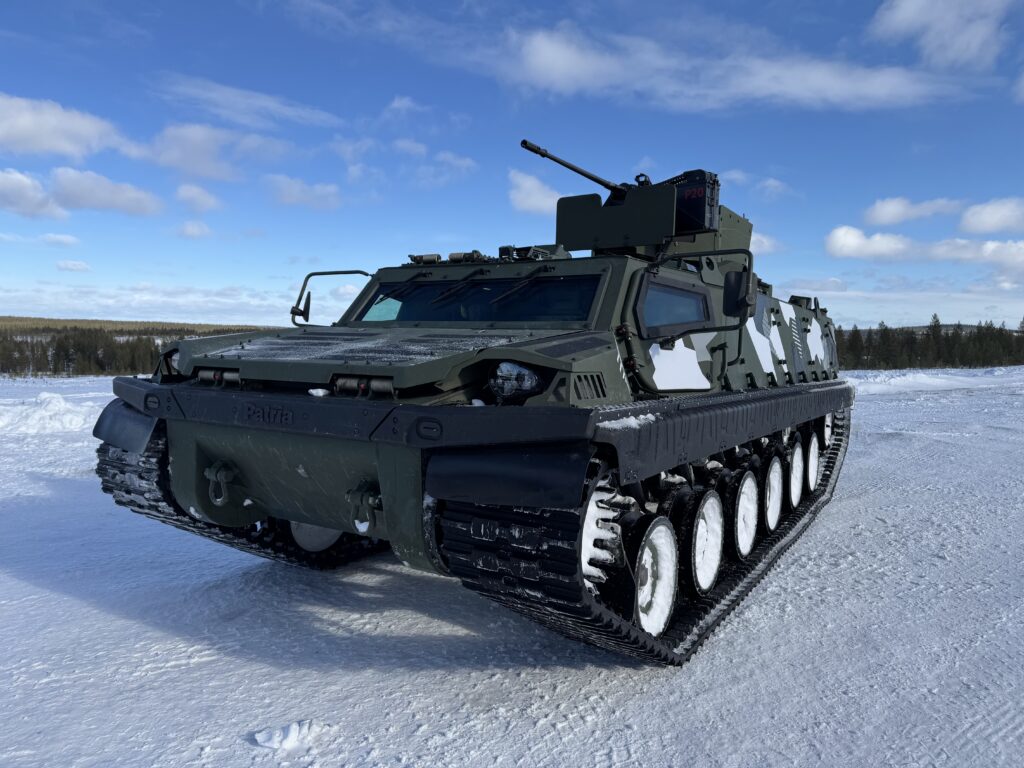
Among its new products, Patria launched the Patria TRACKX tracked combat vehicle in Sept 2025 – a high-mobility armoured platform aimed for 2027 production – and rolled out more Patria NEMO mortar systems onto 6×6 platforms. Patria’s 50%-owned partner Nammo (munition maker) also contributed strongly to results.
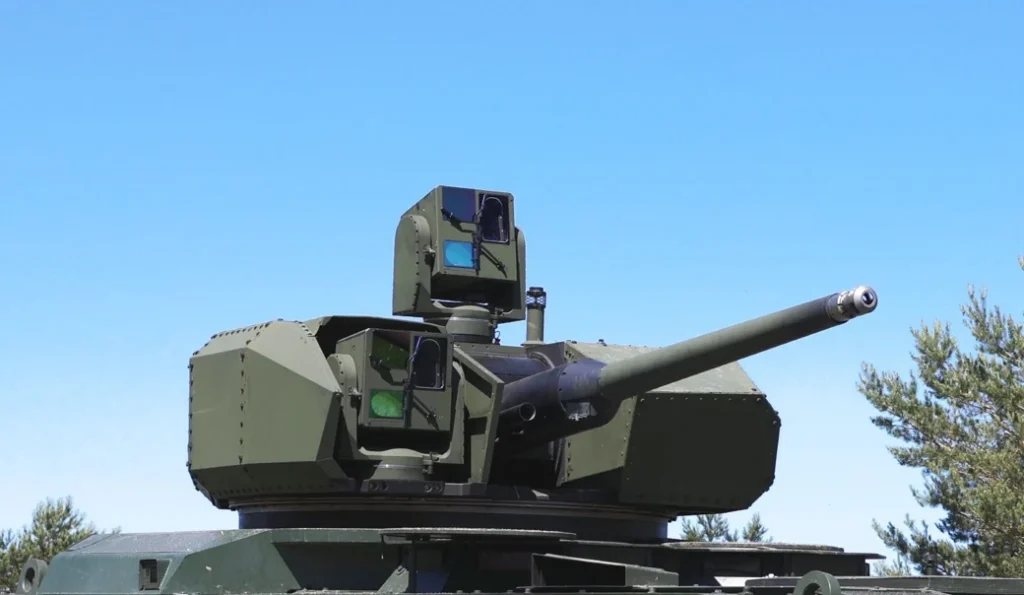
Patria is now a pan-European player. It partnered with Britain’s Babcock to co-produce 6×6 vehicles for the UK Armed Forces, and with Kongsberg for weapon stations: in Feb 2026 Kongsberg will deliver RS4 remote weapon turrets for German and Swedish CAVS vehicles (via Patria), standardizing those fleets. Such Nordic alliances amplify Patria’s offerings. With a backlog equal to over three years of sales, Patria forecasts continued robust growth in 2026, led by vehicle and weapon systems deliveries, supported by rising EU and national defence budgets.
Read More:
- Saab AB: Saab year-end report 2025: Record order bookings – building for growth
- Patria Group: Patria Group’s Financial Review for 2025 – preliminary data
- Kongsberg Defence & Aerospace: Financial results Q4 2025: Concluding a year of solid performance and strong growth
- Kongsberg Defence & Aerospace: KONGSBERG wins NOK 16 billion contract to deliver Counter-UAS solutions in Poland
- Reuters: Saab raises sales growth target as defence spending booms
- Defense News: Europe’s 2025 defense winners include Saab, Rheinmetall; FCAS falters