
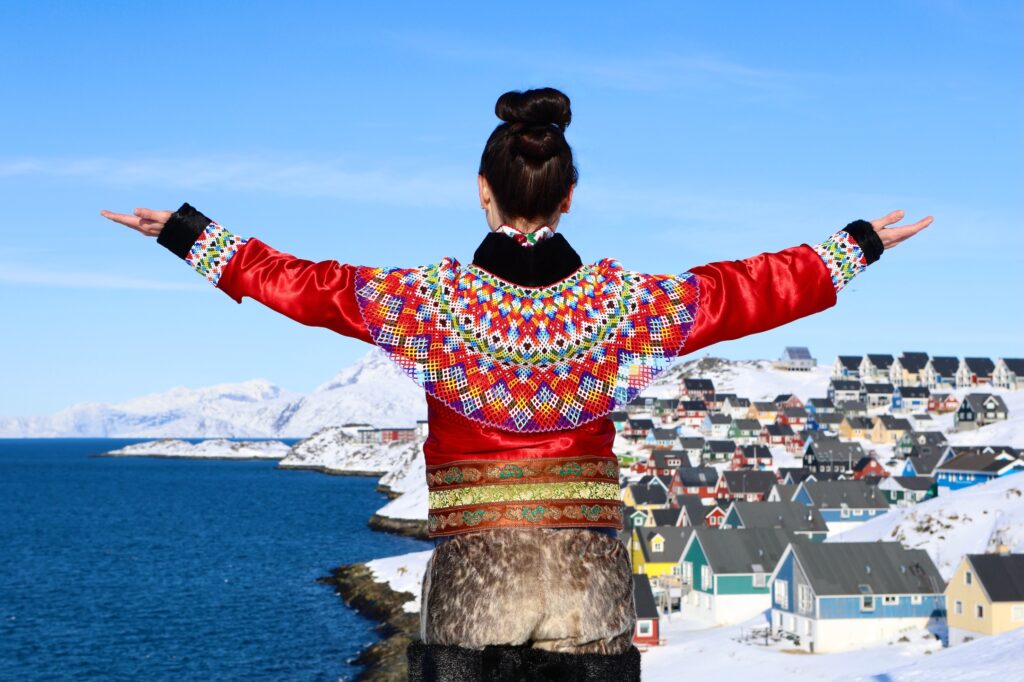
President Trump’s bold bid to acquire Greenland has sent shockwaves through Europe and raised dire questions about NATO’s future. Danish PM Mette Frederiksen warned that a U.S. attack on a fellow NATO member “would be the end of everything – that includes NATO”. Even EU defence chief Andrius Kubilius agreed: a US military takeover of Greenland “would be the end of NATO”. Some sort of agreement on Greenland was found at the Davos 2026 conference.
Allied capitals have scrambled to reaffirm their vows to NATO. At a mid-January 2026 meeting, EU leaders from countries like France, Germany, the UK, Italy, Poland, Spain, Denmark, and the Netherlands issued a joint statement: “Greenland belongs to its people. It is for Denmark and Greenland…to decide” their future. They stressed Arctic security “must be achieved collectively with NATO allies, including the United States”. Polish PM Donald Tusk put it bluntly: “No member should attack or threaten another member…otherwise NATO would lose its meaning”. Europe insisted: Article 5 covers Greenland, and the alliance must stand firm. In Davos, similar announcements were made by various heads of state.
The Greenlandic flag flies over Copenhagen’s Tivoli Castle, symbolising allied unity: decisions about Greenland belong to Copenhagen and Nuuk, not Washington. Canada’s PM Mark Carney emphasised this by reiterating Canada’s NATO obligations: “we are NATO partners with Denmark…our obligations on Article 5…stand, and we stand fully squared behind those”. Across NATO, politicians and diplomats have stressed the unity of Western defence: the US thrust has been met with a pledge of solidarity and joint action.
Allies are also putting muscle into the Arctic. Within days, France, Germany, Norway, Sweden, the Netherlands and Finland announced that small troop contingents would deploy to Greenland for joint exercises. Denmark dubbed this Operation Arctic Endurance, signalling collective defence. Canada, too, reportedly weighed sending soldiers for Greenland drills, though Ottawa later stressed it had no new operations there. Danish Defence Minister Troels Lund Poulsen said Copenhagen would host a “larger and more permanent” NATO force in Greenland to protect the island, stressing that “security in the Arctic is…for all of NATO”. NATO Secretary-General Mark Rutte likewise emphasised that with polar sea lanes opening, “the Russians and the Chinese will be more active” in the Arctic.
Trump in Davos: US Will Not Take Greenland by Force
“We won’t get anything unless I decide to use excessive force, we’d be unstoppable, but we won’t do that. I don’t have to use force, I don’t want to use force, I won’t use force,” said President Trump in Davos.
Belgian Prime Minister Bart De Wever took a strong stand on Europe’s stance towards U.S. pressure over Greenland and transatlantic ties: “Being a happy vassal is one thing. Being a miserable slave is something else. If you back down now you’re going to lose your dignity.”
“There is a strong tendency for countries to go along to get along… compliance will not buy safety,” remarked Canadian PM Mark Carney on the fading rules-based international order and the need for middle powers to collaborate.
"Any threat to acquire European territory by force would be unacceptable.”
- German Chancellor Friedrich Merz in Davos 2026
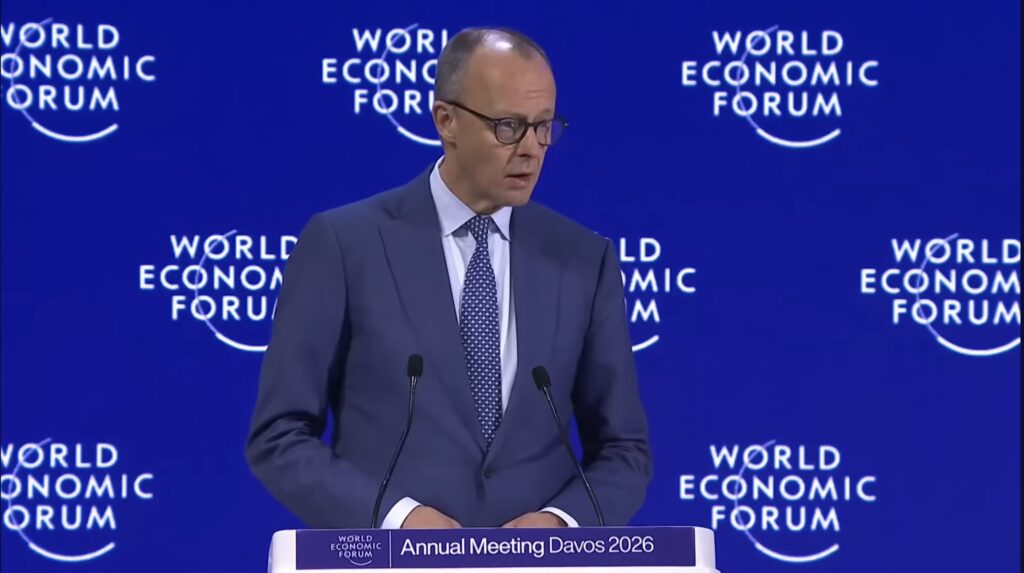
“Denmark and the people of Greenland can count on our solidarity. We will protect Greenland from the threat posed by Russia,” German Chancellor Friedrich Merz emphasised at the World Economic Forum. Europe and Germany will step up in the Arctic as part of NATO rather than cede strategic ground, he signalled. Merz stressed that any threat to take European territory by force would be unacceptable and that Europe must invest in its own security, competitiveness, and unity to face “the demands of the new age”.
He welcomed the U.S. shift away from tariffs and forceful rhetoric over Greenland, but emphasised that European NATO partners will do more in the Far North to ensure security, including Germany’s increased contribution. “We will uphold the principles on which the transatlantic partnership is founded, namely sovereignty and territorial integrity,” Mertz said in Davos.
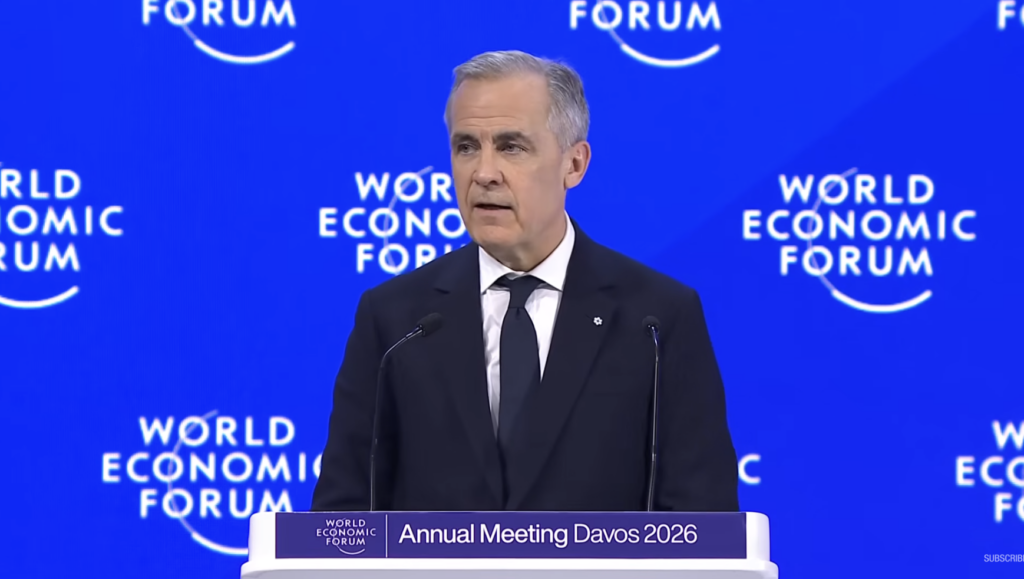
“Let me be direct: We are in the midst of a rupture, not a transition,” Prime Minister Mark Carney said in his speech at Davos.
“Over the past two decades, a series of crises in finance, health, energy and geopolitics have laid bare the risks of extreme global integration. But more recently, great powers have begun using economic integration as weapons. Tariffs as leverage. Financial infrastructure as coercion. Supply chains as vulnerabilities to be exploited,” he continued.
“You cannot ‘live within the lie’ of mutual benefit through integration when integration becomes the source of your subordination,” he said
Is Talk of NATO’s Collapse Self-fulfilling?
Denmark’s Major-General Søren Andersen led home-guard soldiers from Denmark, Sweden, Norway, Germany, France and Finland in cold-weather drills. The deployment, and plans for an Arctic Sentry operation with drones and sensors, modelled on NATO’s Eastern Sentry in the Baltics, make clear the alliance is treating Greenland’s defence as a live issue. In practice, numerous NATO countries are now working together to deter any power-grab: the North Atlantic is no longer “out of scope”.
Despite this show of force, alarm bells still ring in public debate. Many analysts and officials warn that talk of NATO’s collapse is dangerously self-fulfilling. EU foreign-policy chief Kaja Kallas explicitly urged leaders not to stoke “end of NATO” hysteria that could play into hardliners’ narratives. Andris Sprūds, Latvia’s defence minister, was adamant that this row “is not the end at all” of NATO. He reminded audiences that NATO has long weathered sharp disagreements, like Greece vs Turkey, without imploding. Nonetheless, no one is pretending the stakes are minor. Denmark’s Frederiksen warned that if the U.S. actually attacked Greenland, “everything would stop – that includes NATO”. Even the Trump administration’s hawks worry openly about fracturing the alliance, Republican congressman Michael McCaul gloomily noted an invasion would spark “war with NATO itself”.
“Despite all the frustration and anger of recent months, let us not be too quick to write off the transatlantic partnership … We Europeans, we Germans, know how precious the trust is on which NATO rests. In an age of great powers, the United States, too, will depend on this trust. It is their — and our — decisive competitive advantage,” reassured the German Chancellor Friedrich Merz at the World Economic Forum in Davos 2026.
Kremlin: Greenland is Part of Denmark – Or Not
Russia and China are watching intently and quietly cheering the discord. Moscow’s hardliners have mocked the scare about Chinese bases in Greenland, and even Dmitry Medvedev quipped that Trump should hurry up with annexation to highlight Western weakness. The Russian embassy publicly accused NATO of an “accelerated militarisation” of the Arctic under “fictitious pretext” of a Russian or Chinese threat, warning that any drive to seize Greenland is “counterproductive and extremely dangerous”. However, Kremlin spokesman Dmitry Peskov told reporters that “we proceed from the understanding that Greenland is a territory of the Kingdom of Denmark,” adding that Moscow is monitoring the situation around the island.
Later in January, Moscow had a new stand. “What happens in Greenland is of no concern to us whatsoever … Washington and Denmark should sort it out between themselves,” the Russian President Vladimir Putin announced at the Security Council meeting on 21 January.
Russia also denied any intention to occupy Greenland. “We have nothing to do with plans to capture Greenland. … Washington knows clearly that neither Russia nor China have such plans,” Russian Foreign Minister Sergei Lavrov noted at Moscow press briefing, on January 20th. Lavrov combined this with a claim that Greenland is not a “natural part of Denmark”. Russian state media and commentators have continuously portrayed the U.S.-Europe rift as beneficial to Moscow, celebrating divisions in NATO and EU responses.
Beijing’s diplomats took a calmer tone: spokeswoman Mao Ning said Chinese Arctic activity is peaceful and insisted “the U.S. should not pursue its own interests by using other countries as a pretext”. In effect, both Moscow and Beijing benefit from the spat. As a German Marshall Fund analysis puts it, Trump’s Greenland rhetoric is “an own goal” that “alienates allies and plays straight into the hands of adversaries”. If NATO comes apart, Russia stands to regain strategic freedom in the High North, and China’s designs on shipping routes or minerals face less unified Western resistance.
Deeper Northern Defence Partnership Ahead
Across NATO-oriented circles, the Greenland crisis must be resolved within the alliance or not at all. Defence experts stress that the best outcome is one that keeps NATO intact and even strengthens Arctic security. Atlantic Council analysts believe a grand compromise is still on the table, for instance, simply renewing the decades-old US-Danish defence pact rather than annexing territory, so that no one “blows up the transatlantic alliance” for good. If the United States pulls back from NATO, then “NATO as it is now definitely will not exist anymore,” as Kubilius soberly warned. Europe has already begun planning a deeper northern defence partnership, linking Nordic armies with Canada, the UK and the Netherlands, to guard against just such a scenario.
Trade Bazooka To Defend
In late mid-January, Trump put a tariff gun on the table in the Greenland row: 10% on “any and all goods” from eight European countries from 1 February 2026, rising to 25% from 1 June 2026 unless they stop blocking his push to acquire Greenland. The targets are Denmark, Norway, Sweden, Finland, the Netherlands, Germany, France, and the United Kingdom.
This is a political punishment aimed at NATO allies who have publicly backed Danish sovereignty and, in several cases, sent small, symbolic contingents to Greenland under allied exercises. Trump’s message is simple: Support Denmark, pay at the border. European governments have called it coercion and “blackmail”, and the EU is already discussing countermeasures, including the use of its Anti-Coercion Instrument, the EU’s so-called Trade Bazooka.
At the end of the Davos conference, the tariff dispute between the US and some European NATO countries seemed to have been solved. “New tariffs would undermine the foundations of transatlantic relations,” the German Chancellor said. “If they are put in place, Europe’s answer will be united, calm, measured and firm,” he warned.
The immediate risk is economic noise. The bigger risk is strategic: tariffs as a weapon against allies blur the line between alliance management and economic warfare. That is exactly the sort of internal fracture that Russia and China benefit from: they do not need NATO to collapse to win. They just need it distracted, divided, and trading punches with itself.
Rutte: Keep Dreaming
In late January 2026, NATO Secretary General Mark Rutte came under sharp criticism in Brussels and European capitals after dismissing calls for greater European defence independence, telling EU lawmakers that the idea of separating from Washington’s security umbrella was a fantasy.
Speaking to the European Parliament, Rutte said Europe should “keep on dreaming” if it believed it could defend itself without the United States. “You can’t. We can’t. We need each other,” he said, arguing that replacing US protection would require European states to spend as much as 10% of GDP on defence and to develop their own nuclear deterrent — at vast cost.
Rutte’s remarks landed just weeks after a serious transatlantic crisis triggered by US President Donald Trump’s threat to use punitive measures to force Denmark to hand over Greenland, an episode that briefly pushed relations to the brink. Rutte later helped broker a deal on Arctic security to defuse the dispute.
The NATO chief also defended his pragmatic approach to Trump, saying he was willing to praise the US president when deserved and was unbothered by Trump’s decision to publish private text messages between them.
The comments provoked an immediate backlash. France, long the standard-bearer of “strategic autonomy”, reacted angrily. French foreign minister Jean-Noël Barrot said Europeans “can and must” take charge of their own security, calling this the European pillar of NATO rather than a break from it.
From the European Commission, chief spokesperson Paula Pinho struck a more measured tone, insisting the EU’s focus remained on becoming “increasingly resilient” and “increasingly independent” across key sectors, including defence and critical raw materials. She pointed to recent progress in reducing dependence on Russian energy and referenced Commission President Ursula von der Leyen’s call for greater European independence amid growing geopolitical instability.
Criticism also came from former European Council president Charles Michel, who mocked Rutte’s past description of Trump as “daddy” and accused him of resignation and fatalism. “Europe will defend itself,” Michel said. “And Donald Trump is not my daddy.”
The episode has reopened a raw debate inside Europe: how to strengthen its own military capacity without fracturing NATO, and how much strategic dependence on Washington is still politically acceptable in a more volatile world.
UPDATED: The last Rutte chapter was added on January 31st, 2026.
Read More:
- Euronews: US-Denmark spat over Greenland ‘not the end at all of NATO’, says Latvian defence minister
- The Guardian: US attack on Greenland would mean end of Nato, says Danish PM
- Reuters: European leaders rally behind Greenland in face of renewed US threat
- Reuters: European commissioner says US military takeover of Greenland would be end of NATO
- Reuters: Russia says NATO talk of Moscow and Beijing being a threat to Greenland is a myth
- AP/ABC News: China says US shouldn’t use other countries as ‘pretext’ to pursue its interests
- Time: Trump Refuses to Rule Out Leaving NATO Over Greenland Tussle—Can He Legally Do That?
- Atlantic Council: The US and NATO can avoid catastrophe over Greenland and emerge stronger. Here’s how.
- German Marshall Fund: Greenland Is Strategic: But It Is Not a Pawn
- Reuters: Dutch minister calls Trump’s Greenland tariff threat blackmail
- Associated Press: In their words European governments criticize Trump’s tariff threats over Greenland
- Euronews: Trump to hit eight European countries with 10 import tax over Greenland dispute
- Euractiv: Europe hits back at Trump tariff threat over Greenland
- Financial Times: Bessent says Europe is too weak to guarantee Greenland’s security
- France 24: Trump announces 10 tariff on Europe including France UK Denmark starting Feb 1
- Copenhagen Post: Trump threatens 10 tariffs on Denmark and European allies over Greenland
- The Guardian: Trump threatens 25 tariff on European allies until Denmark sells Greenland to US
- AA: Kremlin says Russia considers Greenland part of Denmark
- ABC News: GOP Rep. McCaul says a US invasion of Greenland would mean ‘war with NATO itself’
- Reuters: Germany’s Merz: Europe must not rush to write off transatlantic ties
- Global Banking & Finance Review (via Reuters): Merz Highlights Importance of Transatlantic Ties at Davos
- AP News (WRAL): Europe cannot be a ‘miserable slave’ to Trump, says Belgium’s prime minister
- Reuters: EU leaders to reassess U.S. ties despite Trump U-turn on Greenland
- NDTV Davos Live Updates: Trump won’t take Greenland with force
- MT Newswires / MarketScreener: Germany’s Merz: ‘We Are Not at the Mercy of This New World Order’
- SudDeutsche Zeitung: Trump reklamiert dauerhaften Zugang zu Grönland – Dänemark widerspricht (in German)
- The Guardian: Davos: Trump launches his ‘board of peace’ as Kushner presents Gaza ‘master plan’ – as it happened
- Reuters: Germany’s Merz: Europe must not rush to write off transatlantic ties
- Yahoo/Associated Press (via Yahoo News): World is no longer ‘a cozy place,’ Merz tells Davos
- AP News: Denmark says its sovereignty is not negotiable after Trump’s Greenland about-turn
- Al Jazeera: Trump’s Greenland pact will demand allies boost Arctic security; NATO chief
- Reuters (via MarketScreener): Davos — Germany’s Merz: We support talks between Denmark, Greenland, US on principles of sovereignty and territorial integrity
- Bloomberg / Markets Insider: Merz Calls for Economic Pivot to Fight Back Power Politics
- Euronews: Europe wants to ‘avoid escalation’ with US over Greenland, says Merz
- AP News: EU leaders gather to chart a new course for transatlantic ties after Trump threats over Greenland
- The Local (AFP): German Chancellor Merz welcomes Trump’s retreat on Greenland
- CBC: Read Mark Carney’s full speech on middle powers navigating a rapidly changing world
- World Economic Forum: Special Address by Mark Carney, Prime Minister of Canada | World Economic Forum Annual Meeting 2026
- Reuters: Russia’s Lavrov says Greenland is not a ‘natural part’ of Denmark
- Reuters: Putin says who owns Greenland is of no concern to Russia, says it might be worth $1 billion
- Reuters: Russia says the West should stop claiming Moscow wants to occupy Greenland
- AP News: Russia watches US-European tensions over Greenland with glee, gloating and wariness
- Euronews: Rutte faces backlash for telling Europeans to ‘keep on dreaming’ about independence from US security