
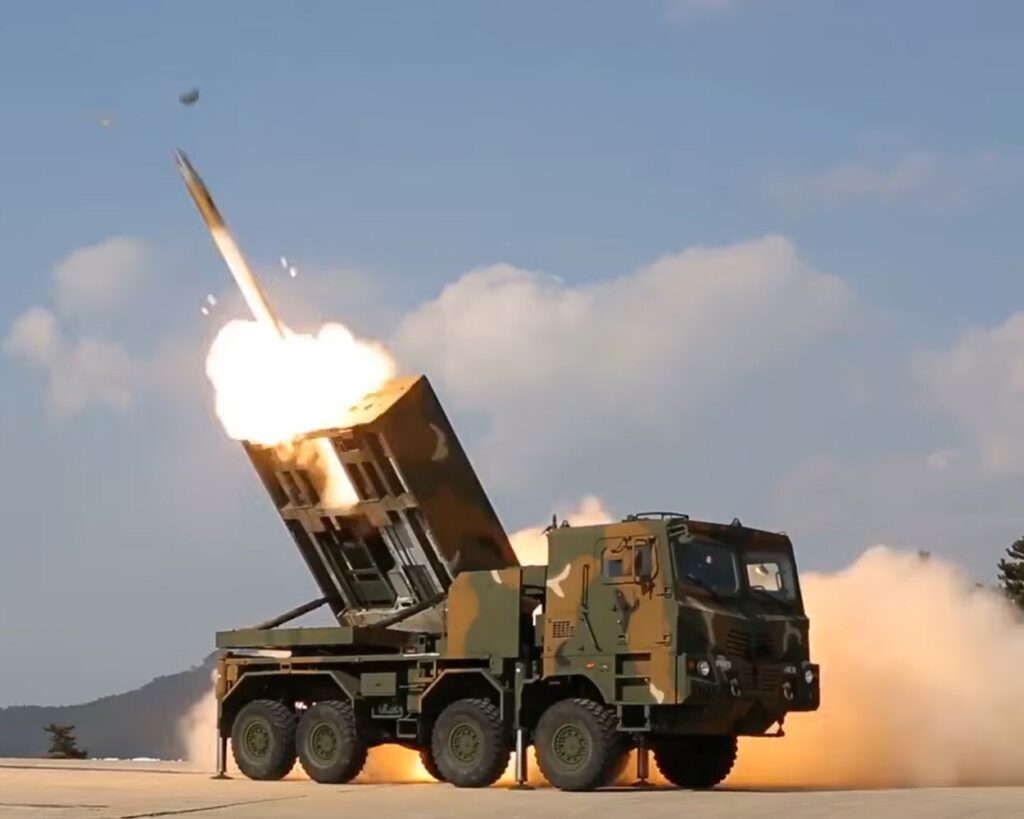
Hanwha Aerospace entered Estonia with a €100 million defence-industry investment proposal linked to its ambitions in the country’s military modernisation. Subsequent reporting showed the package depended on Hanwha winning a major procurement competition. At the same time, records concerning other Hanwha Group companies revealed continued exposure to Russia-related business during the sanctions era, prompting scrutiny of corporate transparency, due diligence and the expanding role of global defence conglomerates in Europe.
Hanwha Aerospace entered Estonia with a message that landed well in Tallinn: more weapons, faster deliveries, local maintenance, an ammunition plant, research cooperation and a headline investment figure of nearly €100 million. Within days, the public record grew more complicated. ERR, Estonia’s public broadcaster, reported that the package was an offer tied to Estonia’s infantry fighting vehicle competition, not a completed investment. At the same time, the wider Hanwha Group’s record showed two separate Russia-related exposures: machine-tool exports to Russia by Hanwha Precision Machinery after the full-scale invasion, and the long-running entanglement of Hanwha Ocean in LNG tanker contracts for Russia’s Arctic LNG 2 project. The result is a due diligence problem for Estonia.
The Estonian Offer was Real, but Also Conditional
Hanwha’s March 2026 messaging described a direct investment package of nearly €100 million in Estonia, with a broader economic impact reaching as much as €260 million. Invest in Estonia, and ERR presented the concrete components in similar terms: about €25 million for a 40 mm ammunition facility with planned annual capacity above 300,000 rounds, about €23 million for a maintenance, repair and overhaul competence centre for K9 and Chunmoo systems, plus training and R&D cooperation with Estonian firms. Defence Minister Hanno Pevkur publicly welcomed the package and said Hanwha had become “a very good partner” for Estonia in technology transfer.
Three days later, ERR added the part that mattered most: the €100 million was “an offer,” not a concluded investment, and the package would materialise only if Estonia selected Hanwha’s Redback infantry fighting vehicle. ERR also reported that Estonia’s IFV procurement rules already require a share of the contract value to be invested in the domestic defence industry. RKIK category manager Janari Kasemets said other manufacturers were also making industrial offers, while unnamed industry specialists told ERR that Hanwha was using the press release to draw attention to its bid in the final phase of the competition.
The internal logic of the package points in the same direction. Pevkur told ERR that 40 mm ammunition was mainly intended for combat vehicles and specifically noted that Redback uses that calibre. ERR separately reported that, if Redback were selected, the plant would produce 40 mm grenades. Hanwha’s cooperation deals with Estonian firms also track the Redback campaign. Nortal and SensusQ said they were building a battlefield management system on the Redback platform. Marduk said its work with Hanwha was to develop a counter-UAS capability integrated with an IFV “for the Estonian market.” Hanwha’s MRO plan in Estonia also explicitly mentioned the future servicing of IFVs.
Estonian public criticism has centred on transparency. The offer, critics argue, should have been clearly presented as a procurement-linked industrial package from the outset. Which commitments were tied to the Redback bid, and which depended on Hanwha winning further business? That distinction became blurrier because Hanwha already had an industrial relationship with Estonia through the Chunmoo deal signed in December 2025. Hanwha’s own press release on that contract said the industrial partnership would proceed “in multiple phases corresponding to the total value of Estonia’s orders.” Pevkur later told ERR that “one part of the agreement” had already been that Hanwha would invest in Estonia’s defence industry. Public documents do not clearly separate the Chunmoo-linked industrial obligations from the later €100 million Redback-linked offer.
Hanwha was Building an Ecosystem Around its Bid
Hanwha’s Estonia strategy is built on an ecosystem in Estonia. It signed a maintenance cooperation with GoCraft alongside the Chunmoo contract. It signed a software and systems cooperation with Nortal and SensusQ in September 2025. It signed counter-drone development deals with Frankenburg Technologies and Marduk Technologies. In March 2026, it became the first South Korean member of the Estonian Defence and Aerospace Industry Association. In public messaging around that move, Hanwha said it wanted to “sit at the same table” with Estonian companies and expand joint R&D and supply-chain cooperation.
This pattern matches Hanwha’s wider European export model. Reuters reported in October 2024 that the company expected its European land-arms revenue to double by 2027, driven by its willingness to manufacture in customer countries. Reuters also reported missile production plans in Poland, local operations in Norway, and a production site in Romania. Hanwha is selling speed of delivery, but it is also selling localisation, industrial workshare and in-country support. Estonia is part of that strategy.
Hanwha is also on Estonia’s shortlist for new navy ships together with Hyundai, Saab and Baltic Workboats, and Pevkur said publicly that Hanwha was among potential bidders for Estonia’s naval overhaul. However, according to an openly available, reliable source, the €100 million controversy is anchored in the Redback IFV campaign, not in a naval contract.
Hanwha’s Controversial Russian Links
Hanwha Precision Machinery exported machine tools directly to Russia after the full-scale invasion, and at that time, it still sat inside Hanwha Aerospace’s corporate structure. Reuters reported in April 2024 that Hanwha Aerospace was spinning off Hanwha Precision Machinery and Hanwha Vision from its defence business. Hanwha’s own 2019 corporate material had described Hanwha Precision Machinery as a subsidiary of Hanwha Aerospace.
The Insider reported in November 2023, using customs data from Import Genius and NBD, that Hanwha-branded imports to Russia between 1 March 2022 and 28 February 2023 totalled $22.3 million, of which $9.5 million was attributed to Hanwha Precision Machinery. It further reported that Hanwha Precision Machinery’s exports to Russia reached $13.7 million between 1 March 2022 and 31 July 2023, and that those shipments went directly to JSC IPK Finval, without intermediaries. Hanwha Precision Machinery told The Insider that direct sales were normal for wholesale trade, that it relied on end-user statements, and that all business with Russia stopped after 24 April 2023, when South Korea expanded export controls. It also said the post-24 April shipments had been contracted or declared before that date.
That sanctions timeline is supported by South Korean sources. Korea JoongAng Daily reported on 24 April 2023 that Seoul expanded its Russia and Belarus export restrictions from 57 items to 798. Kim & Chang’s sanctions update said the new regime added 741 items, including industrial machines, and that exports under contracts executed before 28 April 2023 could still receive exceptional licences on a case-by-case basis. Hanwha’s explanation is at least consistent with the structure of South Korea’s rules at the time. But the exports continued into mid-2023. The legal picture depends on licensing, contract dates and technical specifications that are not public.
In November 2023, the U.S. Treasury sanctioned JSC IPK Finval and described it as a leading Russian supplier of industrial machinery, tools, gear and equipment. The Insider went further and argued, based on Russian procurement data and installation acknowledgements, that Finval supplied military-linked customers, including Titan-Barrikady, Hydropribor, KEAZ and an FSB-linked unit. Hanwha Precision Machinery denied knowingly dealing with military end-users and said Finval’s onward deliveries to such users occurred without its knowledge. A Hanwha Aerospace subsidiary exported to a Russian industrial importer later sanctioned by the U.S., investigative reporting linked that importer to military customers, and Hanwha denied knowledge of military end use and said it stopped Russia trade after the April 2023 control expansion.
Hanwha Ocean’s Russian Exposure
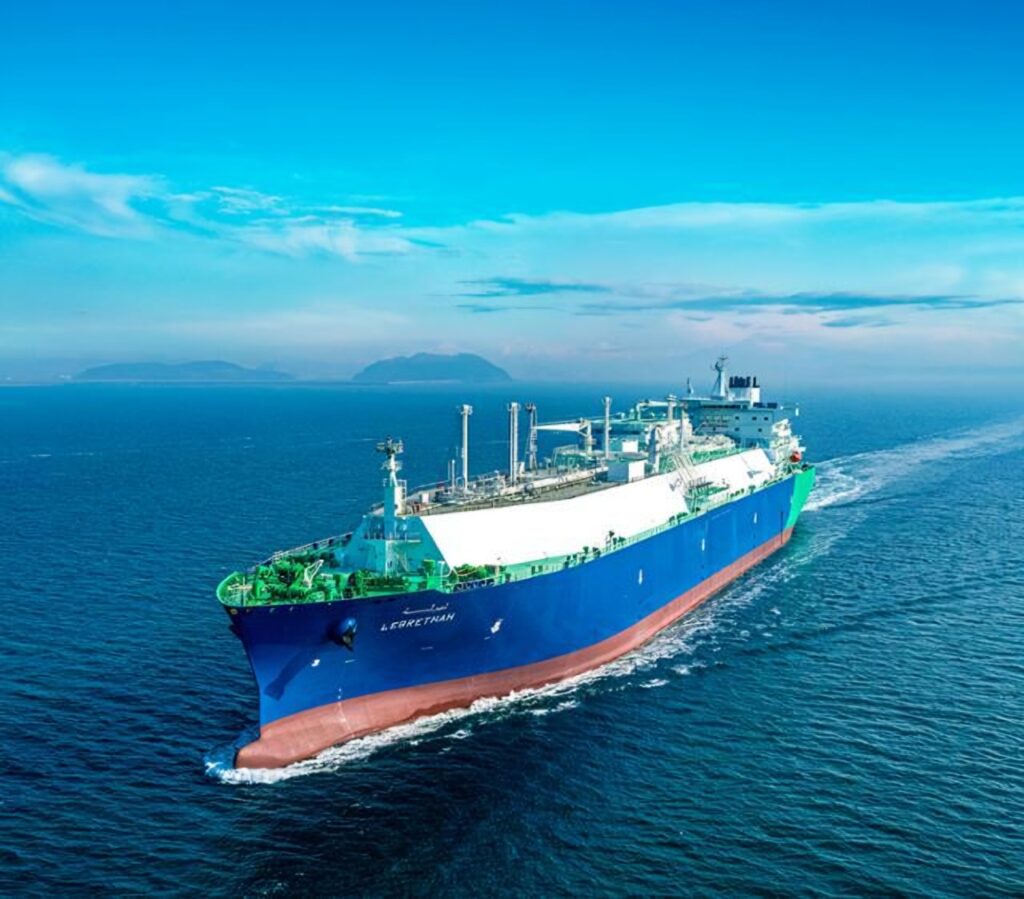
Hanwha presents itself in Europe as an integrated land-sea-air defence-industrial partner. The second Russia-related trail runs through Hanwha Ocean, formerly Daewoo Shipbuilding & Marine Engineering. Reuters and the Oxford Institute for Energy Studies both show that Arctic LNG 2 originally planned to use 21 Arc7 ice-class LNG carriers: 15 from Russia’s Zvezda yard and six from Hanwha Ocean. OIES states that the Hanwha order was placed in October 2020 and covered three vessels for Sovcomflot and three for Mitsui O.S.K. Lines, all intended for Arctic LNG 2. Reuters reported that three Sovcomflot vessels were cancelled because sanctions blocked payment and delivery. OIES said the other three MOL vessels were completed but could also no longer be chartered for Arctic LNG 2 because of sanctions.
By June 2026, The Korea Times reported that all six Arc7 vessels remained undelivered at Hanwha Ocean’s Geoje shipyard, creating a major financial burden. The paper cited industry sources who said the combined value of the six specialised ships was far above $1.56 billion and that at least $780 million remained unpaid because final delivery had not occurred. Reuters had already reported in late 2023 and early 2024 that the shortage of specialised tankers was crippling Arctic LNG 2, and OIES described the Hanwha Ocean vessels as central to the project’s original logistics plan.
A further Reuters report from July 2025 showed how close Hanwha-built tonnage remained to Russia’s LNG system even after the sanctions push. The EU lifted sanctions on three MOL-managed tankers after commitments that they would no longer carry Russian energy from Yamal and Arctic 2, “for which they had originally been commissioned.” Reuters said those three ships had been built at Hanwha Ocean in the previous year. That is not evidence of Hanwha violating sanctions, but it still shows that Hanwha-built vessels remained deeply entangled in Russian Arctic LNG logistics during the sanctions era.
It is clear that the wider Hanwha Group has had substantial commercial exposure to Russian strategic sectors that now sit at the centre of Western sanctions policy.
But how much of the €100 million investment promise was genuinely new? How much overlapped with the Chunmoo industrial-partnership obligations, what export licences, if any, covered Hanwha Precision Machinery’s Russia shipments after April 2023? What group-wide compliance assurances has Hanwha given Western government customers since then?
Read More:
- ERR: South Korean weapons giant to invest €100 million in Estonia
- ERR: Minister: South Korean company’s investments tied to needs of Estonian Defense Forces
- ERR: Hanwha Aerospace €100 million investment is an offer – not yet a done deal
- ERR: Estonia narrows Navy ship talks to four firms
- Invest in Estonia: Hanwha Aerospace to invest €100M in Estonia’s defence industry
- Hanwha: Hanwha Aerospace awarded €250 million contract to supply Chunmoo systems to Estonia
- Hanwha Aerospace mobile newsroom: Hanwha Aerospace Signs MOU with GoCraft to Establish Local Maintenance Framework
- Nortal: Nortal partners with Hanwha Aerospace to co-develop advanced BMS
- Marduk Technologies: Marduk Technologies signs MoU with Hanwha Aerospace during ADEX 2025 in Korea
- Frankenburg Technologies: Frankenburg Technologies and Hanwha Aerospace sign MOU
- Embassy of the Republic of Korea in Estonia: Hanwha Aerospace Joins the Estonian Defence and Aerospace Industry Association (EDIA) (17 Mar, 2026)
- Yonhap: Hanwha Aerospace joins Estonian defense industry association
- Reuters: Hanwha Aerospace’s Europe land arms sales to double by 2027, CEO says
- Reuters: South Korea’s Hanwha Aerospace to produce missiles in Poland
- Reuters: South Korea’s Hanwha Aerospace signs $922 mln deal with Norway to supply rocket launchers
- Reuters: South Korea’s Hanwha Aerospace to spin off industrial solutions businesses from defence
- Hanwha: Europe Technical Center Poised to Accelerate Hanwha Precision Machinery’s Global Expansion
- The Insider: New U.S. sanctions to halt South Korea’s machine tool supply to Russian arms manufacturers
- U.S. Treasury: Treasury Hardens Sanctions With 130 New Russian Evasion and Military-Industrial Targets
- Korea JoongAng Daily: Korea expands export restrictions against Russia, Belarus
- Kim & Chang: South Korea Tightens Export Control Measures Regarding Russia, Belarus, and North Korea While Reinstating Japan as Whitelisted Trading Partner
- Oxford Institute for Energy Studies: Arctic LNG 2: The litmus test for sanctions against Russian LNG
- Reuters: Lack of Arctic tankers puts Russia’s LNG development dreams on ice
- Reuters: Russia’s Arctic LNG 2 suspends gas liquefaction amid sanctions, lack of tankers, sources say
- Reuters: EU lifts sanctions against three LNG tankers formerly working for Russia
- The Korea Times: Hanwha Ocean faces mounting costs from blocked icebreaker delivery to Russia
- Hanwha: Hanwha Ocean
- Hanwha: Hanwha Semitech