
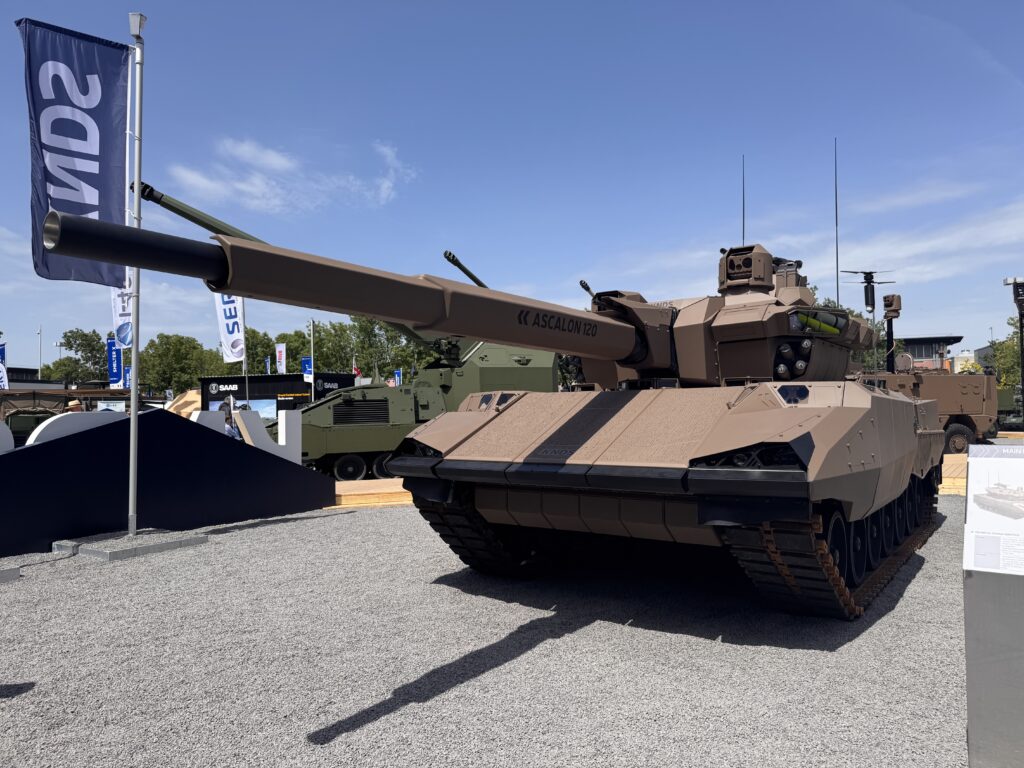
KNDS (Krauss-Maffei Wegmann & Nexter Defence Systems) has unveiled two intermediate-capability main battle tank (MBT) demonstrators at Eurosatory 2026. Designed for the realities of the modern battlefield, particularly those seen in Ukraine, the vehicles place a strong emphasis on survivability in an environment where drones are a constant threat. The two demonstrators are France’s CAPINT and Germany’s Leopard 2 A-RC 3.0, both built on a common Leopard 2 chassis.
Next-generation main battle tanks currently exist only on manufacturers’ drawing boards, and their final form remains uncertain. Meanwhile, the war in Ukraine has exposed the need to enhance the capabilities of existing MBTs. Drones, loitering munitions and top-attack missiles have emerged as some of the most significant threats to armoured forces.
Manufacturers are therefore developing intermediate-capability tanks to bridge the gap between current-generation MBTs and future platforms, many of which remain years behind schedule. The Franco-German Main Ground Combat System (MGCS) programme faces significant delays and is now unlikely to enter service before the 2040s. France may even decide to leave the programme altogether.
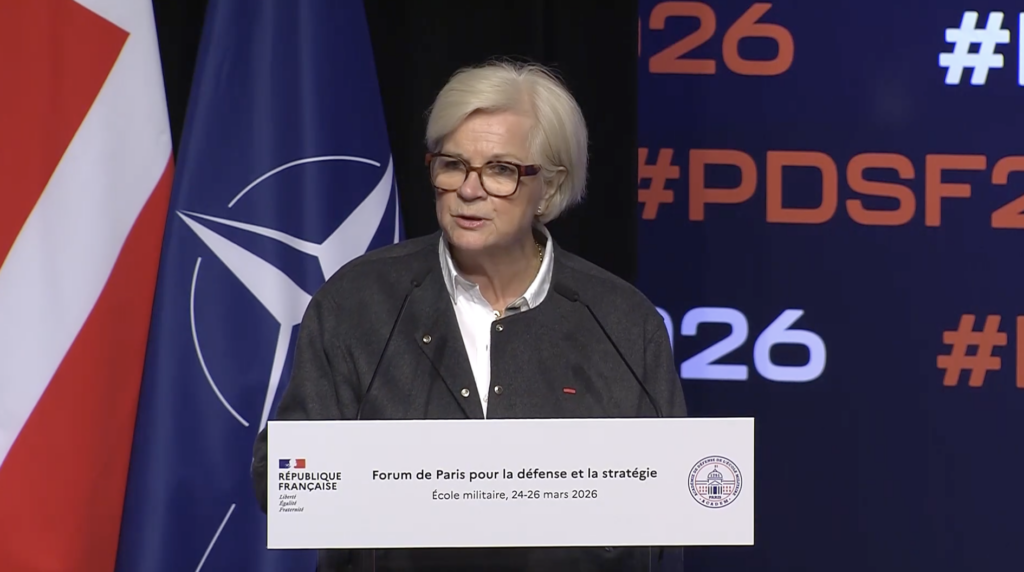
According to French Armed Forces Minister Catherine Vautrin, the MGCS programme is approximately a decade behind schedule, prompting France to pursue an interim tank capability based on a French turret and a KNDS platform.
Germany’s decision to move ahead with a Leopard 3 programme has further complicated the MGCS project, Vautrin told French lawmakers in April 2026. France now needs an interim solution to cover the period between the Leclerc leaving service in 2038 and the arrival of MGCS sometime in the early 2040s. “We cannot afford to wait. We are working on an interim tank equipped with a sovereign turret and connected to drones and robotic systems. This is at the heart of the partnerships we have established with Ukraine. It will be a redesigned tank with a high degree of connectivity. This work is included in and funded by the Military Programming Law”, Minister Vautrin said at the parliamentary hearing.
France’s CAPINT Tank
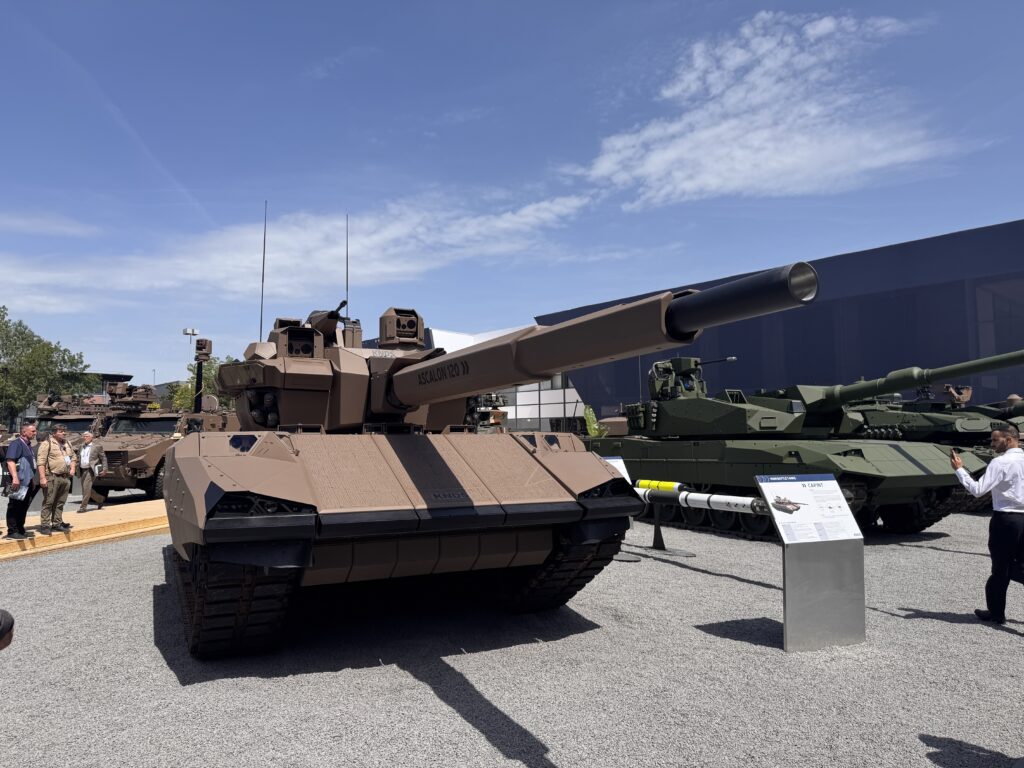
KNDS France unveiled its CAPINT demonstrator at Eurosatory 2026. The vehicle incorporates many of the capabilities that have proven relevant in the war in Ukraine. It is designed to operate alongside drones and unmanned ground vehicle (UGV) wingmen, providing what KNDS describes as a dual-capability approach.
CAPINT can employ drones for reconnaissance and fire direction, while UGVs can undertake tasks that would otherwise expose crewed vehicles to unnecessary risk.
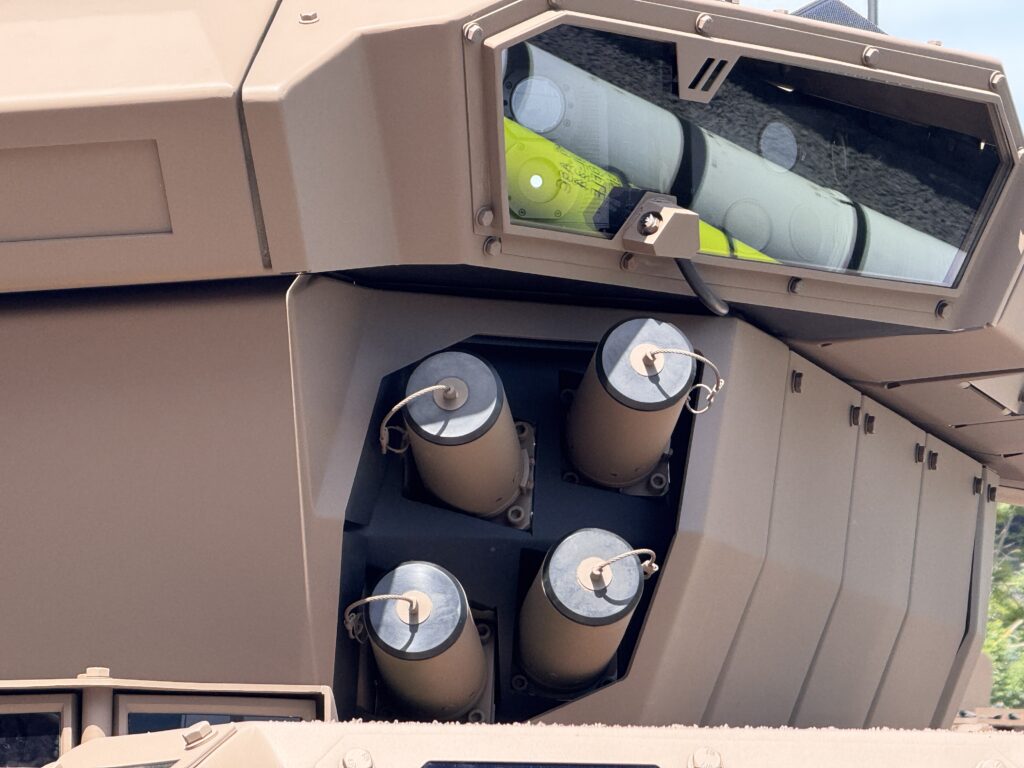
The vehicle was displayed with a 120mm ASCALON L55 cannon, which can be upgraded to a 140mm L48 weapon. KNDS argues that the larger gun would be capable of defeating any current or emerging armoured threat on the battlefield.
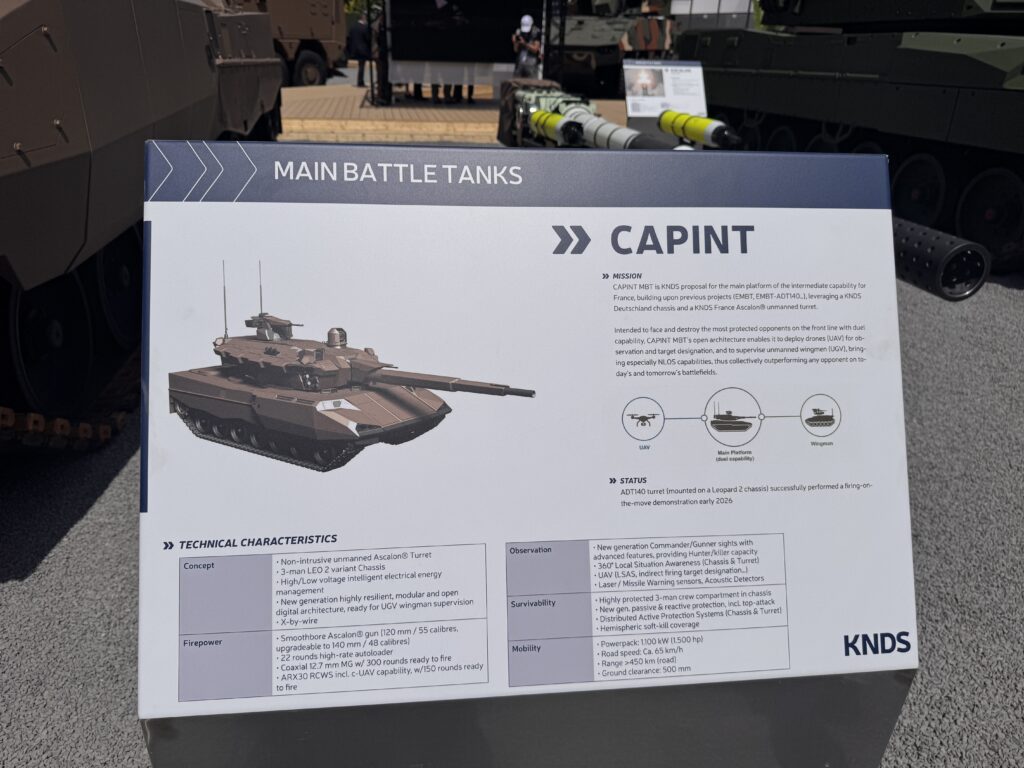
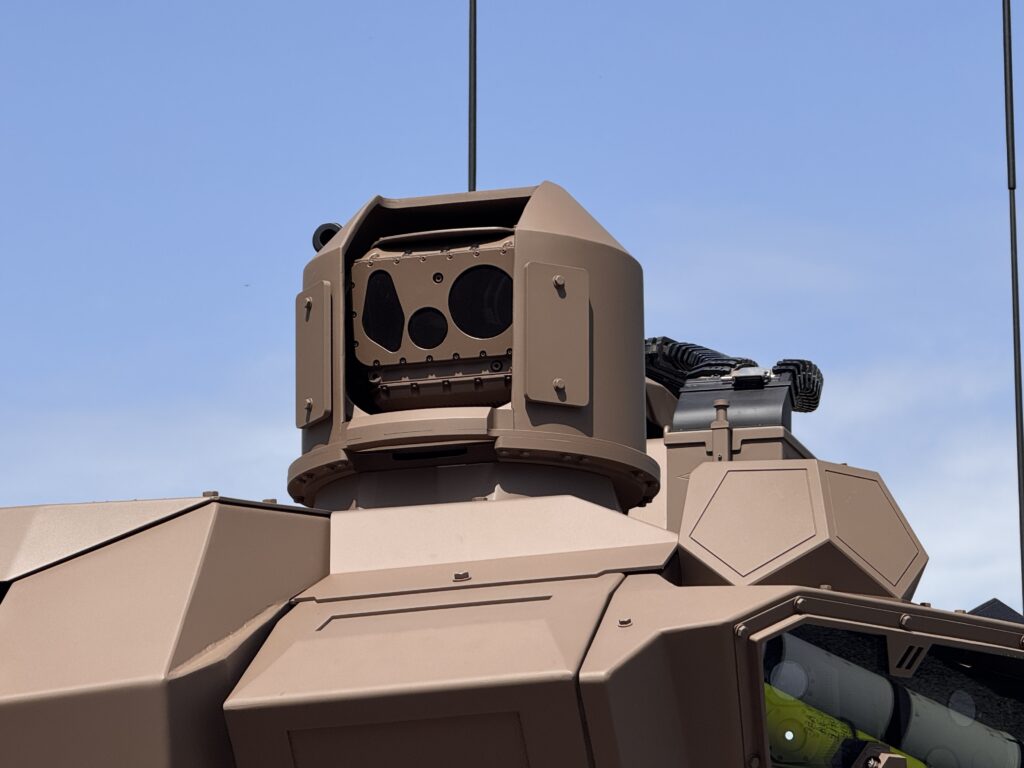
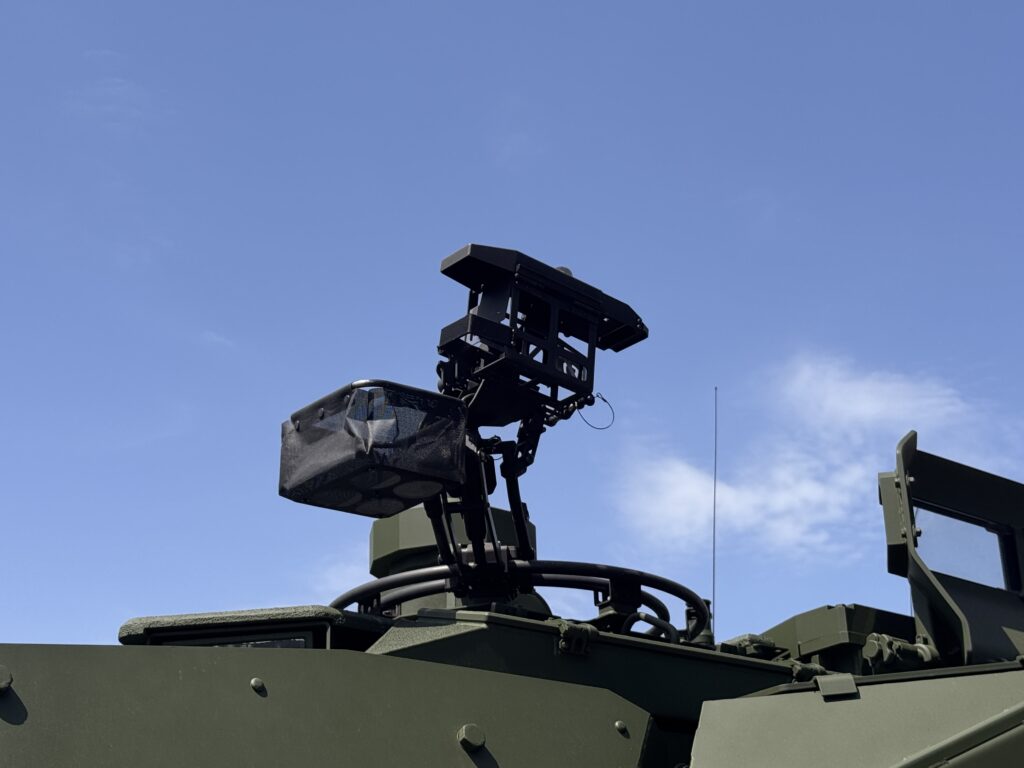
The 120mm ASCALON cannon is fed by an autoloader holding 22 rounds. Secondary armament consists of a 12.7mm coaxial heavy machine gun with 300 rounds. Mounted on the turret roof is a remotely operated ARX30 weapon station armed with a 30mm autocannon and 150 rounds. This weapon can be used against drones and other targets where expending main gun ammunition would be unnecessary.
CAPINT has a crew of three, all located within the hull rather than the turret. This arrangement improves survivability by separating the crew from the main ammunition storage. Modern battlefields place a heavy cognitive burden on tank crews, making automation and AI-assisted systems increasingly important for managing information and threats.
The vehicle features next-generation passive and reactive armour designed to counter both conventional threats and top-attack weapons. Protection is further enhanced by distributed active protection systems covering both the hull and turret, together with hemispherical soft-kill capabilities.
Germany’s Leopard 2 A-RC 3.0
KNDS Deutschland unveiled an updated version of its Leopard 2 A-RC 3.0, first introduced at Eurosatory 2024. The latest version incorporates several notable improvements.
The 2026 demonstrator features additional frontal armour protection for the hull, where the crew is located. Anti-drone measures have also been strengthened, including a 30mm autocannon and a total of eight anti-drone interceptors mounted on the sides of the turret.
The main armament remains a 120mm L55 cannon, which can be replaced with a 130mm weapon if required.
Vehicle weight varies according to configuration but is reported to remain below 62 tonnes, making it approximately ten tonnes lighter than the heaviest Leopard 2 variants currently in service. Achieving substantially lower weight would require an entirely new design, one of the reasons why next-generation MBT programmes continue to attract significant investment.
Upgrading Existing Fleets
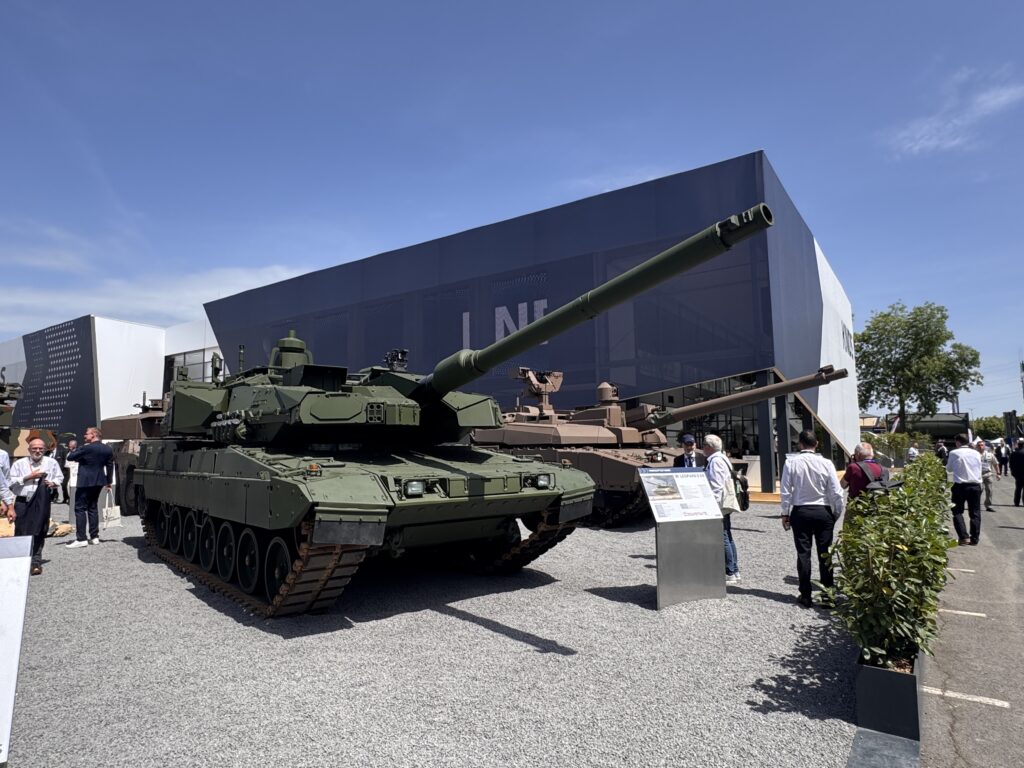
One of the most attractive aspects of these intermediate-capability tanks is their use of the Leopard 2 chassis. Existing Leopard 2 operators could potentially upgrade their fleets by replacing the turret and carrying out the necessary technical modifications, rather than purchasing entirely new vehicles.
For countries seeking rapid capability improvements, this approach could offer a practical and cost-effective solution.
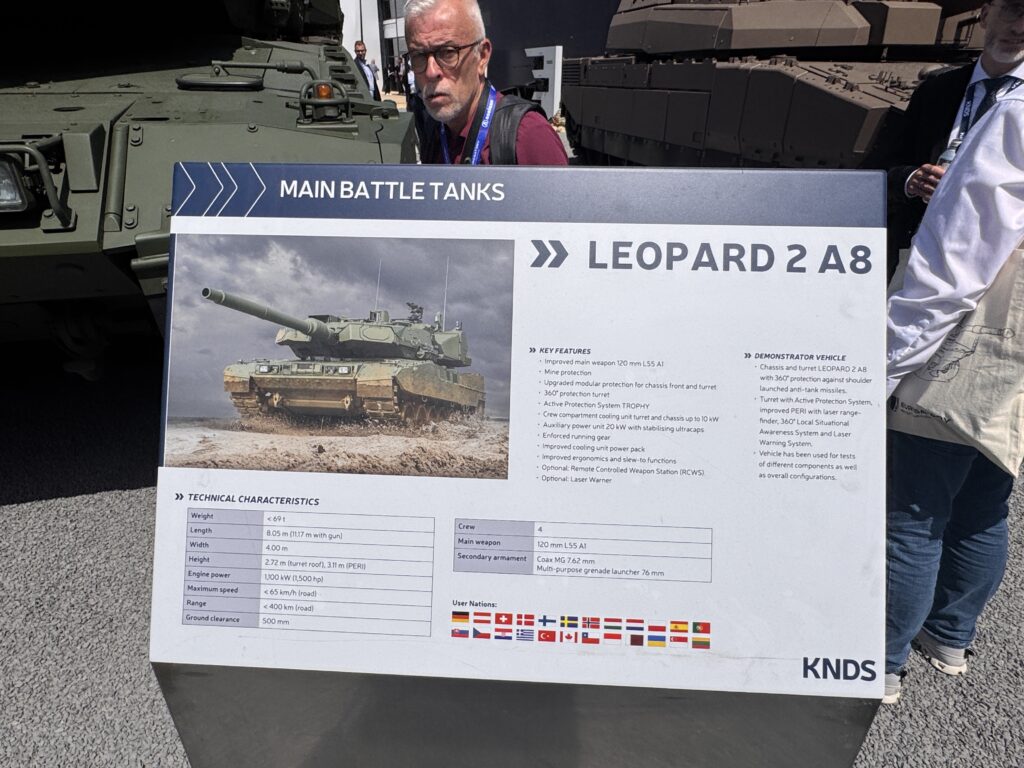
Current-generation Western MBTs with crewed turrets have accumulated significant weight through successive upgrades, additional armour packages and new electronic systems. Many have effectively reached the limits of their original design margins, leaving little room for further growth.
Read More:
- KNDS Group
- KNDS France
- KNDS Deutschland
- Defence News: France mulls fallback tank for delayed MGCS program in defense update
- Milmag: MGCS Delayed. France to Build Its Own Interim Tank
- Reuters: Franco-German KNDS launches new tank for France as joint project lags
- Académie de défense de l’École militaire: Closing of the PDSF 2026 – Catherine Vautrin, Minister of the Armed Forces and Veterans