
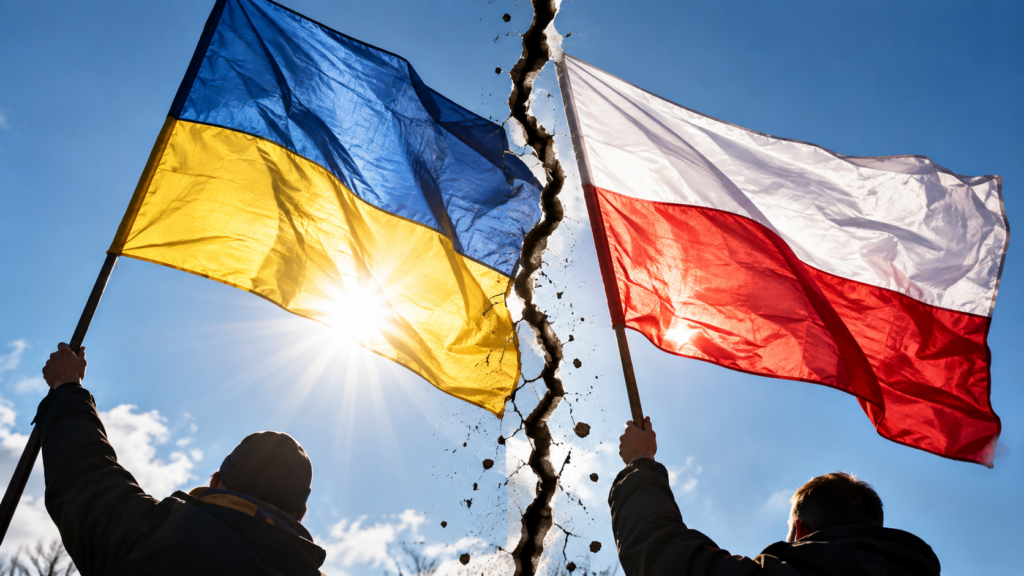
Violence against Ukrainians in Poland is rising just as European support for Kyiv becomes more contested. Across Germany, France, Britain and other European countries, opposition to military aid, sanctions and continued financial support is moving from the political margins towards mainstream debate. The forces driving it differ sharply from country to country, from genuine domestic grievances and war fatigue to nationalist politics and long-standing ideological hostility towards NATO. Running through them is another factor: sustained Russian hybrid activity designed to amplify divisions, weaken support for Ukraine and turn domestic disputes into strategic pressure on Europe. Poland, Ukraine’s principal land gateway to the West, is where the consequences are becoming most visible.
In the first months after Russia invaded Ukraine in February 2022, Poland became the great European exception. Millions of Ukrainians crossed its border. Polish families opened their homes. Railway stations became improvised relief centres. Municipalities, charities, businesses and ordinary citizens organised assistance on a scale that surprised even Poles themselves. The political consensus was similarly strong. Ukraine’s survival was regarded as a Polish security interest, and Poland became the principal land corridor through which Western military assistance reached the Ukrainian armed forces.
The Ukrainian presence is visible everywhere. Even on Polish trains, information videos are shown in Ukrainian.
Four years later, something considerably darker has entered Polish public life. During the first six months of 2026, Ukrainian citizens made 180 reports to the Polish police concerning suspected hate crimes, according to figures obtained by Rzeczpospolita. The equivalent full-year totals were 267 in 2024 and 275 in 2025. Even allowing for changes in reporting behaviour, the first-half figure represented an increase of more than 30 per cent from the comparable period a year earlier.
Separate police figures analysed by the Polish fact-checking organisation Demagog strengthen the conclusion. Using offence categories that allow comparison with earlier years, police recorded 179 confirmed hate crimes in which Ukrainian citizens were victims during the first half of 2026. Among them were 125 offences under the provision covering public insult or violation of bodily integrity on national or ethnic grounds, and 54 cases involving violence or unlawful threats because of nationality or ethnicity.
The numbers are still small relative to a Ukrainian population in Poland of well over a million.
But cases are disturbing. In on occasion, two 11-year-old Ukrainian girls travelling on a bus in Bielsko-Biała were subjected to a stream of nationalist abuse by a 54-year-old man, who was subsequently charged with publicly insulting them because of their nationality. In Warsaw in May, three Ukrainian teenagers were attacked on the Świętokrzyski Bridge. A 16-year-old suffered a fractured skull. In Wrocław there have been violent attacks in which prosecutors investigated nationality as a motive. Polish media have reported other assaults after victims were heard speaking Ukrainian.
There is also a growing prosecutorial response. Poland created 50 specialised prosecution offices to deal with hate speech and prejudice-motivated crime. Between February and June 2026, 283 prejudice-motivated cases were sent to court, including 220 indictments.
The phenomenon has consequently moved beyond anecdote. Poland is experiencing a measurable anti-Ukrainian backlash. The more difficult question is why.
From Extraordinary Solidarity to Accumulated Resentment
The starting point is the extraordinary character of Poland’s original response. Support for receiving Ukrainian refugees reached 94 per cent immediately after Russia’s full-scale invasion, according to CBOS polling. Such unanimity was always likely to weaken as emergency solidarity became permanent coexistence.
By July 2026, CBOS recorded a historic reversal. For the first time in its surveys, more Poles opposed accepting further Ukrainian refugees than supported doing so, 52 per cent against 42 per cent. Fifty-four per cent considered the assistance Poland provided to Ukrainian refugees excessive.
The same surveys reveal a more complicated picture than simple xenophobia. Eighty-seven per cent supported linking full access to healthcare benefits to insurance contributions, while 58 per cent opposed removing free collective accommodation from Ukrainian mothers with children over one year old. Polish opinion therefore appears increasingly conditional rather than uniformly hostile. Many voters want Ukrainians treated increasingly like other long-term residents rather than as recipients of an exceptional wartime regime.
That distinction matters because Russian propaganda works most effectively when it attaches itself to a real argument.
Poland has absorbed a very large population in a short period. Schools, housing markets, health services and local government have had to adjust. Ukrainians compete in labour markets and run businesses. Individual crimes committed by Ukrainians receive considerable media and social-media attention. There are legitimate disputes about welfare eligibility, migration rules and the costs of support.
Economic evidence, however, undermines one of the most persistent versions of the anti-Ukrainian narrative, the idea that Ukrainian refugees are principally a financial burden living from Polish benefits. A Deloitte analysis commissioned by UNHCR estimated that Ukrainian refugees generated the equivalent of 2.7 per cent of Polish GDP in 2024, with a high employment rate and no detected adverse effect on overall Polish unemployment or real wages.
The political usefulness of the welfare argument therefore extends beyond its economic accuracy. It gives resentment a simple vocabulary: Poles pay, Ukrainians receive. That message travels well online.
From Welfare to National Identity
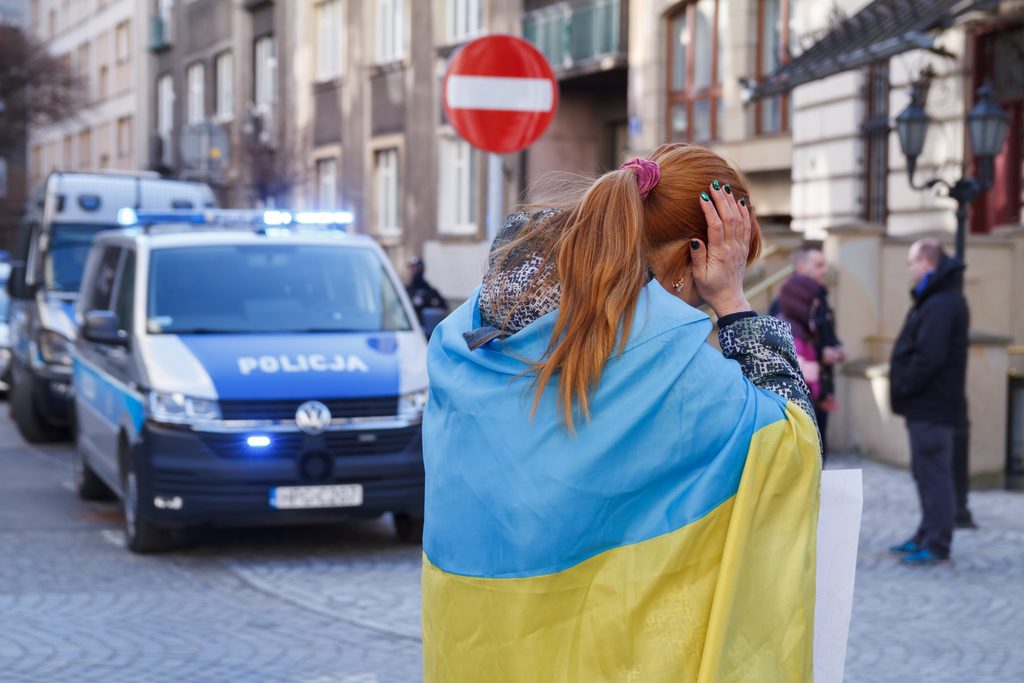
The deeper source of anti-Ukrainian politics lies elsewhere. Poland and Ukraine carry an extraordinarily difficult twentieth-century history, above all the massacres of Polish civilians in Volhynia and Eastern Galicia in 1943 and 1944 by the Ukrainian Insurgent Army, UPA, and other Ukrainian nationalist formations. Tens of thousands of Polish civilians were killed. Those events have not been forgotten in Poland.
Contemporary Ukraine’s treatment of the Organisation of Ukrainian Nationalists, the UPA and figures such as Stepan Bandera has repeatedly caused political conflict with Warsaw.
That conflict intensified dramatically in 2026 after the naming of a Ukrainian military formation after the Heroes of the UPA. President Karol Nawrocki subsequently stripped Volodymyr Zelenskyy of Poland’s Order of the White Eagle. The row created ideal conditions for politicians who had already moved Ukraine from foreign policy into Poland’s domestic culture wars.
The result is visible in opinion research. In July, 46 per cent of Poles described Polish-Ukrainian relations negatively and only 12 per cent positively, the worst result recorded by CBOS. Sixty-five per cent placed greater responsibility for the poor relationship on Ukraine. A majority, 53 per cent, still believed reconciliation was possible, although that too was the lowest level in the history of the survey.
This offers Poland’s nationalist right a potent political combination: contemporary migration, welfare, sovereignty and unresolved historical trauma.
During the 2025 presidential campaign, anti-Ukrainian messaging became increasingly normalised. Politicians competed over restrictions on benefits and Ukrainian privileges. Grzegorz Braun transformed hostility towards Ukrainian symbols into political theatre. In 2026, leading political figures began linking the Volhynia dispute directly to military and diplomatic relations.
This does not establish a causal line from a politician’s speech to an assault on a Ukrainian teenager. It changes the social environment in which such violence occurs.
Jacek Kucharczyk, president of Poland’s Institute of Public Affairs, told Rzeczpospolita that a toxic atmosphere generated in politics and online had begun moving into the physical world, producing what he described as an “effect of permission”.
The distinction between political hostility and personal violence becomes important precisely when the taboo against aggression starts weakening.
The Russian Paradox: Poland Does not Have to Become Pro-Russian
Even as Polish attitudes towards Ukrainians sour, attitudes towards Russians remain overwhelmingly negative.
CBOS found in February 2026 that 74 per cent of Poles expressed antipathy towards Russians, the highest figure recorded for any nationality in the survey. Attitudes towards Ukrainians have deteriorated for three successive years, while Russia remains deeply unpopular.
That apparent contradiction is central to understanding Russian influence operations in Poland. Moscow does not need Poles to become Russophiles. It needs enough Poles to become hostile towards Ukrainians.
A Polish voter can regard Vladimir Putin as an enemy, support NATO membership, favour a strong Polish army and simultaneously conclude that Ukraine is exploiting Poland, dishonouring Polish victims, taking Polish welfare money and refusing to reciprocate Polish military assistance.
From Moscow’s perspective, that combination works perfectly well. It weakens Polish support for Ukraine while leaving Russia’s disastrous reputation in Poland untouched. Russian information operations therefore have a strong incentive to present themselves in Polish nationalist language rather than overtly Russian language. Their most effective messages start with grievances that already exist.
Hard Evidence of Russian Amplification
The evidence here is significantly stronger than speculation about individual street attackers. The Institute for Strategic Dialogue documented a coordinated Russia-aligned campaign during Poland’s 2025 presidential election. Operation Overload, also known as Matryoshka, distributed fabricated material claiming that Ukrainian refugees were preparing terrorist attacks during the Polish election. Seven identified X posts accumulated more than 654,000 views. Similar material falsely claimed that Ukrainians planned assassinations of politicians elsewhere in Europe.
The operation impersonated established European media organisations and used AI-generated audio. Russia-linked Pravda or Portal Kombat websites spread claims that Ukrainians were responsible for rising Polish crime. Coordinated accounts amplified material portraying Ukrainian refugees as welfare cheats and called for deportations.
Polish researchers have recorded the scale of the wider ecosystem. Demagog and the Institute of Media Monitoring identified about 94,000 anti-Ukrainian online posts between April and July 2025, with a potential reach exceeding 32 million contacts. The volume increased substantially later in the year. Rzeczpospolita cites the same research in tracing the connection between electoral politics and the acceleration of anti-Ukrainian content.
By summer 2026, Poland’s own state institutions were warning publicly about the mechanism.
The Polish Institute of International Affairs, PISM, concluded in August that Russia was the principal beneficiary of the worsening Polish-Ukrainian relationship. Its researchers found that Polish-language references containing extreme anti-Ukrainian hate terminology increased by 171 per cent between 26 May and 13 July, to 364,000 mentions. Engagement with such content rose by 345 per cent. Russian platforms and the Pravda or Portal Kombat network were prominent in the ecosystem. PISM does not claim that Russia created the current dispute but exploited it.
The Real Polish Trauma of Volhynia is Valuable to Moscow
Russian influence operations become easiest to dismiss when every uncomfortable Polish grievance is labelled “Russian propaganda”. But Volhynia did happen and its victims were real. Polish demands for exhumations and historical acknowledgement have a legitimate basis. Ukrainians themselves have difficult debates over OUN and UPA memory.
The Kremlin’s opportunity comes from taking that real wound and manipulating its political meaning.
In July, Poland’s Ministry of Foreign Affairs-backed Council of Resilience issued an unusually explicit warning after Russia’s FSB released supposedly newly uncovered materials concerning Volhynia.
Polish historians questioned the presentation of those documents. The Council concluded that the Russian operation was attempting to transfer historical emotion into present Polish-Ukrainian relations and ultimately destroy cooperation between the two countries.
PISM describes a much longer record: Since at least 2014, according to the institute, Russian actors have exploited unresolved historical questions between Poland and Ukraine. It points to anti-Ukrainian demonstrations, vandalism of memorials, provocations in western Ukraine and attacks on Polish diplomatic premises in the years before the full-scale invasion. Since 2022, the emphasis has increasingly moved towards refugees, welfare, Ukrainian businesses and military support.
The tactic is strategically sophisticated because Moscow does not need to falsify the existence of the original grievance. It needs to maximise its emotional intensity, remove context, attach new grievances to it and persuade audiences that a historical crime committed eight decades ago should determine Poland’s strategic relationship with a country currently fighting Russia.
Russian Interference has Moved Physical provocation
The strongest evidence that this is more than an online problem comes from Poland’s own Internal Security Agency, ABW.
In July 2026, Polish prosecutors indicted an 18-year-old Ukrainian citizen, Illia K., alleging that he had carried out sabotage and subversion tasks on the orders of Russian special services. According to the ABW, the purpose was explicitly to inflame national tensions between Poland and Ukraine.
Investigators linked him to 47 criminal acts committed between November 2024 and August 2025, including desecration of memorial sites associated with Polish victims of the UPA. He was also accused of preparing sabotage involving an unmanned aircraft. Recruitment took place through internet messaging services and payments were made in cryptocurrency, according to the agency.
The alleged Russian operation used a Ukrainian national to conduct anti-Ukrainian provocations involving Polish historical memory. That is almost a textbook example of hybrid influence. The identity of the operative becomes part of the camouflage. An act can appear to confirm an existing ethnic narrative while the strategic beneficiary sits elsewhere.
Poland has separately uncovered networks accused of arson, transport sabotage, reconnaissance and other operations carried out for Russian intelligence. Russian services have repeatedly recruited low-level operatives through Telegram and similar platforms, often using money rather than ideology as the incentive.
This changes the evidential threshold surrounding the present crisis. There is still no basis for describing every man who punches a Ukrainian in Wrocław or abuses a Ukrainian child on a bus as a Russian agent. Most such violence is far more likely to arise from domestic prejudice, criminal aggression or political radicalisation.
There is, however, solid evidence that Russian state actors actively seek to produce, imitate, amplify and exploit Polish-Ukrainian hostility, and that they have commissioned physical provocations designed specifically to deepen it.
Moscow’s Most Useful Operation May Require No Russian Operative at All
PISM has warned that Russian activity is increasingly concerned with moving “beyond platforms”, encouraging activity in the physical world. The institute assesses that Russia publicises, and may attempt to organise, violent acts against Ukrainians and can use “one-time agents” for vandalism, attacks on activists, destruction of Ukrainian property and other provocations. It also warns of astroturfing, where organised agitation is presented as spontaneous popular mobilisation.
A hybrid operation reaches its most effective stage when an adversary no longer needs to manufacture every act itself. Once a hostile narrative has entered domestic political competition, authentic users reproduce it, algorithms reward it, politicians discover votes in it and violent individuals act on it for their own reasons.
The foreign operation then needs only to amplify. That is much cheaper, harder to attribute and politically more destructive than conventional propaganda.
Poland’s Defence Industry is Entering the Danger Zone
This domestic shift also has implications that go well beyond migration policy.
Poland has been trying to turn its geographical position, enormous defence budget and proximity to the Ukrainian battlefield into an industrial advantage.
Since 2022, Ukrainian defence companies have relocated parts of their activity into EU and NATO territory, including Poland and other Central European states. Polish companies have entered partnerships with Ukrainian producers, while Warsaw and Kyiv have discussed joint ammunition production, unmanned systems, repair, maintenance and technology transfers.
OSW, Poland’s Centre for Eastern Studies, reported in April that cooperation intensified after the full-scale invasion as Ukrainian defence companies moved activity into safer EU and NATO jurisdictions. At least several dozen Polish and Ukrainian companies have been involved in cooperation since 2022. The intended model increasingly involves Ukrainian technological and battlefield expertise combined with European capital, production capacity and physical security.
For Poland, this has been commercially beneficial. Its armed forces are expanding rapidly. Defence expenditure is around 4.7 per cent of GDP in 2026. Domestic and Central European defence procurement has increased sharply. Companies including Rheinmetall, CSG and other European manufacturers are expanding production or cooperation in Poland. Polish procurement from domestic companies and joint ventures had risen almost fourfold since 2022 to PLN 30.4 billion (EUR 6.9 billion) in 2025.
Ukraine adds another layer to that opportunity. Its defence sector has accumulated battlefield knowledge in drones, electronic warfare, target acquisition, software and rapid product iteration that European companies urgently want. Poland has geography, NATO protection, industrial infrastructure, engineers and access to the European market. In theory, this makes it an obvious location for joint Ukrainian-European production. In practice, politics is beginning to interfere.
The First Warning: Industrial Cooperation Entangled with the Political Dispute
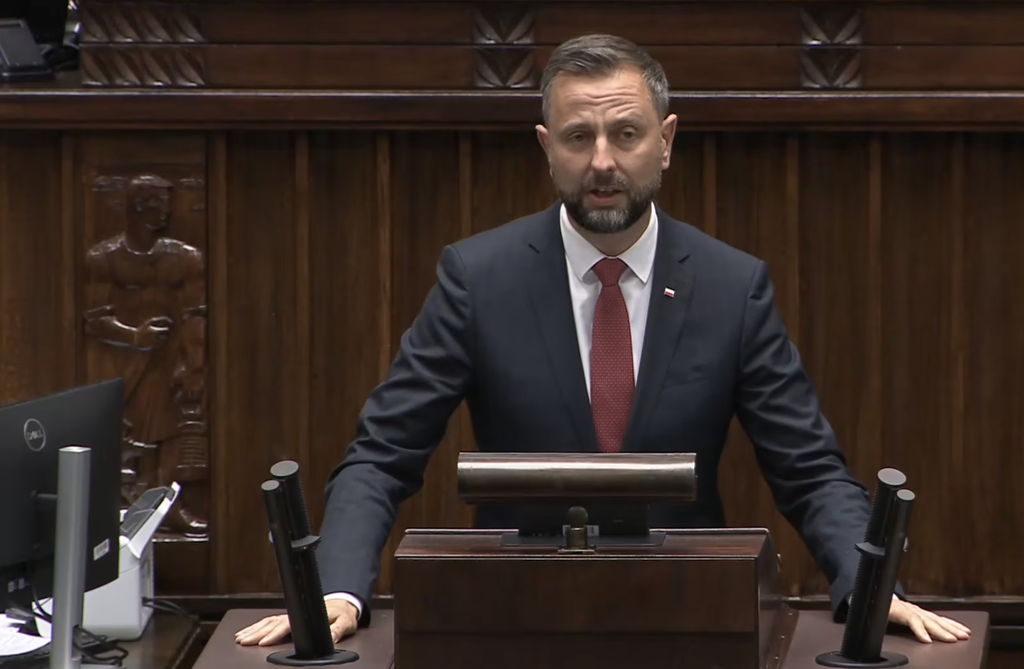
OSW observed in April that Polish-Ukrainian intergovernmental agreements concluded around the turn of 2025 and 2026 to expand defence-industrial cooperation under the Build with Ukraine programme had still not been implemented.
Then came a much more public dispute. In July 2026, Polish Defence Minister Władysław Kosiniak-Kamysz accused Ukraine of failing to deliver drone technology that he said had previously been promised in connection with discussions over Poland transferring its remaining MiG-29 aircraft.
He explicitly linked the failure to worsening historical tensions, arguing that Kyiv was allowing the history dispute to interfere with cooperation. Ukraine’s position on the alleged agreement was not independently established in the report, so his accusation should be treated as the Polish minister’s account rather than a proven breach by Kyiv.
A dispute that had once concerned historical memory had moved directly into defence technology transfer. For investors, these kind of boundaries matter.
A joint drone factory, ammunition line or electronic-warfare venture can survive political disagreement. It becomes harder to finance when technology transfer, licensing, government approvals and procurement commitments begin moving with the political relationship.
The Second Warning: Physical Security
On 31 August, a fire struck a WB Electronics facility at Skarżysko-Kamienna. Polish prosecutors say the fire was deliberately started by placing a device containing flammable material at the facility. Warehousing was destroyed and damage was estimated at least PLN 15 million (EUR 3.4 million).
The National Prosecutor’s Office opened its investigation under provisions covering participation in foreign-intelligence activity against Poland and a terrorist offence. The ABW is investigating jointly with prosecutors and police. As of the available public information, nobody has been charged and the foreign state potentially responsible has not been officially identified.
Even though there is little direct evidence of that Russia ordered the WB Electronics fire, the incident is strategically serious. WB Electronics is one of Poland’s most important private defence groups. Its unmanned systems have been supplied to and used by Ukraine. The facility therefore sits almost exactly at the intersection that hostile Russian operations would have an interest in targeting: Polish defence production, Ukrainian military capability and expanding European industrial support for Kyiv. Poland has already attributed other major sabotage activity to Russian intelligence, including previous arson and infrastructure plots. The Skarżysko-Kamienna investigation therefore cannot be treated by defence investors as an ordinary industrial fire while a foreign-intelligence inquiry remains open. Now, this is political risk becoming physical risk.
Anti-Ukrainian Violence is Already Deterring Defence Investments
According to several NDR sources, many Ukraine-linked defence companies are reluctant to establish operations in Poland because of increasingly hostile attitudes towards Ukrainians. For a Ukrainian company considering relocating intellectual property, engineers or production into Poland, the calculation now includes indeed several additional questions.
Can Ukrainian technical staff and their families live safely and comfortably in the location chosen for the plant? Can a company recruit Ukrainians without making its workforce a political target? Could a municipal dispute over a Ukrainian-linked facility become attached to nationalist politics? Will a future Polish government alter procurement priorities or cooperation rules as anti-Ukrainian politics becomes electorally profitable? Will security requirements for a Ukrainian-linked plant raise capital expenditure and insurance costs? Could Russian intelligence use employees, subcontractors or low-level recruited operatives to sabotage the venture?
For a Western company choosing between Poland, Germany, Denmark, the Czech Republic or another NATO jurisdiction for cooperation with Ukrainian technology, these questions matter, too. Investment decisions depend heavily on predictability.
Poland still possesses formidable advantages. It has one of Europe’s largest defence markets, NATO protection, proximity to Ukraine, strong industrial capabilities and an explicit policy of attracting manufacturing and technology transfer. The broader Polish defence-investment boom continues. Rheinmetall and other European companies are expanding activity there. The specific vulnerability is Ukraine-facing investment. Political hostility towards Ukrainians can increase personnel risk. Bilateral disputes can impede technology transfer. Russian sabotage raises site-security costs. A nationalist political backlash can create uncertainty over government policy towards joint Ukrainian production. Each risk reinforces the others.
Poland is Valuable to Moscow Because it is Valuable to Ukraine
Russia has a strategic reason to concentrate effort on Poland. Poland is one of the principal logistical arteries connecting Ukraine to NATO economies. It is a transit state for military assistance. It trains Ukrainian personnel. Its companies repair and manufacture military equipment. Its territory can host production that would be exposed to Russian missile and drone attack if located inside Ukraine.
A Ukrainian defence company moving production from Kyiv or Dnipro to NATO country Poland deprives Russia of one of its advantages: the ability to attack the factory conventionally.
That makes Polish territory part of the defence-industrial battlefield. The tools available to Moscow change accordingly. Inside Ukraine, Russia can use missiles and drones. Inside Poland, it needs intelligence operations, sabotage, cyberattacks, political pressure, disinformation and social disruption.
Seen from that perspective, anti-Ukrainian agitation is connected to defence industry through strategy rather than through a simplistic conspiracy in which Moscow controls every extremist.
If Polish voters become less willing to support Ukraine, military assistance becomes politically costlier. If Ukrainians become socially unwelcome, relocating skilled defence workers becomes harder.
If Warsaw and Kyiv become trapped in historical disputes, joint ventures and technology transfers slow down. If factories working for Ukraine require extensive counter-intelligence and physical protection, projects become more expensive.
If violence or sabotage gives multinational companies doubts about concentrating Ukraine-related production in Poland, competing European locations gain an advantage. Russia gains something from every stage.
Poland’s Difficult Strategic Challenge
Warsaw cannot answer the problem by suppressing the Volhynia debate. Polish historical grievances deserve serious treatment. Ukrainian glorification of individuals or organisations responsible for atrocities against Poles inevitably produces political consequences. A democratic Poland will continue debating welfare policy, migration, Ukrainian behaviour and the terms of military assistance.
The security task is to prevent those arguments from being transformed into collective hostility towards Ukrainians living in Poland. That requires recognising a distinction Russia works constantly to erase. The Polish prosecutors are pursuing more hate-crime cases and the ABW is exposing Russian recruitment operations. The Polish foreign ministry is openly warning that Russia weaponises Volhynia and Polish researchers are mapping the online networks through which anti-Ukrainian narratives move. But the political system faces the more difficult test.
Moscow Only Needs Poland and Ukraine to Hate Each Other
Four years after the invasion, Russia has failed spectacularly to make itself attractive to Polish society. Three quarters of Poles still express antipathy towards Russians. The Kremlin can achieve important objectives without changing that figure.
A Poland that fears Russia while distrusting Ukraine is strategically more useful to Moscow than a Poland that fears Russia and regards Ukraine as an indispensable partner.
A Poland in which the Volhynia massacres are remembered responsibly presents little advantage to the Kremlin. A Poland in which that memory becomes a reason to assault Ukrainians, block military cooperation or abandon joint defence projects presents an opportunity.
And a Poland in which domestic actors perform much of that work themselves is the most valuable outcome of all. The recent attacks on Ukrainians should therefore be understood as more than a minority-protection issue. They are becoming a Polish national-security issue. If anti-Ukrainian politics continues moving from social media into the street, and from the street into industrial and defence policy, the strategic beneficiary is already clear. It is the country that Poland itself still regards as its greatest threat.
Europe’s Ukraine Consensus is Becoming More Conditional
The Polish case belongs to a wider European shift, although the nature of that shift differs sharply from one country to another. There is still little evidence of a general European conversion to sympathy for Vladimir Putin. The European Commission’s spring 2026 Eurobarometer found that 76 per cent of Europeans regarded Russia’s invasion as a threat to EU security, while 81 per cent supported a common European defence and security policy. ECFR polling across 15 European countries in May found that majorities in most countries still regarded Ukraine as either an ally or a necessary strategic partner.
What is changing is the willingness to translate that sympathy into open-ended military, financial and social commitments. The four-year emergency has become normal politics. Refugee assistance competes with housing and welfare. Arms deliveries compete with domestic expenditure. Ukrainian EU membership raises questions about agriculture, budgets and minority rights. Fear of Russian escalation coexists with fear that abandoning Ukraine would make Europe less secure.
This creates a political environment remarkably well suited to Russian influence operations.
Moscow does not need a European majority to endorse Russia’s war. A weaker objective is sufficient: persuade different national audiences that Ukraine is expensive, ungrateful, corrupt, historically objectionable or strategically doomed. The resulting political coalition can contain nationalists, pacifists, anti-establishment voters, fiscal conservatives and parts of the radical left without requiring them to agree on Russia itself.
Eastern Germany: Opposition to Ukraine Aid is a Regional Political Identity
In eastern Germany, attitudes towards supporting Ukraine are deeply divided. An ARD DeutschlandTrend survey conducted between 31 August and 2 September 2026 found that 54 per cent of respondents in eastern Germany considered German weapons deliveries to Ukraine excessive, compared with 39 per cent in western Germany. Only 42 per cent of eastern Germans regarded Russia as a strong or very strong threat to German security, compared with 59 per cent in the west. Nationally, support for weapons deliveries still narrowly outweighed opposition: 38 per cent considered existing deliveries appropriate and 14 per cent wanted more, while 42 per cent considered them excessive.
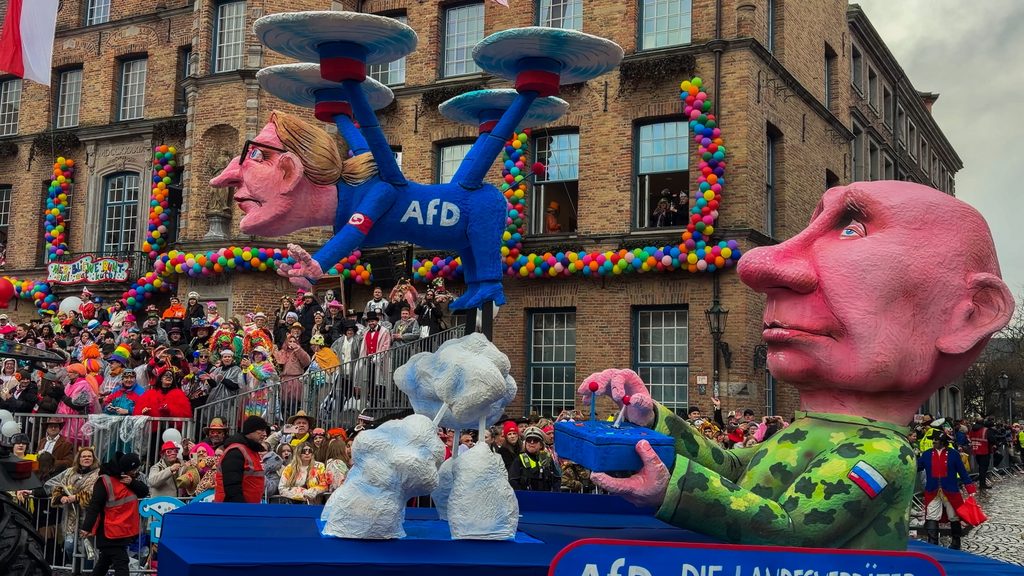
This east-west difference now has direct electoral consequences. The far-right Alternative für Deutschland party (AfD) has made opposition to sanctions, scepticism towards weapons deliveries and renewed economic relations with Russia important parts of its appeal in the eastern Länder. The September 2026 elections demonstrated how politically powerful that combination has become. AfD won Sachsen-Anhalt and Mecklenburg-Western Pomerania, while the BSW has also campaigned heavily against sanctions and escalation with Russia. A BSW leader in Sachsen-Anhalt explicitly identified Russia policy as one of the areas in which his party shared positions with the AfD.
The AfD’s connections with Russia are extensive and openly cultivated. Co-leader Tino Chrupalla met Russian Foreign Minister Sergei Lavrov in Moscow in 2020, AfD politicians have repeatedly visited Russia and attended events at the Russian embassy, and party politicians travelled to Russia as unofficial observers during Putin’s tightly controlled 2024 presidential election. In 2025, an internal dispute erupted over another AfD delegation planning to travel to Sochi and meet senior Russian figures.
AfD politician Petr Bystron remains under investigation over suspected payments connected with the pro-Russian Voice of Europe influence network. The European Parliament waived his immunity after German prosecutors alleged that he may have received cash or cryptocurrency in return for speaking and voting in ways beneficial to the Russian government. Bystron denies the allegations, and the case remains unresolved. He and former AfD lead European candidate Maximilian Krah had also maintained contacts with Viktor Medvedchuk, Putin’s long-time Ukrainian ally.
The relationship remains current. In September 2026, reports emerged that AfD leaders Alice Weidel and Chrupalla were preparing a meeting withKirill Dmitriev, one of Putin’s senior economic representatives, to discuss restoring Russian gas supplies to Germany. The Kremlin publicly welcomed the AfD’s desire for dialogue. The AfD simultaneously opposes sanctions and much of Germany’s military assistance to Ukraine.
On the German left, the picture again requires a distinction between direct Russian connections and political convergence. The clearest current case is the Bündnis Sahra Wagenknecht, BSW. Wagenknecht and leading party figures oppose arms deliveries and sanctions and favour the restoration of Russian energy imports. ARD’s Faktenfinder has documented several instances in which BSW politicians circulated claims about Ukraine that closely followed Kremlin narratives, including claims subsequently shown to be false. A BSW MP’s employee was separately revealed by Correctiv to have appeared at an event involving Russian ultranationalist ideologue Alexander Dugin.
The contacts are also overt. In 2025, the BSW parliamentary group in Brandenburg invited Russian ambassador Sergei Nechayev into the state parliament. In September 2026, after the Sachsen-Anhalt election, BSW politicians identified Russia policy, opposition to sanctions and energy relations as areas of agreement with the AfD, and the two parties entered talks in which “peace policy” was explicitly on the agenda.
Germany therefore demonstrates something particularly important for the wider European argument. Russia does not need a single ideological proxy. The AfD approaches the issue through nationalism, sovereignty, energy and hostility towards the existing European order. The BSW approaches it through anti-Americanism, economic opposition to sanctions and hostility towards military escalation. Their politics differ considerably elsewhere. On Russia, sanctions and weapons for Ukraine, they can arrive at remarkably similar positions.
That helps explain why eastern Germany is so different from Poland. Polish anti-Ukrainian sentiment can coexist with profound hostility towards Russia. In Germany, particularly in the east, resistance to supporting Ukraine is much more closely connected with a positive argument for restoring relations with Moscow itself.
The common argument of both German far-right and far-left concerns the war itself: sanctions hurt Germans, weapons prolong the conflict, diplomacy requires accommodation with Moscow and domestic spending should take priority.
A domestic grievance becomes more politically effective when Ukraine is made responsible for it.
Poland’s deterioration has increasingly involved Ukrainians living in the country. In eastern Germany, resistance to aiding Ukraine appears to be driven more by opposition to military support and scepticism about confrontation with Russia than by strong hostility towards Ukrainian refugees, still less by anti-Ukrainian street violence.
Czechia: A More Complicated Course
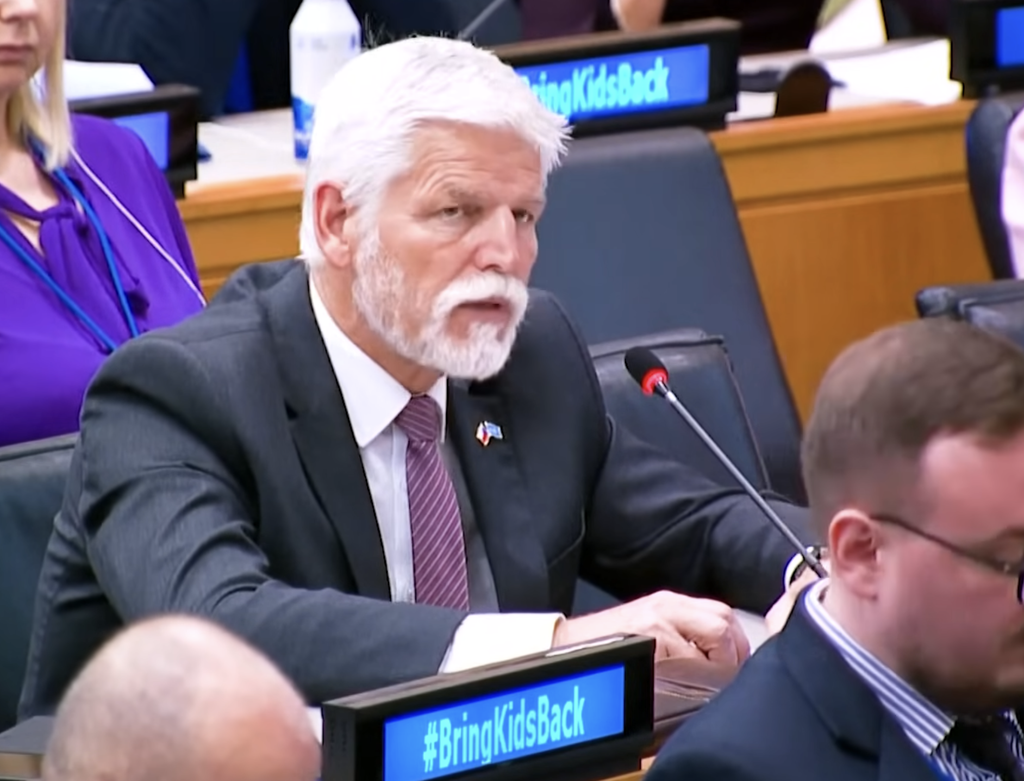
The Czech Republic shows the difference between campaign rhetoric and government. Before the 2025 election, Andrej Babiš said a government led by ANO would stop Czech weapons deliveries to Ukraine. His eventual government has taken a more complicated course. The Czech ammunition initiative has survived, although Prague has sought to reduce direct Czech financial exposure and rely increasingly on foreign contributors. President Petr Pavel said in May that the number of countries financing the initiative had fallen from 18 to nine.
The contradiction became especially visible in July 2026. The Czech government agreed to make a contribution to the NATO-led PURL mechanism for purchasing American weaponry for Ukraine. Prime Minister Babiš described the payment as small and one-off. Foreign Minister Petr Macinka called it essentially symbolic. The SPD, Babiš’s coalition partner, opposed even that contribution. Czech media subsequently reported that approximately CZK 140 million (EUR 5.7 million) had been transferred.
Yet Babiš himself has simultaneously hardened his language about Russia. In September 2026 he publicly said that Russia was conducting hybrid warfare against the Czech Republic, causing irritation among SPD politicians who continued advocating imports of cheap Russian energy.
Czech policy has therefore become more conditional, cheaper for the Czech taxpayer and politically more contentious. It has not become straightforwardly aligned with Moscow.
The Czech defence industry has become one of the economic beneficiaries of European rearmament and the war in Ukraine. Babiš’s own government contains politicians who regard defence production as an important source of Czech industrial growth. That creates a powerful material counterweight to anti-aid politics. The Czech case may therefore become a model for a broader European compromise: rhetorical distance from Kyiv, limits on taxpayer-funded aid, continued commercial weapons production and continued participation in selected NATO mechanisms.
Slovakia: the Anti-aid Position has Moved into Government Policy
Slovakia has gone further than the Czech Republic. Prime Minister Robert Fico returned to office on an explicit promise to end state military assistance to Ukraine. His rhetoric has subsequently moved beyond budgetary scepticism into a broader argument that Western governments are prolonging the conflict and increasing the danger of a direct NATO-Russia war.
On 19 September 2026, Fico argued that some Western politicians were effectively seeking a confrontation between Russia and NATO. Slovak media have repeatedly documented the same political theme: the war is presented as something Slovakia should keep at maximum distance, and Western military support is portrayed as a potential route towards escalation.
These arguments fall on unusually fertile ground. GLOBSEC’s multi-year surveys have consistently shown Slovakia among the Central and Eastern European countries with the greatest scepticism towards military support for Ukraine and some of the strongest receptiveness to narratives that place responsibility for escalation on NATO or the West. The divergence predates Fico’s current government. His political success has institutionalised it.
Slovakia therefore differs from Poland in a fundamental way. Poland’s government remains strategically committed to Ukrainian survival despite deteriorating public opinion. Fico’s government has incorporated scepticism towards military support directly into state policy. For Russian strategy, this is the more direct prize.
Post-Orbán Hungary: a Real Change, Followed by a Rapid Return of Hungarian Conditions
Can an election can reverse a country’s Ukraine policy? The defeat of Viktor Orbán and the arrival of Péter Magyar’s Tisza government in 2026 did produce genuine changes.
The new government removed restrictions imposed under Fidesz on Ukrainian news websites, arguing that independent Ukrainian media should not be treated in the same way as outlets disseminating Russian propaganda. It also supported the opening of two clusters in Ukraine’s EU accession negotiations.
Those are substantial departures from Orbán. However, they have not produced unconditional alignment with Kyiv.
Magyar has insisted that further progress on Ukrainian EU accession depends on concrete Ukrainian guarantees for the Hungarian minority in Transcarpathia. In September he refused to treat Hungary as a member of Zelenskyy’s new Carpathian Eight regional format and publicly rebuked the Ukrainian government over the issue.
The new Hungarian government is therefore moving away from Orbán’s systematic obstruction of Western Ukraine policy while maintaining a strongly national interpretation of Hungarian-Ukrainian relations.
Russian influence in Hungary before the election was unusually closely intertwined with domestic politics. Political Capital reported in February that Russian information activity appeared designed to help preserve the Orbán system and to intensify Hungarian-Ukrainian confrontation during the election campaign. The post-election outcome is consequently mixed from Moscow’s perspective. Russia lost a government that had repeatedly blocked European action on Ukraine. It did not lose every Hungarian grievance against Kyiv.
Slovenia: Feared Post-election Turn Has Gone in the Other Direction
The return of Janez Janša to government in 2026 has produced a conspicuously pro-Ukrainian policy. In July, Janša announced a USD 50 million (EUR 44 million) Slovenian contribution to the Prioritised Ukraine Requirements List (PURL) mechanism, primarily for Ukrainian air defence, and travelled to Kyiv shortly afterwards. Ukraine’s ambassador described relations with the new government as pragmatic and successful.
The Slovenian government has also continued publicly identifying Russian foreign information manipulation campaigns and disseminating analyses of Kremlin narratives concerning Ukraine, NATO and European security.
Slovenia therefore offers little evidence of a Polish-style anti-Ukrainian turn at state level.
Thus, claiming that the Central Europe is turning against Ukraine is too broad a conclusion. Elections are producing divergence rather than a common regional direction.
Romania: Public Opinion has Moved Much Further than Government Policy
Romania presents one of the more serious long-term vulnerabilities. An INSCOP survey conducted between 28 January and 6 February 2026 found that 42.6 per cent of Romanians believed Romania should provide no assistance at all to Ukraine. Only 10.5 per cent selected military aid as the form of assistance Romania should provide. Perhaps more strikingly, 44.5 per cent expected Russia to win the war, compared with 23.4 per cent who expected a Ukrainian victory.
Another INSCOP survey published in May found an almost evenly divided national picture. Some 48.3 per cent regarded Ukraine as a friendly country, while 46.9 per cent regarded it as relatively or completely unfriendly. Russia remained much less popular, with only 19.3 per cent regarding it as friendly.
Again, this is the Polish paradox. A person can distrust Ukraine without trusting Russia.
Supporters of the nationalist AUR were particularly likely to oppose assistance to Ukraine and to regard Ukraine negatively. Russian and pro-Russian information operations have meanwhile been documented repeatedly in Romania. Expert Forum identified coordinated and inauthentic networks during the 2025 presidential election, while Romania’s foreign ministry attributed one Telegram disinformation campaign to Russian interference.
The information environment remains active. In July 2026, Veridica traced a false narrative claiming that Romania was already effectively at war with Russia through support for Ukraine. In September, Romania’s presidency was forced to rebut online claims that Romanian troops were to be sent to fight in Ukraine.
Romania has so far maintained its Western security orientation. Its public opinion nevertheless provides considerably more room for an anti-aid political movement than existed in 2022.
Bulgaria: Anti-Ukrainian Hostility, Russian Narratives and Policy Retrenchment
Bulgaria comes particularly close to the social-media mechanism now visible in Poland. In June 2026, Factcheck.bg documented a wave of Bulgarian social-media posts telling Ukrainians to leave the country and describing them as criminals, parasites or ungrateful guests. The campaign attached itself to several criminal cases involving Ukrainian citizens and generalised them into claims about the Ukrainian community as a whole.
The infrastructure for such narratives is already well established. Factcheck.bg’s monitoring of false claims by Bulgarian politicians found that the war in Ukraine had become the subject generating the largest number of documented political falsehoods since 2021. Twenty of the 22 cases examined on the subject came from politicians associated with BSP or Revival, two parties with strongly Russia-friendly traditions or positions.
The political environment changed further in 2026. Prime Minister Rumen Radev’s government announced in June that Bulgaria had reached the limit of additional military and financial assistance it was prepared to provide to Ukraine. In July, Radev said Bulgaria would not participate in the Coalition of the Willing. Bulgarian media reported an extraordinary dispute inside the government over whether the foreign minister had endorsed a Kyiv declaration that the prime minister subsequently rejected.
Bulgaria has not changed geopolitical camps. On 24 September it joined more than 50 countries in a statement supporting Ukraine and condemning Russian aggression.
A country with historically stronger cultural sympathy for Russia than Poland now has three forces operating simultaneously: a government reducing practical military assistance, established parties circulating anti-Ukraine narratives, and social-media campaigns turning individual Ukrainian criminal cases into collective hostility.
Croatia: Split Runs Through the State Itself
Croatia has a different problem. Prime Minister Andrej Plenković’s government remains firmly committed to Ukraine. Croatia continues political, financial, humanitarian and military support, and Plenković has placed particular emphasis on defence-industrial cooperation with Ukraine and on sharing Croatian expertise in demining, war-crimes investigations and veterans’ policy.
President Zoran Milanović has repeatedly opposed deeper Croatian involvement.
The disagreement became particularly visible during the summer of 2026 over Croatia’s participation in Coalition of the Willing activities and military events in France. Plenković publicly described Milanović’s policy as “anti-Ukrainian, pro-Russian and anti-NATO”. Milanović himself presents his position primarily as opposition to Croatia being drawn further into the war.
Croatia therefore displays institutional polarisation rather than evidence of a broad popular campaign against Ukrainians. The strategic effect can nevertheless resemble the other cases. Foreign policy becomes a domestic political conflict in which every new commitment to Ukraine can be contested as escalation.
Austria: FPÖ Occupies the Anti-aid Space
Russian influence networks have unusually deep historical opportunities in Austria.
The right wing populist party Freiheitliche Partei Österreichs (FPÖ) has repeatedly demanded an end to Austrian financial support for Ukraine. In February 2026, every other parliamentary party rejected its proposal to stop the assistance. A similar FPÖ initiative in June again received no support outside the party.
Austria’s formal neutrality still shapes the debate, but neutrality has not prevented the government or President Alexander Van der Bellen from condemning the Russian invasion and supporting continued non-combat assistance to Ukraine. Van der Bellen reiterated that position at the United Nations on 23 September.
The Russian dimension is unusually tangible. Austria expelled three Russian diplomatic personnel in 2026 amid suspicions surrounding espionage infrastructure in Vienna. Separately, leaked communications reported by Der Standard showed former Wirecard executive Jan Marsalek and associates discussing a planned disinformation campaign intended to turn Austrian opinion against Ukraine by exploiting the history of the Azov movement. With far-right nationalist roots, Azov movement was established in May 2014 during the initial conflict in the Donbas region as a volunteer battalion to fight pro-Russian separatists. Russian president Vladimir Putin alleged that Ukraine was controlled by far-right forces, such as Azov. Thus, he gave Denazification as a reason for the invasion. Austria shows the complete hybrid pattern in miniature: legitimate neutrality debates, a domestic anti-aid party, Russian intelligence activity and attempts to insert emotionally effective anti-Ukrainian narratives into the local information space.
Italy: Meloni Remains with Ukraine
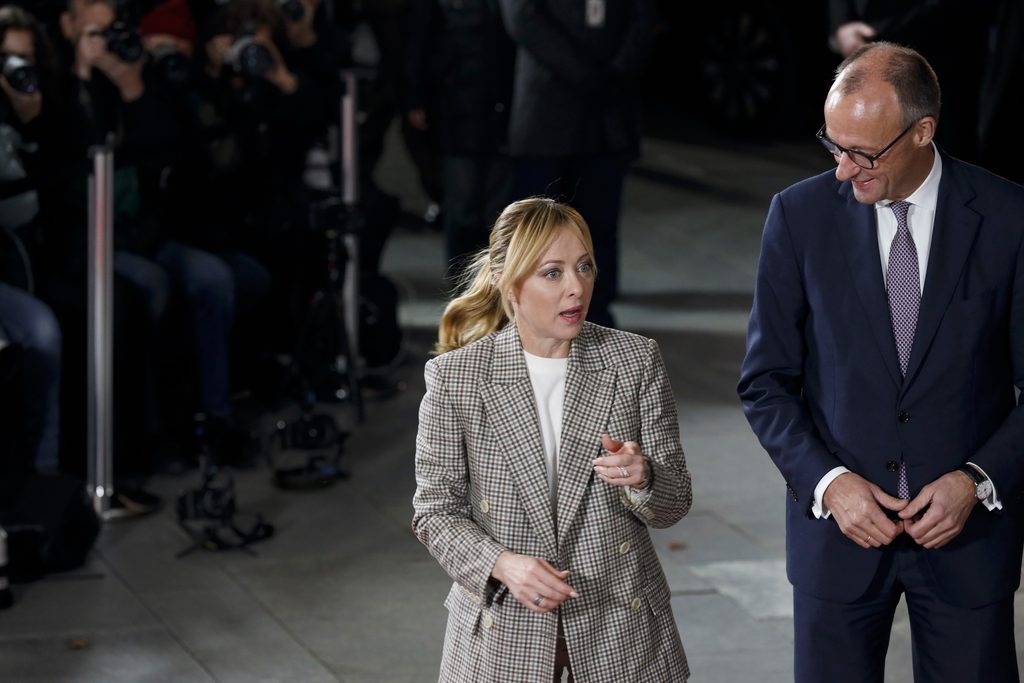
Italy is one of the clearest cases where government policy and public reluctance coexist. Giorgia Meloni has continued to support Ukraine and in September said Italy’s position had never wavered. She also described recent Russian activity against European states as provocative and defended Italy’s place within the Western security architecture.
Italian public opinion remains substantially more reluctant about military commitments than opinion in many northern and eastern European states.
The May 2026 ECFR survey found Italy to be the only one of the 15 countries surveyed in which a clear majority opposed increased military spending, with 58 per cent against and 28 per cent in favour.
On 20 September, 91.7 per cent of participating the populist Five Star Movement members voted against continued weapons deliveries to Ukraine, while 94.1 per cent opposed the European rearmament programme. Participation was just over 42 per cent of the party’s registered membership, which matters when interpreting those figures.
A separate September poll reported by La Repubblica found voters in the prospective centre-left alliance divided almost evenly over continuing military and financial support, with opposition particularly strong among Five Star supporters. Italy therefore has no Polish-style wave of hostility towards Ukrainians. It has something strategically important in a different way: a large democratic constituency that distinguishes sympathy for Ukraine from willingness to continue arming it.
France: Ukraine Aid is Becoming a Presidential-election Issue
A 2023 French National Assembly inquiry into foreign interference, created at the request of the the far-right party Rassemblement National itself, concluded that there had been long-standing and significant connections between the party and Vladimir Putin’s system. It pointed to repeated visits to Russia and occupied Crimea, favourable European Parliament votes, the party’s support for Russia’s 2014 annexation of Crimea and – money. In 2014, the then the far-right party Front National borrowed EUR 9.4 million from the First Czech Russian Bank, a Moscow-based institution. The debt eventually passed to the Russian company Aviazapchast before the RN repaid it in 2023. Marine Le Pen was personally received by Putin at the Kremlin during her 2017 presidential campaign.
When assessing the party’s present scepticism towards supporting Ukraine, this history cannot be ignored. Senior RN figures have argued in 2026 for limiting or ending further aid, although Jordan Bardella has adopted a more qualified position than some colleagues. The party is simultaneously trying to distance itself from Moscow. In September 2026, Le Pen and Bardella explicitly condemned Russian hybrid operations in Europe, drawing an unusually hostile response from the Kremlin. The evidence supports a history of unusually close Russian relationships and substantial ideological convergence, rather than a claim that Moscow dictates current RN policy.
There is a parallel strand on the French radical left, although the evidence is different. Jean-Luc Mélenchon spent years arguing for a more accommodating relationship with Moscow. Shortly before the invasion he said that “Crimea is Russian”, called anti-Russian policy dangerous and absurd, and framed NATO expansion as an important cause of the confrontation. He condemned Russia’s invasion once it happened, and there is no comparable evidence of Russian financing of La France Insoumise. The relationship here is principally ideological: anti-NATO politics, non-alignment and a tendency to explain Russian actions partly through Western policy.
France has moved rapidly into a similar debate as Poland as it approaches the 2027 presidential election. In early September 2026, senior far-right party Rassemblement National politicians called for reductions in French assistance to Ukraine. RN vice-president Louis Aliot used the phrase “couper le robinet”, turning off the tap. Jordan Bardella subsequently adopted a more qualified position, saying future assistance should be subject to guarantees and conditions.
It moves Ukraine from foreign policy into the central argument over French public expenditure. France has simultaneously become one of the principal targets of Russian information operations in Europe.
The French government’s VIGINUM service has documented networks including Portal Kombat, Doppelgänger, Matryoshka and Storm-1516. Their recurring objectives include discrediting Ukraine, depicting Western support as dangerous or futile, amplifying French fears of escalation and manufacturing apparently domestic opposition to French policy.
The activity continued during 2026. VIGINUM attributed a February operation targeting Emmanuel Macron to the Russian Storm-1516 network with high confidence. By August, several potential presidential candidates had disclosed Russian-origin disinformation campaigns directed against them.
French authorities are also investigating suspected Russian-linked sabotage and espionage activity. The political question for 2027 will be whether reducing support for Ukraine becomes an ordinary budgetary position accepted across a much broader electorate.
Britain: Consensus Remains Unusually Strong
Britain remains one of the more resilient European cases at government level. By July 2026 the UK had committed GBP 25 billion (EUR 29 billion) to Ukraine, including GBP 16 billion (EUR 18.6 billion) in military support. The government also remained one of the leaders of the Coalition of the Willing and expanded cooperation with Ukrainian defence production.
The change of prime minister has not produced a strategic change. Andy Burnham’s government has continued the British policy of treating Ukrainian security as closely connected to British security, including cooperation on missile and drone production.
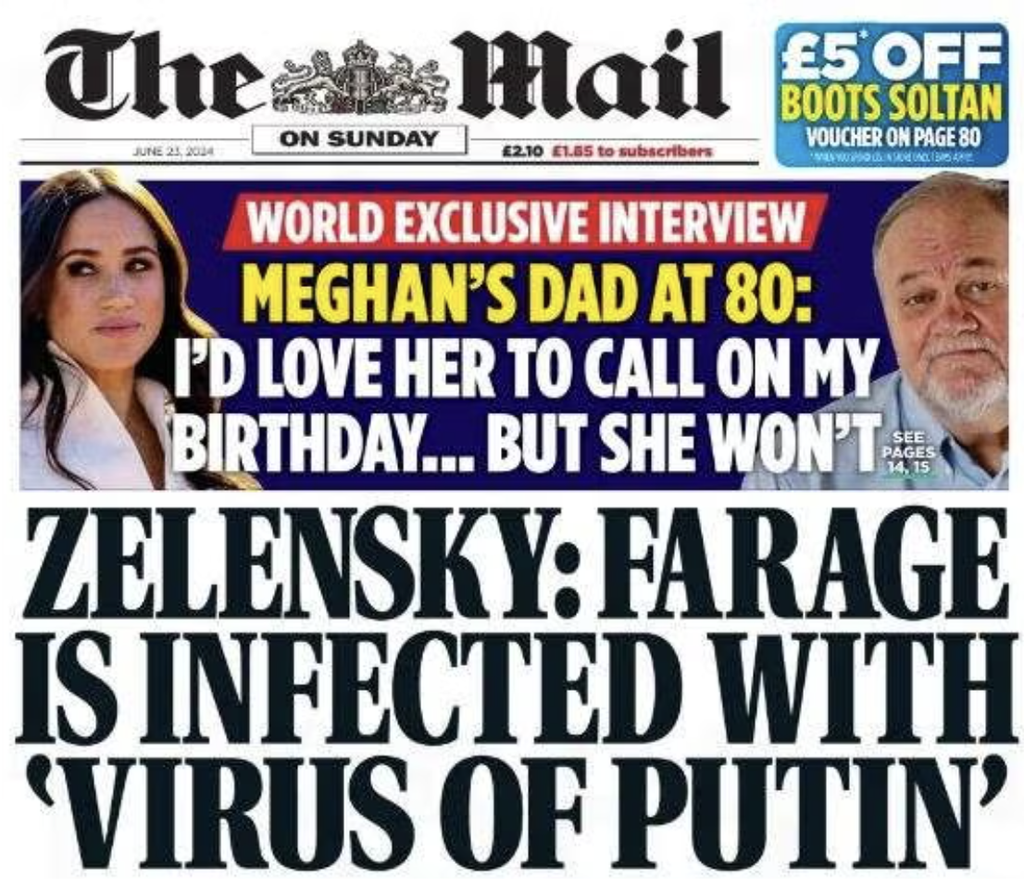
In Britain too, the far right is again the main source of Ukraine scepticism. Nigel Farage and Reform UK combine support for a larger British military and NATO membership with a long record of criticism of Western policy towards Russia and Ukraine. A September 2026 analysis of Reform’s defence platform by Action on Armed Violence identified this tension directly.
Farage himself has a long history of engagement with the Russian information sphere. He appeared on the Russian state-funded RT network at least 17 times between 2010 and 2014, described Putin in 2014 as the world leader he most admired “as an operator”, and argued during the 2024 general election that NATO and EU expansion had helped provoke Russia’s invasion of Ukraine. He has also repeatedly said that Putin bears responsibility for starting the war and that he does not support the invasion.
The more concrete connection comes from Nathan Gill, a former leader of Reform UK in Wales and previously an MEP in Farage’s UKIP and Brexit Party groups. In November 2025, Gill was sentenced to ten and a half years in prison after admitting eight bribery offences. The Crown Prosecution Service said he had received about GBP 40 000 (EUR 46 500) for tabling motions, making speeches and facilitating media activity for people linked to pro-Russian interests. His statements concerned Ukraine and advanced narratives advantageous to Russia.
Gill had operated in Farage’s political circle for years, although investigators said they found no evidence that Gill influenced Farage, and Farage was not investigated in the case. Reform condemned Gill’s behaviour. Still, a senior figure who moved through UKIP, the Brexit Party and Reform’s Welsh leadership was proven in court to have accepted money for pro-Russian political activity. This sits alongside Farage’s own long-established scepticism towards Western policy on Russia and Ukraine.
Britain also has a Russian connection on the anti-NATO left. George Galloway, now leader of the Workers Party of Britain, presented programmes for RT and was paid more than GBP 100 000 (EUR 116 000) between 2013 and 2015 for his work on the Russian state-backed channel. His party currently opposes NATO membership and in September 2026 attacked Labour and the Greens for sending what it called “endless billions of pounds to Ukraine”. Here, too, opposition to supporting Ukraine is embedded in a much older rejection of NATO and Western foreign policy.
Britain has not experienced a comparable influx of Ukrainian refugees, nor has there been a similar political mobilisation against Ukrainian immigrants or any government retreat from military support. Russian information operations nevertheless target the British information environment. The Foreign Office updated its sanctions regime in 2026 against organisations and individuals involved in Russian foreign information warfare, describing Doppelgänger and associated networks as mechanisms for spreading counterfeit documents, fabricated websites and deepfakes intended to weaken support for Ukraine.
Spain: Plenty of Information Warfare
In Spain, a May 2026 Gad3 survey commissioned by the Spanish defence-industry association TEDAE found majority support for the government’s position on Ukraine. Only 11 per cent considered Spanish security and defence expenditure excessive, while 82 per cent regarded it as adequate or insufficient. The commissioning organisation should be kept in mind when interpreting the result, although the findings point away from a large anti-defence mobilisation.
The political atmosphere around Ukraine is also less intense than in Poland, Slovakia, Bulgaria or eastern Germany. That has not spared Spain from Russian influence activity.
Spain’s 2025 National Security Report, published in 2026, says Russian disinformation operations have sought to reduce Western support for Ukraine, weaken trust in democratic institutions and promote Russia-friendly narratives. It specifically identifies sanctions, energy costs and Western assistance to Kyiv as recurring themes.
Spanish fact-checking organisation Maldita has documented the same evolution at operational level. During 2026 it identified AI-generated material, manipulated images, satire and targeted narratives portraying Zelenskyy as corrupt or wasteful and depicting Ukrainian assistance as money disappearing overseas while Europeans suffer economically. Spain demonstrates that Russian operations are active even where the domestic political market for strongly anti-Ukrainian politics remains relatively limited. The operation can wait for the political opportunity.
Poland is the Gatekeeper
These ambivalent and indecisive European attitudes towards supporting Ukraine reinforce Poland’s role as a gatekeeper. Poland increasingly contains all three dimensions at once: deteriorating public attitudes, physical hostility towards Ukrainians and documented Russian operations intended to exploit Polish-Ukrainian grievances.
On 18 September 2026, even amid the domestic deterioration, Prime Minister Donald Tusk announced that Poland was joining a new anti-ballistic missile coalition with Ukraine and said Warsaw was preparing another significant package of assistance. The Polish state continues to treat Ukraine’s survival as a strategic interest.
In June 2026, the city council of Sopot, in Tusk’s home town. has urged the Polish government to act against rising anti-Ukrainian sentiment, hate speech and disinformation. Councillors highlighted Ukrainians’ significant contribution to the Polish economy and warned that xenophobic hostility is being amplified by foreign actors seeking to destabilise the country. The resolution follows a documented increase in anti-Ukrainian incidents, including recent verbal and physical attacks on Ukrainian minors on public transport in Płock and Bielsko-Biała.
So, a substantial part of Polish public opinion is becoming less willing to treat Ukrainians themselves as a special responsibility. That gap is precisely where hostile influence works. Moscow does not need to convince Europe that Russia is benign. It needs to make supporting Ukraine politically exhausting. And fragmentation is exactly what Russian hybrid strategy is designed to produce.
Read More:
- POLITICO Europe: Poland’s anti-Ukrainian turn spills into violence
- Rzeczpospolita: Rośnie liczba ataków na Ukraińców w Polsce. Tegoroczne dane KGP niepokoją
- Demagog: Ukraińcy. Ilu popełnia przestępstwa, a ilu pada ich ofiarą?
- OKO.press: Pierwsze sukcesy w wojnie z hejtem na Ukraińców. Jest więcej aktów oskarżenia
- CBOS: Stosunek Polaków do innych narodów
- CBOS: Polacy o ograniczeniu pomocy dla uchodźców z Ukrainy
- CBOS: Stosunki polsko-ukraińskie
- Polski Instytut Spraw Międzynarodowych PISM: Eskalacja sporu polsko-ukraińskiego jako cel operacyjny Rosji w Polsce
- Institute for Strategic Dialogue: Investigation | Russia-aligned campaigns amplify negative sentiment towards Ukrainians in Poland ahead of a decisive presidential vote
- Agencja Bezpieczeństwa Wewnętrznego, ABW: Akt oskarżenia w sprawie działań dywersyjnych na rzecz obcego wywiadu
- Ministerstwo Spraw Zagranicznych RP: Oświadczenie Rady Odporności w związku z rosyjską dezinformacją wokół zbrodni wołyńskiej
- Prokuratura Krajowa: Wszczęcie śledztwa w sprawie pożaru w Skarżysku-Kamiennej
- OSW Centre for Eastern Studies: Build with Ukraine: Kyiv’s new approach to defence industrial cooperation with European partners
- European Commission, Eurobarometer: Standard Eurobarometer 105, Spring 2026
- European Council on Foreign Relations: Home alone: Europeans are ready to defend themselves
- ARD / WDR: Mehrheit sieht Russland als Sicherheitsrisiko für Deutschland
- Tagesschau: ARD-DeutschlandTrend: Deutsche fühlen sich durch Russland bedroht
- DIE ZEIT: AfD und BSW: Nah dran an Moskau
- DIE ZEIT: BSW-Spitzenkandidat sieht „Schnittmengen“ mit AfD
- Seznam Zprávy: Babiš už nechce posílat zbraně na Ukrajinu. Je to trestuhodné, míní Vondra
- ČT24: Do muniční iniciativy přispívá už jen devět zemí, řekl Pavel Financial Times
- iROZHLAS: Česko má poslat peníze na zbraně pro Ukrajinu, SPD je proti
- Novinky: Hybridní válka s Ruskem? O tom nám Babiš nic neřekl, tvrdí SPD
- Denník N: Fico straší vojnou, spojencom odkazuje, že s ním nemajú rátať
- GLOBSEC: GLOBSEC Trends 2025: Ready for a New Era?
- HVG: A Tisza-kormány feloldotta az ukrán sajtó korábban Orbánék által elrendelt blokkolását
- Telex: Magyar: Ukraine must take specific steps towards upholding rights of Hungarian community in Transcarpathia
- Political Capital: Szintet lépett a magyar választást befolyásoló orosz beavatkozás
- Delo: Janša napovedal izdatno denarno pomoč Ukrajini
- Government of Slovenia: Pregled dezinformacij: Kaj Kremelj želi, da verjamete o njegovi vojni proti Ukrajini
- INSCOP Research: Four years of war in Ukraine. The profound impact on public opinion in Romania
- INSCOP Research: Percepția românilor cu privire la Republica Moldova. Capitolul 4: Relațiile României cu alte țări
- Expert Forum: Elections in Romania and Moldova: Kremlin campaign narratives
- Veridica: FAKE NEWS: Romania is, de facto, at war with Russia
- Factcheck.bg: Неверни и подвеждащи твърдения подклаждат омраза срещу украинците в България
- Factcheck.bg: Политически лъжеметър
- Mediapool: Радев: България продължава да подкрепя Украйна, но няма повече оръжия и пари
- Mediapool: България подписа изявление срещу Русия и в подкрепа на Украйна
- HRT: Plenković: Milanovićeva politika je proruska, a Kundid je izgubio povjerenje
- HRT: Milanović protiv vojske u Parizu, Plenković: Ako Kundid ne posluša, očekujem ostavku
- ORF: Breite Front gegen blaue Ukraine-Forderungen im NR
- Der Standard: Spion Marsalek in Chats: „Wünschte, wir hätten einen verlässlichen Nazi“
- ANSA: M5S, il 91,7% è contro le armi. Conte: al governo faremo tabula rasa
- ANSA: Italy has clear Ukraine stance, Moscow showing signs of irritability, Meloni
- La Repubblica: Sondaggi politici, giù la fiducia nel governo. Primarie: Schlein avanti, ma solo uno su 4 le vuole
- Le Monde: L’aide de la France à l’Ukraine, dont le RN veut « couper le robinet », représente une goutte d’eau dans les finances publiques françaises
- Le Monde: Jordan Bardella sur le soutien à l’Ukraine : « On ne peut pas donner de l’argent sans aucune garantie »
- VIGINUM, SGDSN: Guerre en Ukraine : trois années d’opérations informationnelles russes
- VIGINUM, SGDSN: Analyse du mode opératoire informationnel russe Storm-1516
- UK Government: UK support to Ukraine: factsheet
- UK Foreign, Commonwealth & Development Office: UK action against Russian foreign information warfare
- Action on Armed Violence: Farage, firepower and foreign policy: the defence policies of Reform UK examined
- El País: Solo el 11% de los españoles cree excesivo el gasto en defensa, según una encuesta encargada por la patronal de la industria militar
- Departamento de Seguridad Nacional, España: Informe Anual de Seguridad Nacional 2025
- Maldita.es: Cuatro años de guerra y desinformación en Ucrania: de vídeos sacados de contexto al uso de la IA en el campo de batalla
- Maldita.es: Jajaganda: cómo Rusia busca consolidar narrativas desinformadoras en Europa a través de la burla y la parodia
- Kiel Institute for the World Economy: Ukraine Support Tracker: Europe leads on aid, US weapons remain key
- Assemblée nationale: Rapport relatif aux ingérences politiques, économiques et financières de puissances étrangères, n° 1311
- Le Monde: Le RN espère faire oublier ses liens avec la Russie en remboursant l’encombrant « prêt russe »
- Le Monde: Quels sont les liens de Marine Le Pen avec la Russie de Vladimir Poutine ?
- Le Monde: Le RN prend ses distances avec la Russie sans clarifier sa position sur l’Ukraine
- Le Monde: Jordan Bardella sur le soutien à l’Ukraine : « On ne peut pas donner de l’argent sans aucune garantie »
- Le Monde: Jean-Luc Mélenchon : « Les conditions sont mûres pour un grand changement en Europe »
- Le Monde: Sur l’Ukraine et la défense européenne, Jean-Luc Mélenchon et LFI s’éloignent encore du reste de la gauche
- Crown Prosecution Service: Former UKIP MEP jailed for taking bribes
- Metropolitan Police: Former MEP pleads guilty to bribery following Counter Terrorism Policing investigation
- The Guardian: Nigel Farage urged to root out Reform links to Russia after jailing of Nathan Gill
- The Guardian: Nigel Farage claims Russia was provoked into Ukraine war
- The Guardian: MPs defend fees of up to £1,000 an hour to appear on ‘Kremlin propaganda’ channel
- Workers Party of Britain: George Galloway for Holborn and St Pancras
- DIE ZEIT: Russlandkontakte der AfD: Die Russland-Nähe wird zum Problem
- Tagesschau: AfD-„Wahlbeobachter“ in Russland: Statisten in Putins Inszenierung?
- Tagesschau: Russische Einflussoperation: Geldübergabe an Bystron im Auto?
- European Parliament: Request for the waiver of the immunity of Petr Bystron
- Die Presse: Bericht: AfD-Spitze und Putins Wirtschaftsberater planen ein Treffen
- Tagesschau, Faktenfinder: Bündnis Sahra Wagenknecht: Auf Linie mit der russischen Propaganda
- Correctiv: Mitarbeiter der BSW-Mitgründerin Nastic ist prorussischer Nationalist
- Tagesschau: BSW startet in Gespräche mit AfD
- DIE ZEIT: AfD und BSW: Nah dran an Moskau
- Videoparliament: Władysław Kosiniak-Kamysz on the threat from Russia
- CNN: Fires, drones & assassination plots: Russia’s covert war in the EU
- EU Debates: They Stole Ukraine’s Future: Czech President Petr Pavel’s Emotional Plea at UNGA80
- The Guardian: ‘Teach your daughter to speak Polish’: Ukrainians in Poland face growing resentment
- The Kyiv Post: Polish Council of Sopot Urges Action on Anti-Ukrainian Xenophobia