
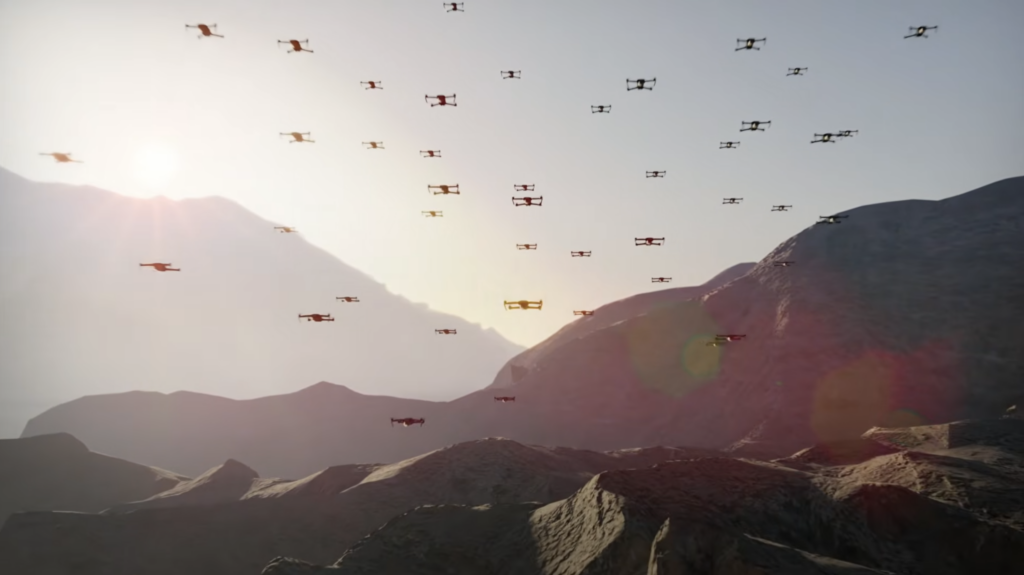
A nationwide Danish counter-drone system, an acquisition in encrypted communications and new contracts in satellites and naval self-protection have materially changed the Terma story since the summer. The Danish group is increasingly selling integrated defence architecture rather than individual pieces of hardware, while radar, space and lifecycle services are becoming more important growth engines.
Terma finished 2025/26 with DKK 5.6 billion (EUR 749 million) of new orders, up 43 per cent, revenue of DKK 3.38 billion (EUR 452 million) and operating profit before special items and tax of DKK 396 million (EUR 53 million). The order book reached DKK 6.9 billion (EUR 923 million), about 55 per cent above the previous year. Roughly 80 per cent of that backlog was allocated to the current 2026/27 financial year. Management expects organic revenue growth of 20 to 25 per cent and operating profit of around DKK 450 million (EUR 60 million). Terma has also said activity in its radar business is expected to roughly double from the previous year.
Terma already has orders, which it now has to convert into equipment, software, services and revenue while continuing to replenish the backlog. And it is moving higher up the defence value chain.
Becoming Much More Than a Radar Company
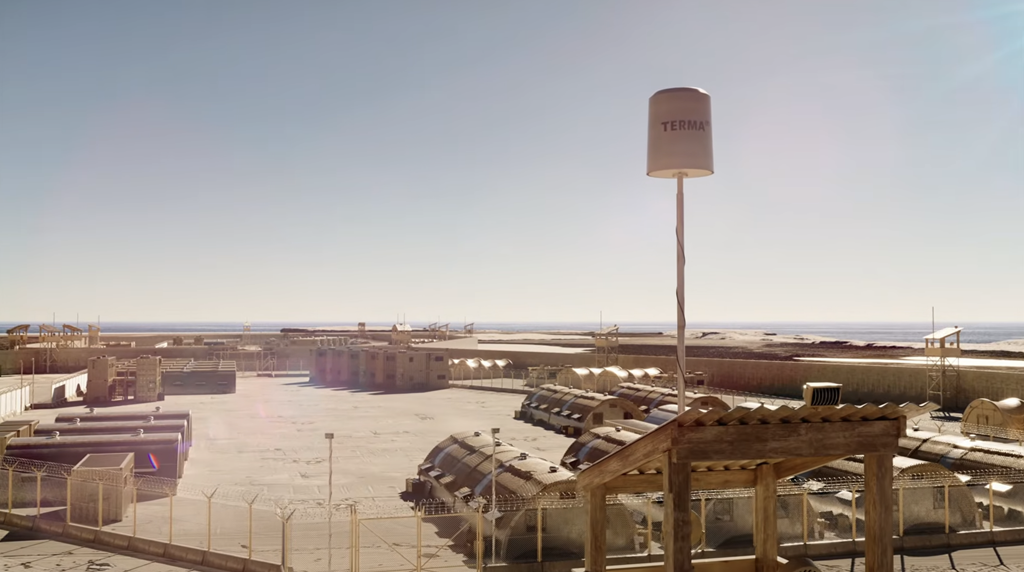
Terma can still be misunderstood outside Denmark as primarily a manufacturer of radars and aircraft components. Those remain important businesses, particularly the SCANTER radar family and its extensive work on the F-35 programme. Terma supplies more than 80 different composite, metallic and electronic parts for the F-35, including pylons, pods, tail skins, fuselage panels, leading edges and engine components. It has delivered some 15,000 pylons across its wider aircraft business.
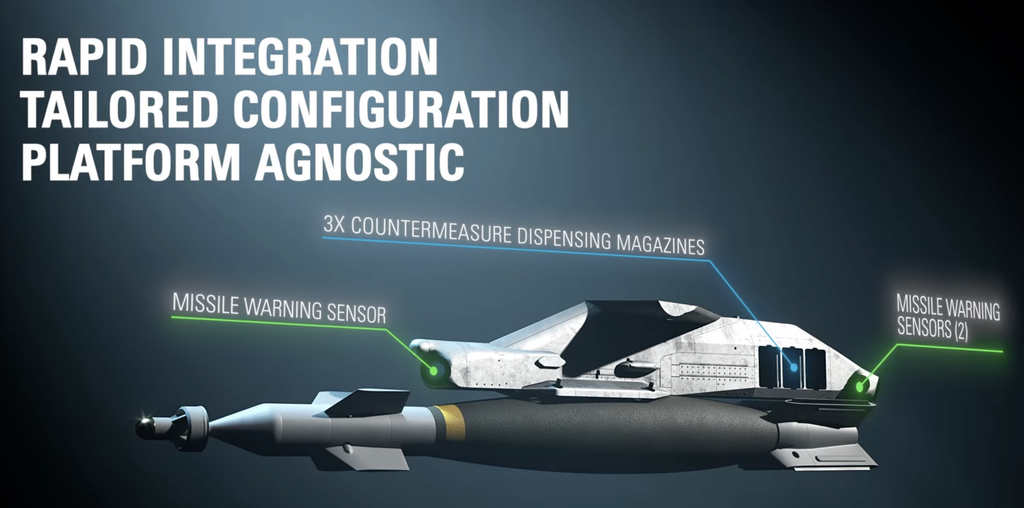
Its aircraft electronics business is equally substantial. The ALQ-213 electronic-warfare controller is installed on more than 2,500 fighter aircraft. It acts as the coordinating layer between radar-warning receivers, missile-warning systems, jammers and countermeasure dispensers, allowing older aircraft in particular to acquire modern electronic self-protection without a complete redesign of the airframe.
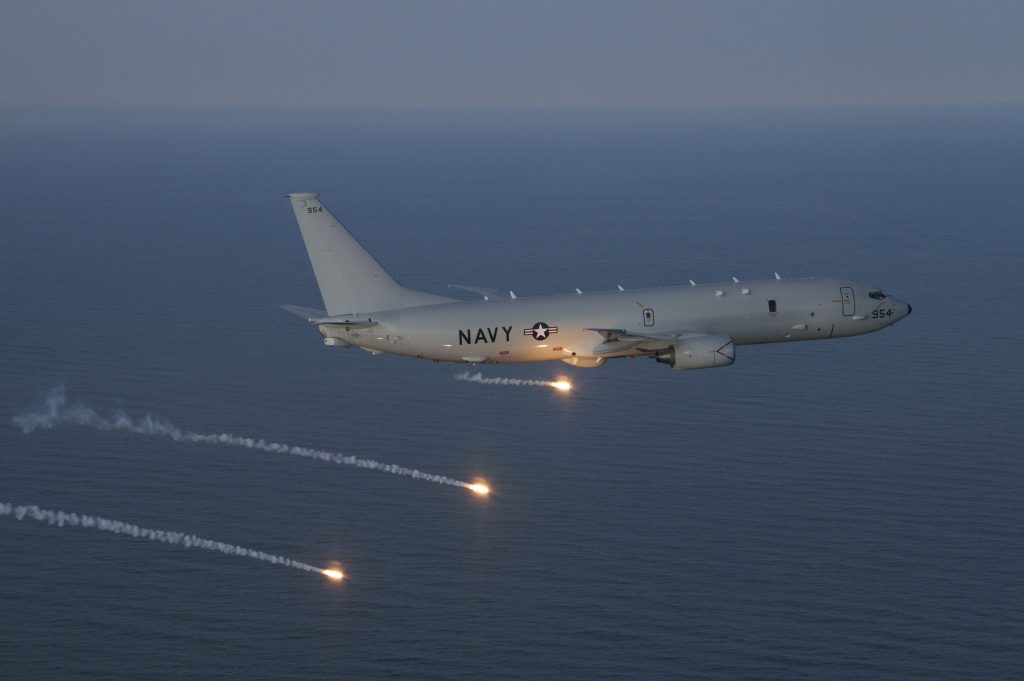
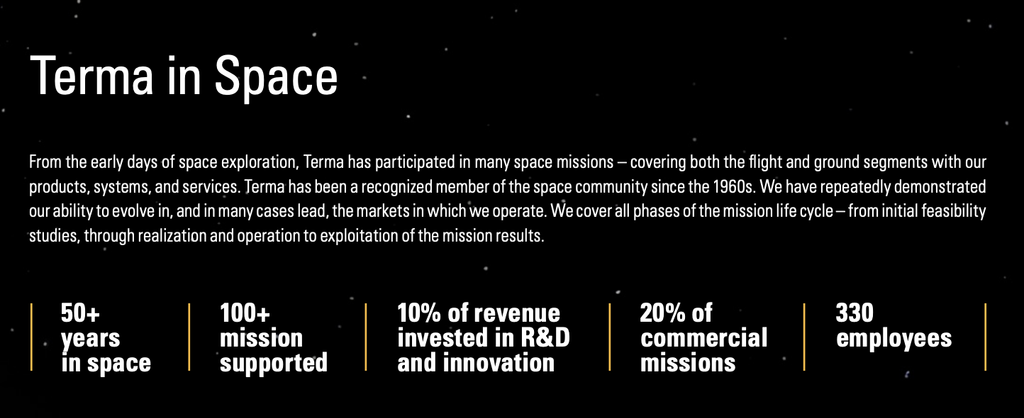
At sea, Terma sells surveillance radars, command-and-control systems and the C-Guard family of ship self-protection systems. In space, it provides spacecraft electronics, power systems, satellite testing equipment, ground software and mission-control technology.
The accounts show how broad the business has already become. Defence accounted for about 69 per cent of 2025/26 revenue and non-defence activities for 31 per cent. Around 82 per cent of sales were generated outside Denmark. SPS/Aeronautics remained the largest reported segment at DKK 1.48 billion (EUR 198 million), about 44 per cent of group revenue. Space generated DKK 645 million (EUR 86 million). The remaining Surveillance & Mission Systems business generated about DKK 1.26 billion (EUR 169 million). According to the annual-report figures, Space grew by roughly 28 per cent and Surveillance & Mission Systems by about 32 per cent year on year, much faster than the roughly 4 per cent growth in SPS/Aeronautics. Terma’s most of the significant new activity is appearing precisely in those faster-growing areas: counter-drone systems, sensor fusion, secure communications, radar, command-and-control and space.
Building Denmark’s National Counter-drone System
The 19 August agreement with Denmark’s Defence Acquisition and Logistics Organisation, FMI/DALO, is the most strategically significant of the recent announcements for the company.
Denmark has selected Terma to provide the command-and-control architecture for a nationwide counter-drone system. Existing and future sensors across the armed forces, civilian authorities and critical infrastructure are to feed into a common operational picture. Artificial intelligence will assist with processing, classification and prioritisation of sensor information, allowing operators to identify relevant drone activity and react in real time.
The central technology is Terma’s Helion multi-domain data backbone. Helion is essentially the connective tissue of the system. Rather than requiring Denmark to buy an entirely homogeneous set of Terma sensors, it is designed to connect different existing and future sensors and turn their outputs into one coherent situational picture.
The architecture also incorporates the FACE command-and-control and data-fusion platform developed by Britain’s OSL Technology, which Terma acquired in November 2025. OSL already had operational counter-drone experience at Heathrow Airport and at the Norwegian air bases at Ørland and Evenes. Terma has now converted that acquisition into a national-level reference customer in Denmark.
Terma bought technology and integration expertise, then combined them with its own radars, data architecture and customer relationships.
On 21 September, Denmark separately announced the purchase of additional counter-drone radars from another Danish company, Weibel Scientific. Those radars are intended to contribute to Denmark’s wider drone-surveillance picture.
Terma does not have to win every sensor contract. Its Danish system is designed to integrate third-party sensors. The commercially attractive position is potentially the layer above them, where data from different radars, RF sensors and other surveillance equipment is fused into the operational picture. By establishing itself as the integrator, competitors’ sensors can become inputs to a Terma system.
No contract value has been disclosed for the national Danish programme, so it would be unsafe to assign it a numerical contribution to 2026/27 sales. Depending on contract accounting and delivery milestones, the immediate financial effect may appear first in order intake and backlog, with revenue recognised over implementation. Strategically, however, Denmark gives Terma a powerful reference case for countries trying to assemble national counter-UAS networks from equipment already in service.
SCANTER Sphera: A Compact Three-dimensional Radar
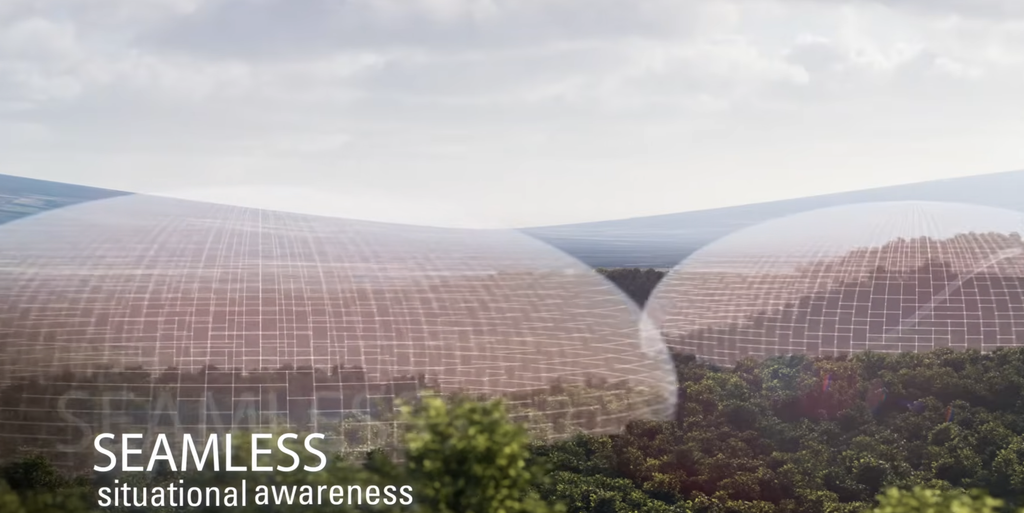
Terma is simultaneously pushing its own new sensor, SCANTER Sphera, into this market.
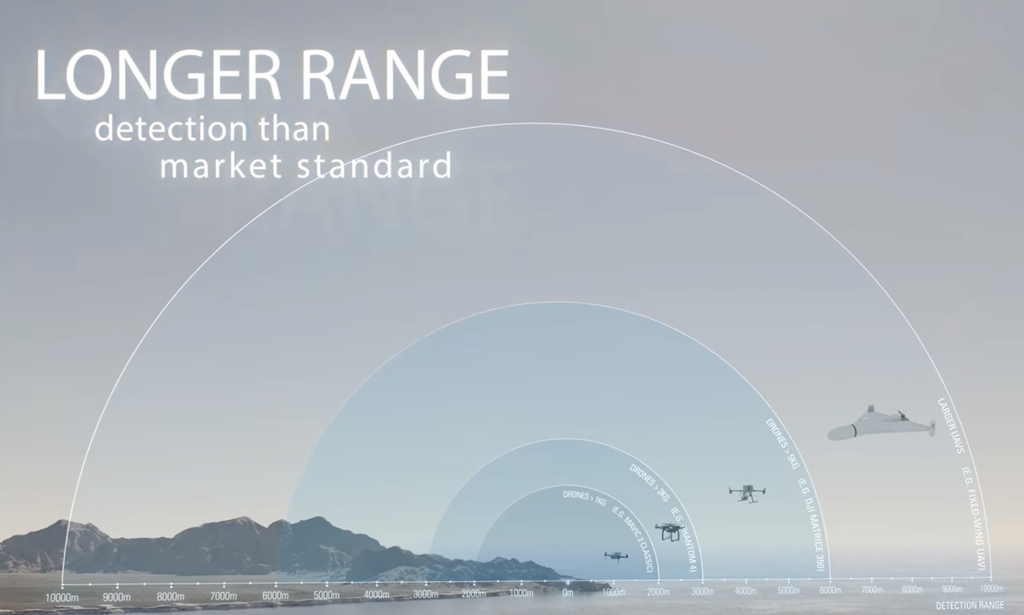
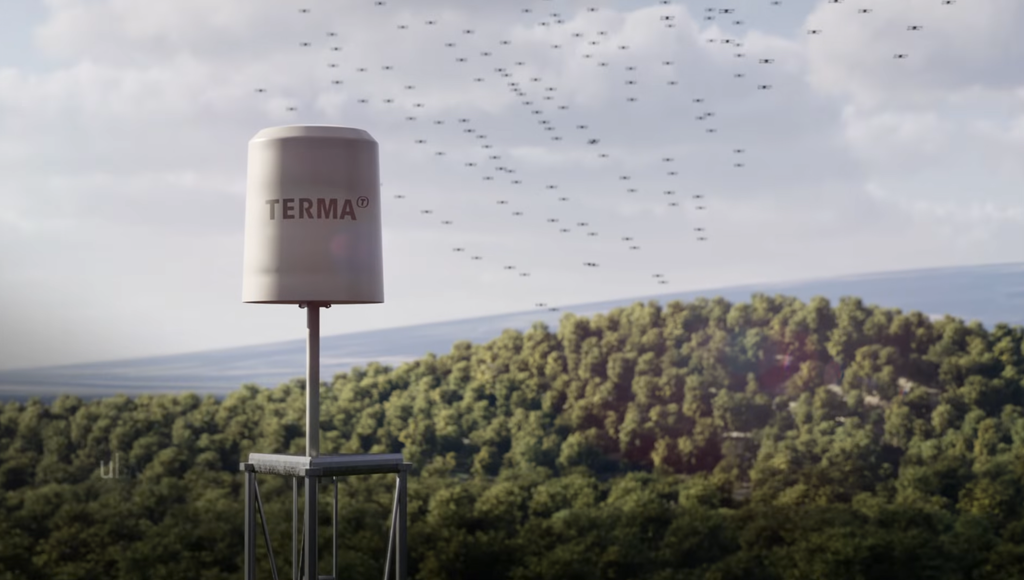
Sphera is a compact three-dimensional radar designed specifically for counter-UAS missions. It targets the difficult end of the problem: nano-, micro- and mini-drones with very small radar signatures. Terma says it uses micro-Doppler and kinematic information together with AI-assisted classification to separate drones from birds and background clutter. Its pulse-based design is intended to remain usable in electronically noisy and jammed environments. Up to eight units can be networked for wider coverage.
The potential customers extend well beyond armies. Terma markets Sphera for air bases, ports, borders, airports, wind farms, energy infrastructure and government facilities.
In September, Terma took Sphera to EWLive in Tartu, Estonia, for live counter-drone demonstrations. C-UAS is becoming a crowded European market, and customers increasingly want evidence that a system can find small drones amid real clutter rather than impressive theoretical detection ranges under laboratory conditions. Management’s earlier forecast that radar activity could double during 2026/27 makes Sphera one of the products worth watching most closely when the next annual figures eventually appear.
Terma announced on 24 September that its SCANTER 6002 surveillance radar has been selected for the Hellenic Navy’s MEKO-class frigate modernisation programme. The customer side involves the Hellenic Navy and Hellenic Aerospace Industry. HAI will integrate Terma’s SCANTER 6002 with its Centaur counter-UAS system. The radar will also feed information into Thales’ TACTICOS combat-management system.
SCANTER 6002 becomes part of an integrated shipboard counter-drone and combat-management architecture. The radar is designed to detect small and low-signature targets in the air and on the sea surface, precisely the problem navies increasingly face from UAVs and other asymmetric threats.
MyDefence Fills Another Gap in the Counter-drone Chain
The 20 August agreement with fellow Danish company MyDefence develops the same idea from another direction.
The companies will initially integrate Sphera with MyDefence’s radio-frequency sensors, jammers and IRIS command-and-control system. RF sensors can detect the radio links between many drones and their operators. Radar can continue tracking an aircraft that is autonomous or does not emit the expected control signal. Jammers provide an electronic means of disrupting some threats. The command system then combines the inputs for the operator.
This produces a more credible layered system than any one detector can provide. The agreement is a memorandum of understanding (MoU) and therefore should not be counted as a sale, yet. The first actual integration work is planned for 2026, while the companies say cooperation may later extend into maritime systems and eventually space and satellite technology.
Dencrypt Adds the Secure Communications Layer
Terma’s agreement on 17 August to acquire Danish cybersecurity company Dencrypt could ultimately prove as important as any individual product sale.
Dencrypt provides end-to-end encryption for voice, video, messages and data on ordinary smartphones, tablets and computers. Its technology can operate across commercial mobile networks, public Wi-Fi and satellite connections without requiring users to carry a proprietary communications device. Its patented Dynamic Encryption technology is Common Criteria EAL4+ certified, and its products hold NATO and national-security accreditations. The transaction still requires final approval and financial terms have not been disclosed.
Terma increasingly collects information through radar and other sensors, fuses it through systems such as Helion and FACE, and converts it into a common operational picture. Dencrypt gives it technology for securely distributing that information to the people who need it.
That creates a coherent chain of products: sensor → classification → data fusion → command and control → secure communications → operator.
It also expands the addressable market. End-to-end secure communications are relevant to armed forces, ministries, intelligence and security organisations, emergency authorities and operators of critical infrastructure. Terma explicitly wants to develop Dencrypt as a sovereign Danish communications capability for Denmark, allied countries and trusted international customers.
Acquisitions always carry an integration risk, and Dencrypt’s contribution to group revenue is unknown. The strategic direction is nevertheless clear. Terma is buying software and intellectual property that allow it to control more of the information chain around its traditional hardware.
Airbus Could Open a Much Larger Helicopter Business
The Airbus Helicopters agreement announced on 19 August belongs to the longer-term pipeline rather than current booked revenue.
Airbus and Terma intend to deepen cooperation in four areas: manufacturing of composite and precision-metal components, integration of Terma electronic-warfare systems into helicopters, research and technology for future rotorcraft, and maintenance, repair, overhaul and technician training.
This gives Terma several routes into future helicopter programmes. The first is familiar industrial work. Terma already knows how to manufacture high-specification aerospace structures at scale through programmes including the F-35.
The second is potentially more valuable. Helicopters are increasingly being equipped with integrated radar-warning receivers, missile-warning sensors, countermeasure dispensers and electronic-support equipment. Terma already has a large installed base of aircraft self-protection electronics and has spent years adapting such technology to platforms without requiring extensive airframe modification.
The third route is services. Maintenance and lifecycle support creates revenue long after an aircraft has been manufactured. If the partnership develops into a Nordic maintenance capability, Terma could participate in decades of fleet support rather than merely supplying components at the initial production stage. The MoU does not identify an order value or guarantee a particular helicopter contract. Its significance lies in positioning Terma inside forthcoming campaigns and Airbus’s supply and support network. Nordic Defence Sector has also highlighted the prospective maintenance dimension and its connection with Danish defence capacity.
A New Space Contract Connects Satellite Mass Production
The 21 September MDA Space announcement is one of the most commercially interesting pieces of post-summer news because it is an actual contract.
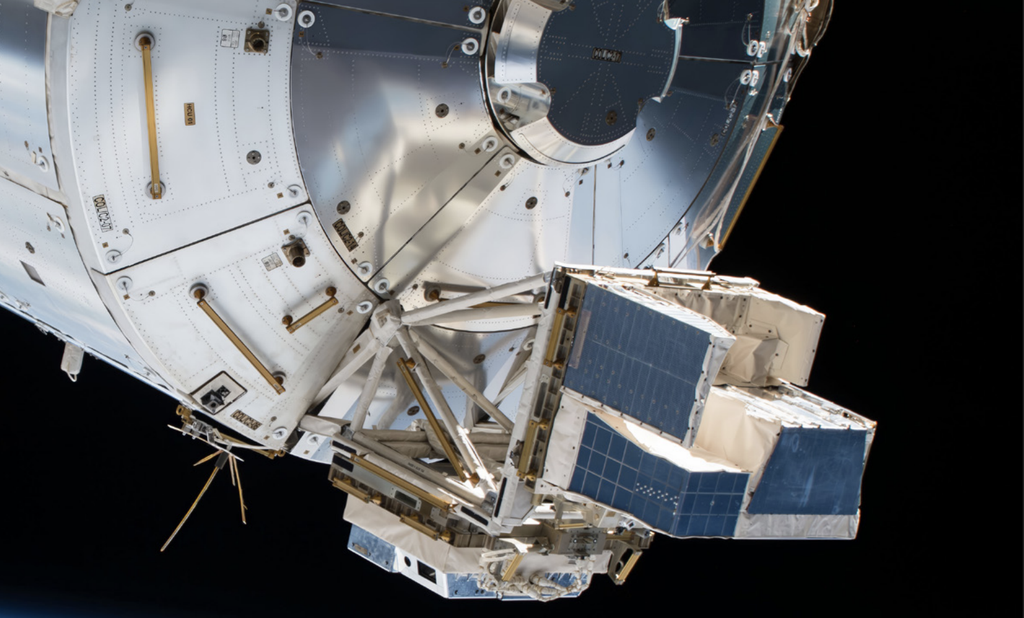
Canadian satellite manufacturer MDA Space has selected Terma as a supplier for its MDA AURORA satellite platform. Terma will supply three types of ground-support and testing equipment: Power Special Check-Out Equipment using its UniverSAS technology, RF Special Check-Out Equipment for radio-frequency testing, and Central Checkout Systems based on Terma’s CCS5 platform.
These are essentially the tools used to prove that satellites work before they are launched. Satellite production traditionally resembled bespoke spacecraft manufacturing. The emerging constellation market increasingly resembles series production. Hundreds of similar spacecraft must pass electrical, radio-frequency and system-level tests quickly and consistently. Reusable and modular checkout equipment becomes more valuable as production volume rises.
On 4 August, MDA Space announced a CAD 474 million (EUR 294 million) expansion of its work on Telesat Lightspeed. Telesat is expanding the fully funded Lightspeed constellation from 156 to 225 satellites. For MDA, the change means 27 additional AURORA satellites on top of the 198 it was already contracted to manufacture.
The Terma contract value remains confidential. The connection is still commercially relevant. Terma has placed its testing technology inside a satellite platform being manufactured at unusually high volume.
If AURORA wins additional constellation customers, the same standardised checkout equipment could potentially travel with the platform. That is the attractive part of the contract. It also arrives when Terma’s Space business is already expanding rapidly. Revenue in the segment rose from DKK 504 million (EUR 67 million) to DKK 645 million (EUR 82 million) in 2025/26, an increase of about 28 per cent.
Japan Gives C-Guard a New Route into Asia-Pacific

On 22 September, Terma signed an agreement with Japan’s Cornes Technologies to promote and supply C-Guard MK II and related equipment for new naval vessels in the Asia-Pacific region, with an explicit focus on Japan.
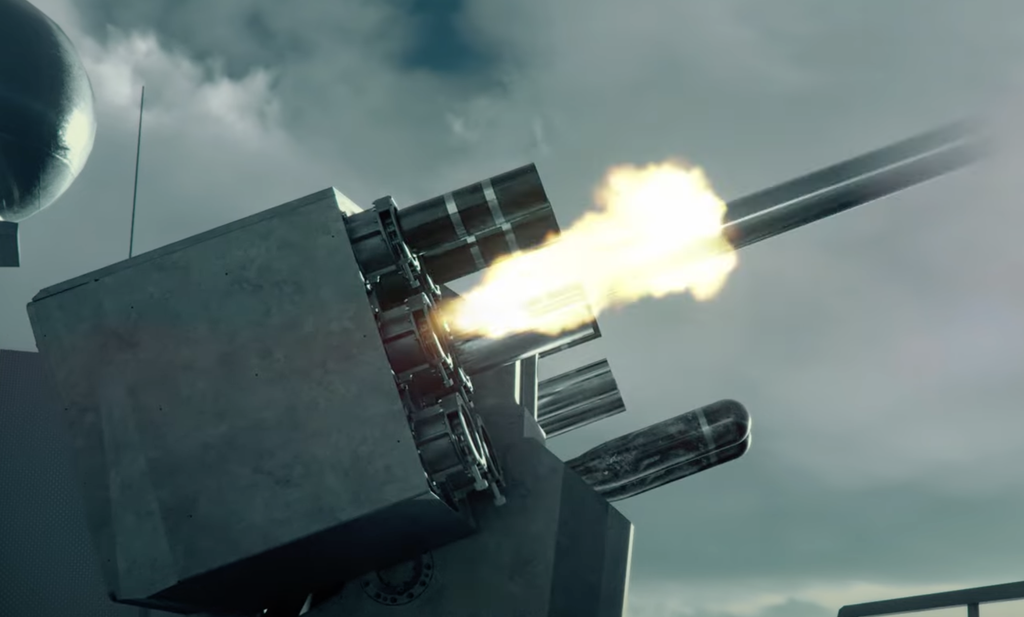
C-Guard MK II is a naval soft-kill self-protection system. When a ship detects an incoming anti-ship missile or torpedo, the system can deploy countermeasures intended to confuse, divert or seduce the weapon away from the vessel. The ammunition options include chaff, flares, corner reflectors and off-board jammers. It uses the NATO-standard 130mm format and can be configured with fixed launchers or Terma’s trainable 12-tube Ancilia launcher. More than 150 C-Guard systems are already in operation worldwide.
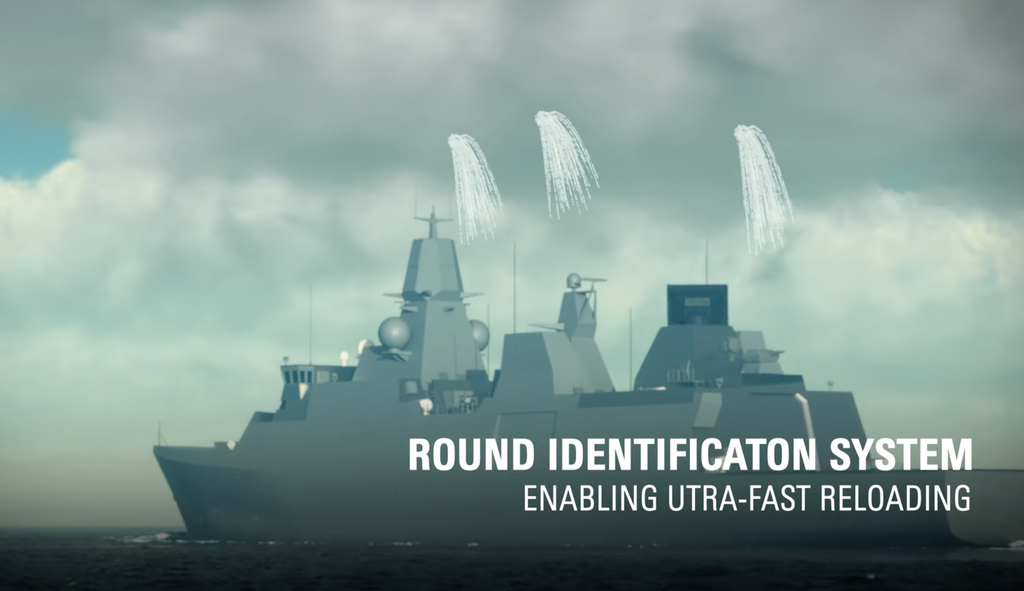
This is an interesting product commercially because it can be fitted to different classes of ship and integrated with a vessel’s existing combat-management system. A navy does not necessarily need to replace its entire combat suite to adopt it.
The Cornes agreement should still be interpreted carefully. Terma says it has signed a contract to promote and supply the system, but it has not identified an end customer, number of ships, quantity of launchers or contract value. It is therefore better understood at this stage as a serious market-entry and local-partner agreement rather than evidence of a large Japanese fleet order. The geographic importance is greater than the currently disclosed financial importance. Japan is investing heavily in naval capability, and a recognised local industrial partner gives Terma a route into procurement and lifecycle support that would be difficult to build remotely from Denmark.
The Lucrative Aftermarket
Some of the least spectacular announcements may be among the most useful indicators of the quality of Terma’s installed base. This aftermarket is easy to overlook beside new defence orders. It can provide precisely the kind of long-duration, less volatile revenue that becomes more valuable as the installed base grows.
A Dutch Ministry of Defence procurement notice published in September shows that Terma received a framework contract worth EUR 1.17 million for maintenance of the ALQ-213 Electronic Warfare Controller. The contract was concluded on 3 July and runs until July 2028. Dutch procurement material describes Terma as the original equipment manufacturer with the exclusive capability and rights needed for the work.
That is small beside a DKK 3.4 billion (EUR 455 million) group, but it demonstrates the economics of having thousands of systems already installed. Electronic-warfare equipment requires maintenance, engineering support, upgrades and eventually modernisation.
A similar pattern appears in the United States. The US Coast Guard placed an approximately USD 87 000 (EUR 76 000) July delivery order with Terma Inc for SCANTER 2001 radar parts under an existing multi-year support contract. Again, the amount is immaterial to group earnings. The significance lies in the recurring demand created by installed radar systems.
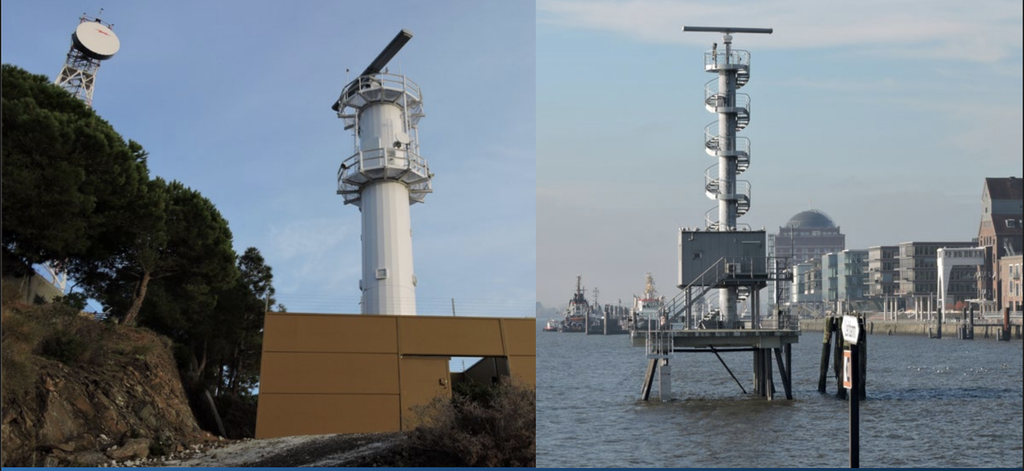
Canada provides another example of the wider ecosystem. A July amendment worth about CAD 1.07 million (EUR 665 000) was made to the Canadian government’s PolarMax aerial-surveillance radar contract with Sperry Marine. The programme uses Terma’s SCANTER 4603 radar, control systems and software on the Canadian Coast Guard’s PolarMax icebreaker. The prime contract belongs to Sperry Marine, so the amendment cannot be treated as CAD1.07mn of Terma revenue. It nevertheless shows SCANTER equipment continuing to generate integration and support work inside major maritime programmes.
NATO: A Long-term Pipeline, Increasingly Software
On 7 July, Terma announced its involvement in the expansion of NATO’s Alliance Ground Surveillance and wider ISR architecture alongside Northrop Grumman, Airbus Defence and Space, Kongsberg and Finland’s Insta. Terma’s contribution includes artificial-intelligence models for automated target recognition and identification, future AI training capabilities and multi-domain data exploitation.
The programme envisages a platform-agnostic architecture capable of combining information from airborne, maritime and land systems, eventually including space assets, with persistent surveillance particularly relevant to the Arctic and Baltic regions.
Terma’s product here is software that turns very large sensor flows into useful military intelligence. That puts the company into the same broad technical territory as its Danish national counter-drone programme: collect data from multiple sources, identify what matters and get usable information to decision-makers faster.
Batteries Announcement with Big Potential
The 5 August memorandum with Austria’s Danube Cell Manufacturing is more peripheral to the current earnings story, but it shows another direction Terma is investigating.
Terma brings battery-cell testing, electronics and software. DCM brings custom cell development and manufacturing. The companies intend to cooperate particularly on aerospace and defence applications, taking cells from early design through testing and application-specific validation. There is a plausible industrial logic behind Terma’s strategy: Drones, satellites, autonomous platforms, portable military electronics and electrically intensive defence systems all require batteries that can meet much more demanding safety, temperature, vibration, reliability and lifecycle requirements than ordinary consumer cells. Terma already sells testing systems into space and other high-reliability environments.
BepiColombo is Approaching Mercury
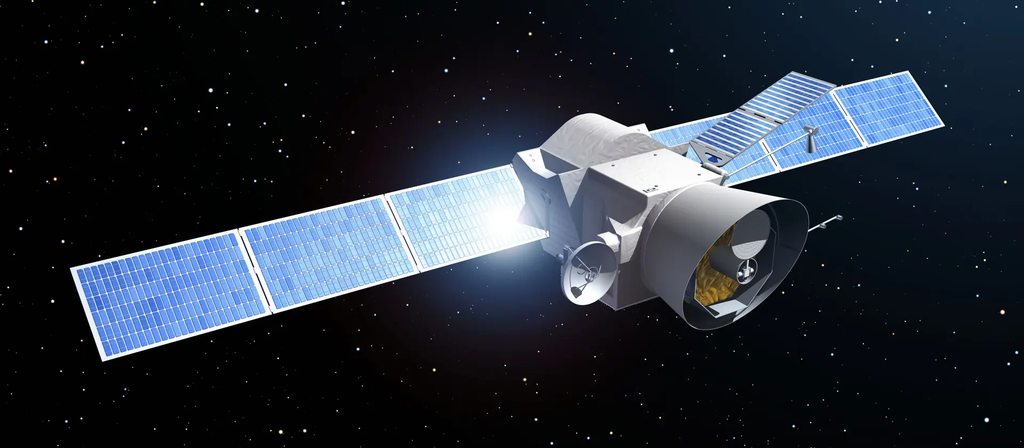
After an eight-year journey, the ESA/JAXA BepiColombo mission is scheduled to enter orbit around Mercury on 21 November 2026. Terma has supported the mission from spacecraft development and testing to in-flight operations.
Terma supplied the roughly 20-kW Power Conditioning and Distribution Unit for the Mercury Transfer Module. The system manages power from the spacecraft’s solar arrays and supplies the electric propulsion system and Mercury Planetary Orbiter. Terma has also contributed testing, mission-control and operational technology to the mission.
For a supplier trying to sell electronics and checkout systems for future institutional and commercial spacecraft, hardware surviving such a mission is useful industrial evidence.
The MDA contract announced two weeks later turns that technical heritage into a more immediately commercial proposition: from specialised European science missions towards higher-volume satellite manufacturing.
Terma’s the Growth Map is Widening
Terma describes Europe as a core priority and North America as a strategically important market.
Denmark is becoming the home-market reference for national counter-drone integration and sovereign communications. Norway already provides operational C-UAS references through OSL at Ørland and Evenes. The Netherlands provides a long-established electronic-warfare installed base. Poland and the Baltic region are natural markets for surveillance and critical-infrastructure protection. NATO programmes expand the same technologies across allied architectures.
North America remains anchored by the F-35, electronic warfare, radar and service businesses. Canada now adds the MDA satellite-production relationship alongside existing maritime radar activity.
Japan and the Cornes agreement give Terma a clearer route into Asia-Pacific naval procurement.
Ukraine remains another strategic geography. Terma established a Kyiv subsidiary during 2025/26 and has identified Ukraine as a priority both for defence and eventual reconstruction.
Terma is trying to enter various national and multinational systems, then remain inside them through upgrades, integration, software and lifecycle support.
In the near future, Terma’s first test is its backlog conversion. The second is radar production. Management’s expectation of roughly doubling radar activity means SCANTER deliveries should be one of the clearest operational indicators of whether the growth plan is working.
The third is counter-UAS conversion. The OSL acquisition has already produced a strategically important Danish reference programme. Sphera is moving through demonstrations and integration with MyDefence. The next question is whether Terma can reproduce the Danish model in other European countries, airports, bases, ports and critical infrastructure.
The fourth is space scale. The MDA AURORA contract puts Terma alongside a satellite production system designed for hundreds of spacecraft. Further AURORA customers or follow-on orders would matter much more than another one-off space mission.
The fifth is services.Dutch ALQ-213 maintenance, Coast Guard radar support and other lifecycle activity may never create spectacular press releases, but as the installed base expands these recurring contracts can make growth more durable.
And finally there is portfolio integration. Dencrypt, OSL, Helion, SCANTER, FACE, electronic warfare and C-Guard used to look like separate niches. Terma is increasingly arranging them into systems that connect sensing, information processing, decision-making, secure communications and protection.
If Terma’s strategy works, the significance of the Danish counter-drone award will extend well beyond its undisclosed contract value. It could become the reference architecture that shows other European customers what the new Terma is trying to sell.
Read More:
- Terma: Terma Delivers Continued Growth and Scales Execution in a High-demand Market
- Terma: Terma Annual Report 2025-2026
- Forsvarsministeriets Materiel- og Indkøbsstyrelse: FMI indgår aftale om nyt anti-drone kommando- og kontrolsystem
- Terma: Denmark selects Terma to deliver nationwide counter-drone defense system
- Forsvarsministeriets Materiel- og Indkøbsstyrelse: Forsvaret modtager danske radarer til detektion og identifikation af droner
- Terma: Terma has entered into an agreement to acquire Dencrypt A/S, a Danish company specializing in end-to-end encrypted communications
- Terma: Terma and MyDefence expand cooperation with initial focus on counter-drone technologies
- Airbus: Airbus and Terma Join Forces to Strengthen Danish Defence Capabilities
- Nordic Defence Sector: Terma og Airbus Helicopters uddyber samarbejde i Danmark
- Terma: Terma Selected by MDA Space as part of MDA AURORA Supply Chain
- MDA Space: MDA SPACE AWARDED $474 MILLION TO EXPAND THE TELESAT LIGHTSPEED LEO CONSTELLATION
- Terma: Terma and Cornes Technologies Join Forces to Strengthen Naval Self-Protection in Asia Pacific
- Terma: C-Guard MK II Decoy Launching System
- Terma: SCANTER Sphera 3D Radar
- Terma: Terma Contributes to Building NATO’s Future Operational Intelligence Architecture
- Terma: Terma and Danube Cell Manufacturing Sign MoU to Advance Battery Development and Testing
- Adjudera: Onderhoudscontract ALQ213 Electronic Warfare Controller
- CanadaBuys: Contract – PolarMax Aerial Surveillance Radar – Contract History
- Terma: Proven Self-Protection Systems For Your Aircraft
- Terma: A One-Stop Shop for Composite & Metal Aerostructures
- Terma: News & Press
- ASDNews: Terma and Cornes Technologies Join Forces to Strengthen Naval Self-Protection in Asia Pacific
- Terma: Terma SCANTER 6002 Radar Selected for Hellenic Navy MEKO-Class Frigate Modernization