
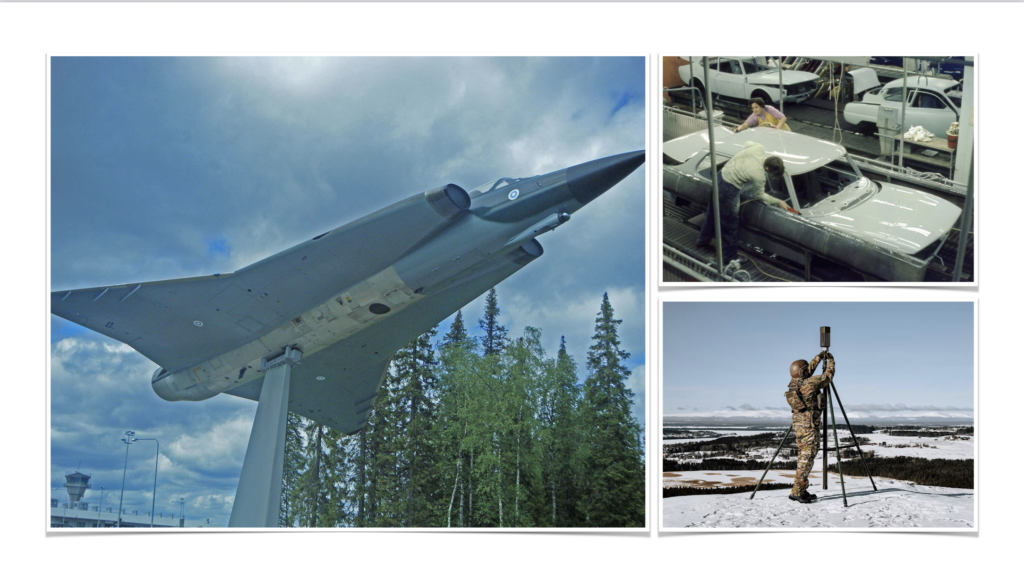
Saab’s Finnish history began in defence, became part of everyday life through hundreds of thousands of cars and has now returned to high technology at remarkable speed. From Bofors guns and Winter War aircraft to Draken fighters, Uusikaupunki convertibles, naval combat systems and three-kilogram electronic warfare sensors, Finland has become one of Saab’s most deeply integrated industrial bases outside Sweden.
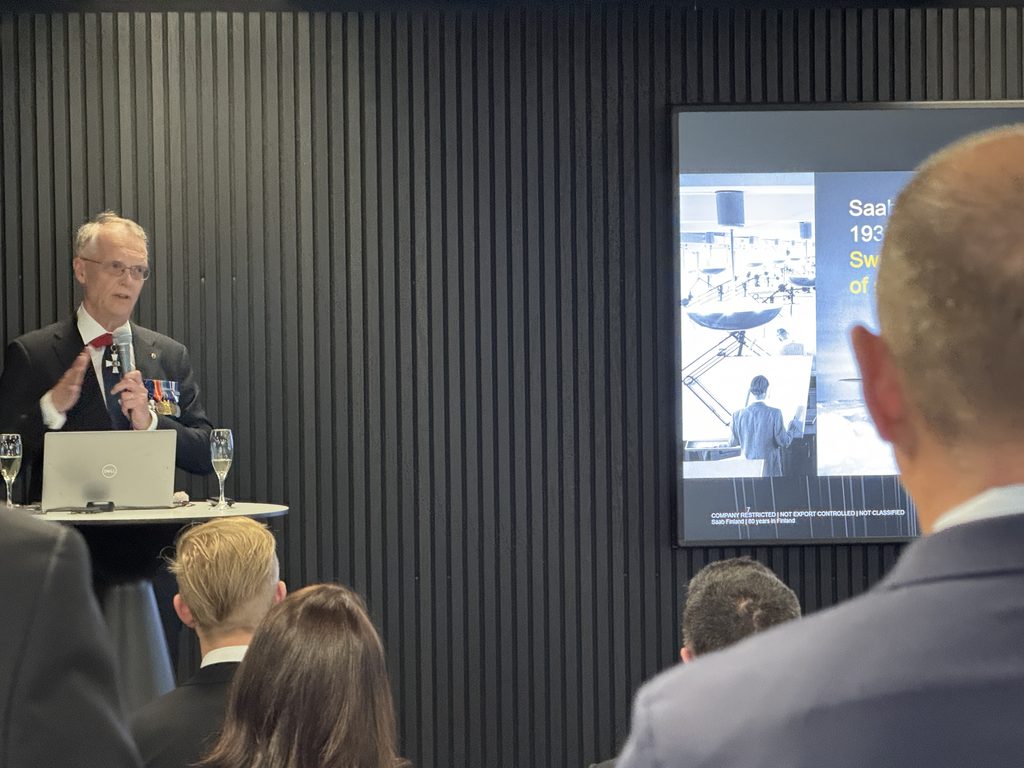
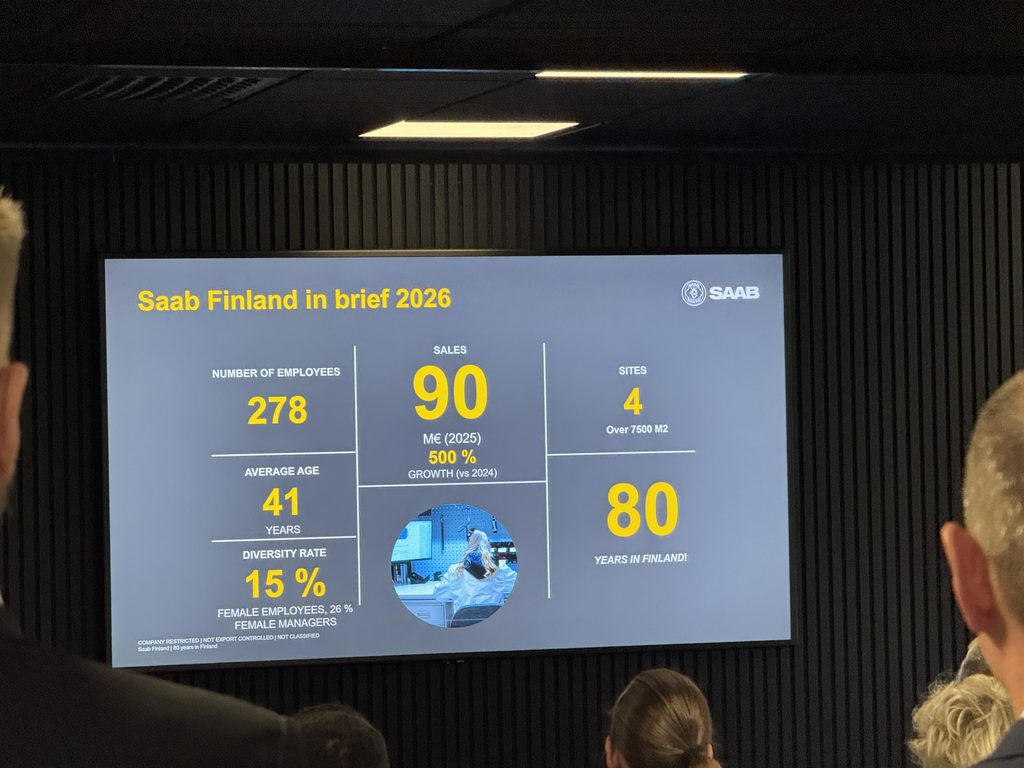
Saab’s Finnish business has changed more in the past decade than it did during several of the preceding ones. At an 80th-anniversary gathering in Tampere in 2026, a company presentation put Saab Finland’s workforce at 278 and its 2025 sales at €90 million, rounded. Sales had grown by about 500 per cent in a year. Another slide traced headcount from just three people in 2015 to around 70 by 2021, followed by another surge from roughly 80 after the HX fighter decision to 275 by the end of 2025.
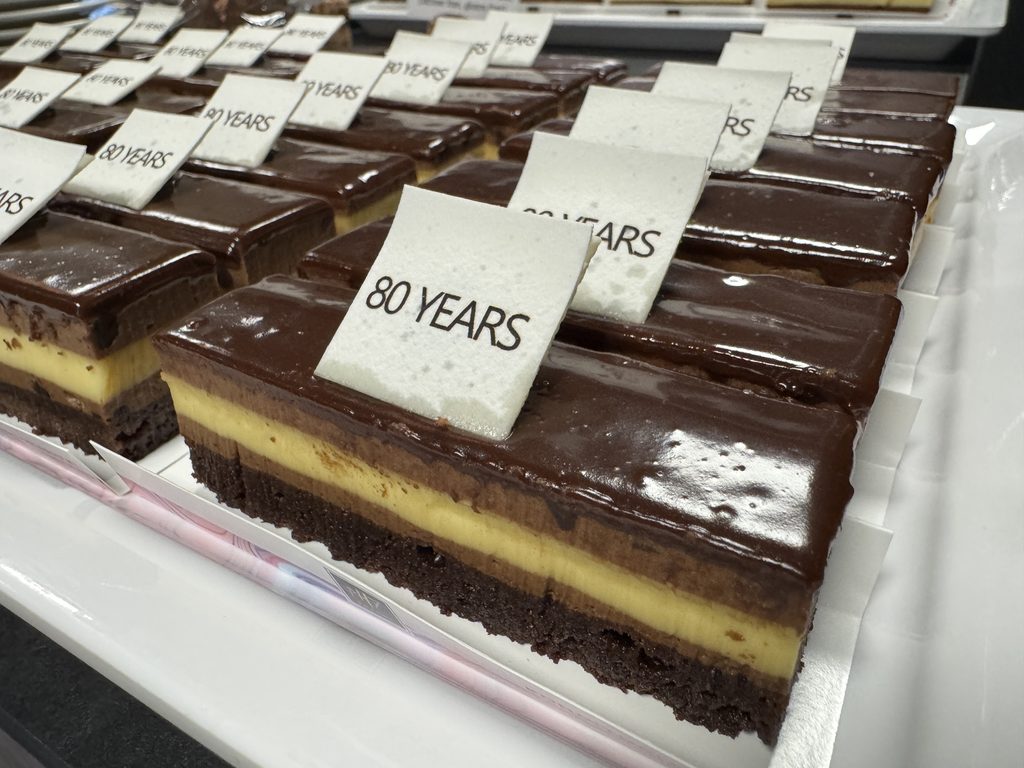
The expansion has continued. Saab’s current Finnish figures give 320 employees and four locations. Tampere Chamber of Commerce reported in September that around 270 people work in Tampere alone and placed turnover at EUR 88 million, an increase of 506 per cent from the previous year.
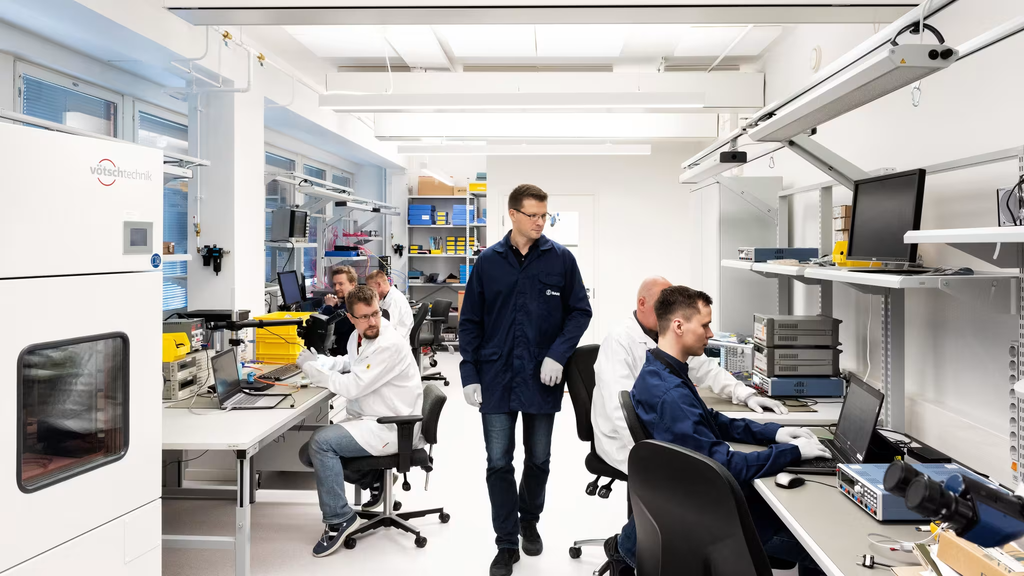
At the 80th-anniversary gathering, Tampere’s Deputy Mayor Jaakko Mustakallio gave the city’s view of what has happened: “It has truly become a crown jewel of our local industry.”
He was referring to Saab’s Tampere Technology Centre, with its research in electronic warfare and microwave technology. For Tampere, the operation has grown from another foreign-owned engineering office into a substantial high-technology employer with research, product responsibility and serial manufacturing in the same city.
That description is increasingly justified. Tampere today develops two major families of Saab capability: electronic warfare systems and the 9LV naval combat management system. The city also contains the production line for Sirius Compact, Saab Finland’s first major locally originated product family to reach series production. According to the company’s latest public information, Tampere has become one of Saab’s important centres for microwave and radio-frequency technology.
Weapons Arrived Much Earlier than in 1946
Saab dates its corporate history in Finland from the establishment of Oy Suomen Bofors Ab in 1946. The Swedish Saab company was founded in 1937 to build military aircraft. Bofors was one of the industrial interests involved in the creation of Saab, and much later became part of the modern Saab group through the consolidation of Sweden’s defence industry. Saab therefore counts the Finnish Bofors company as part of its own corporate ancestry.
Oy Suomen Bofors Ab was entered in the Finnish Trade Register on 8 March 1946. Uddeholm’s history of the company describes Bofors as the first Swedish company to establish a subsidiary in Finland after the wars. The military relationship with Bofors stretches much further back.
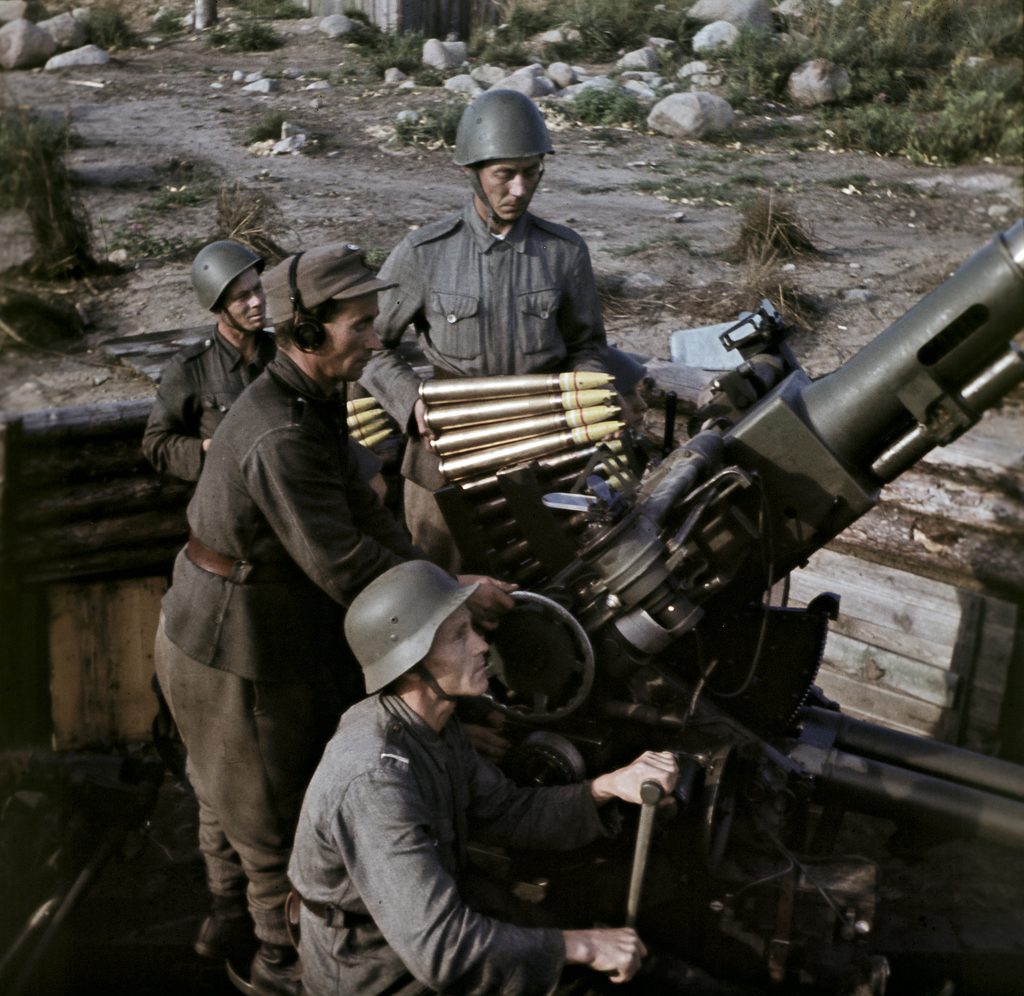
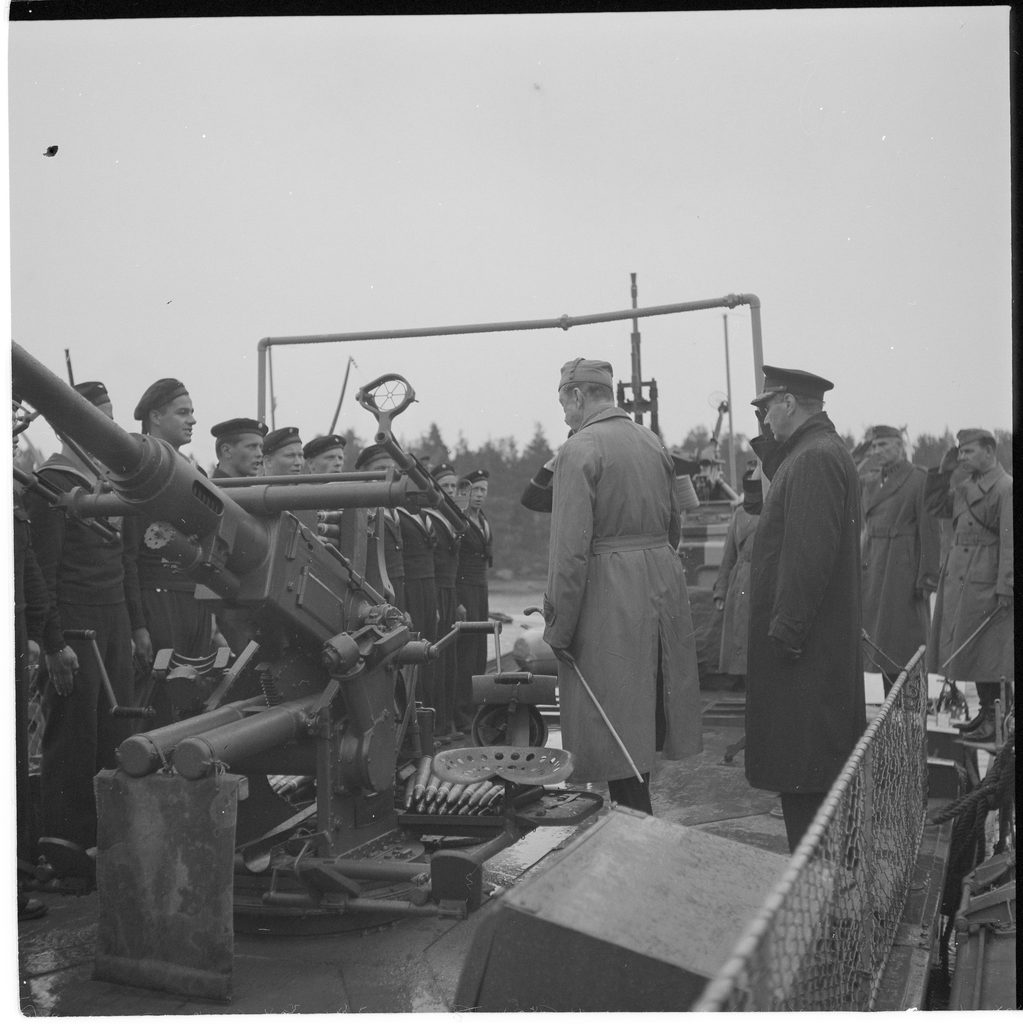
The Finnish Anti-Aircraft Museum records Finnish purchases of heavy Bofors anti-aircraft guns as early as 1927–29, only ten years after Finland gained its independence from Russian Empire. Sixteen were acquired from Sweden, forming an important part of Finnish heavy anti-aircraft defence during the 1930s.
The famous 40 mm Bofors arrived before the Winter War. The first nine reached Finland in spring 1939. Another 56 were purchased in October and November, with further acquisitions during the war. The Finnish Anti-Aircraft Museum credits Bofors 40 mm guns with 128 Soviet aircraft destroyed during the Winter War and more than 500 across the Winter and Continuation Wars combined.
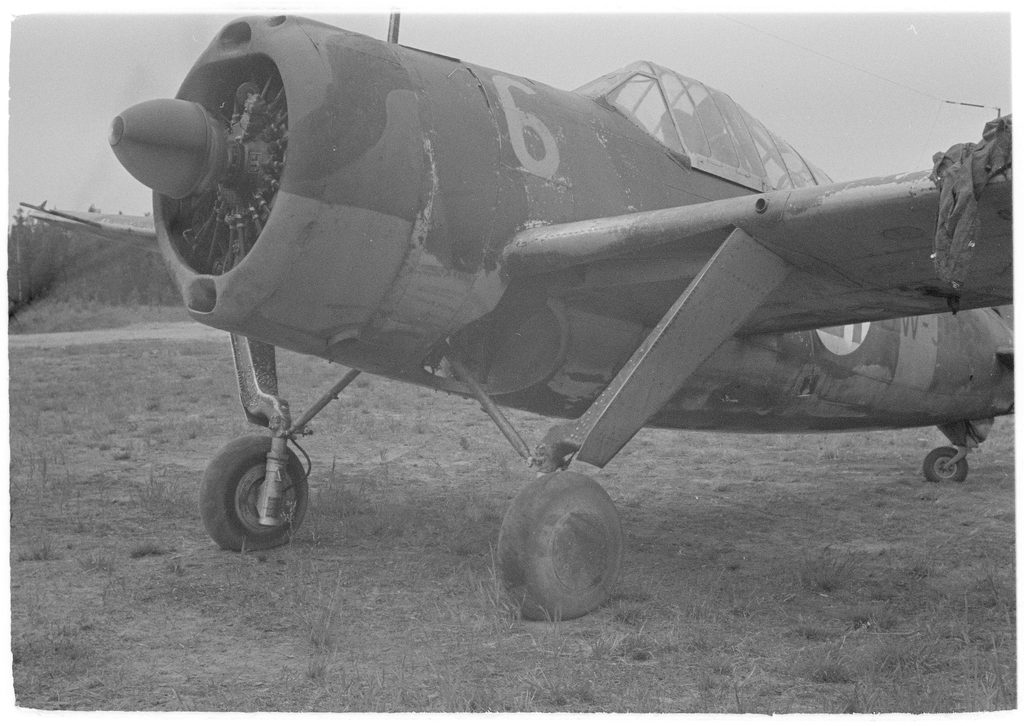
Saab itself also entered the Finnish story during the Winter War. Finland ordered 44 Brewster 239 fighters from the United States late in 1939. Their components travelled by rail through Norway to Saab’s works at Trollhättan, where the aircraft were assembled and test-flown before delivery to Finland. Some Fiat G.50 fighters received similar treatment there. Saab’s factory manager in Trollhättan was Clas Eric Sparré, a nephew of the Commander-in-Chief of the Finnish Army, Marshal Carl Gustaf Emil Mannerheim.
Bofors Sold Guns, Steel, Chemicals and Industrial Services
The Finnish Bofors company, founded in 1946, was broader than a defence sales office. Its first Helsinki office was on Eteläesplanadi, near the presidential palace. Steel was stored in a cellar nearby. A heat-treatment workshop operated initially from a former laundry on Töölönkatu, quite near the parliament. It later moved to Lönnrotinkatu, near the polytechnic university, and eventually to a purpose-built site in Pitäjänmäki, an industrial area on the outskirts of Helsinki.
The range was eclectic. Oy Suomen Bofors sold special steels and provided hardening services. It also represented defence products, pharmaceuticals, chemicals, plastics and industrial wear parts.
The company spread outside Helsinki. Heat-treatment operations opened in Turku in 1966, Tampere in 1969 and Vaasa in 1974. This gives Saab’s present-day presence in Tampere a historical echo. Bofors-related industrial activity had reached the city more than half a century earlier.
Saab Finland’s former managing director, Anders Gardberg, recalled at the company’s 80th-anniversary gathering that the operation grew to roughly 50 to 80 employees, including workshop personnel. On the defence side, it supplied naval and anti-aircraft guns and later became involved in electronics, combat management and simulation.
The corporate family tree then became complicated. Bofors underwent extensive restructuring during the 1980s. The civil steel operation in Finland was sold to Uddeholm Tooling, and Oy Suomen Bofors Ab became Oy Uddeholm Ab on 1 October 1986. Electronics and other activities were separated into their own companies. The defence lineage ultimately travelled through the Swedish Celsius group and into Saab.
This is why an 80th anniversary can legitimately describe a long industrial inheritance while the names and legal entities changed several times along the way.
When Saab Became a Finnish Household Name
Defence built the relationship between the company and the country. But it was cars that made Saab part of Finnish life, even part of their identity.
In spring 1966, the Finnish government instructed state-owned Valmet to investigate the establishment of a passenger-car factory. Valmet sought proposals from 15 manufacturers. Saab-Scania was selected as the partner. Valmet and Saab signed their founders’ agreement on 15 August 1968, and Oy Saab-Valmet Ab was entered in the Trade Register on 29 November.
The Wallenberg connection belongs to the mythology surrounding that decision.
Marcus Wallenberg was central to Sweden’s post-war industrial establishment and to Saab. President Urho Kekkonen developed a close relationship with him. A Yle documentary on Saab-Valmet later raised the possibility that their friendship helped the project along. It remains an interpretation rather than a documented explanation for the selection. The documented process involved competing proposals from 15 car manufacturers and Valmet’s industrial assessment.
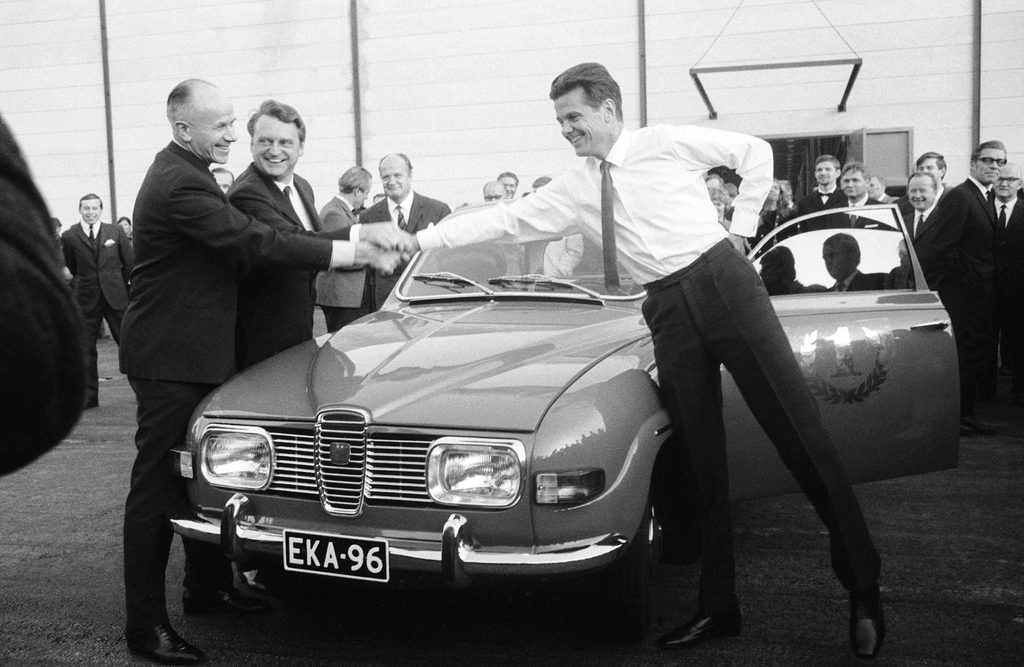
At six in the morning on 13 November 1969, the first car was completed at Uusikaupunki. It was a Saab 96. The factory formally presented the beginning of production at a ceremony later that afternoon.
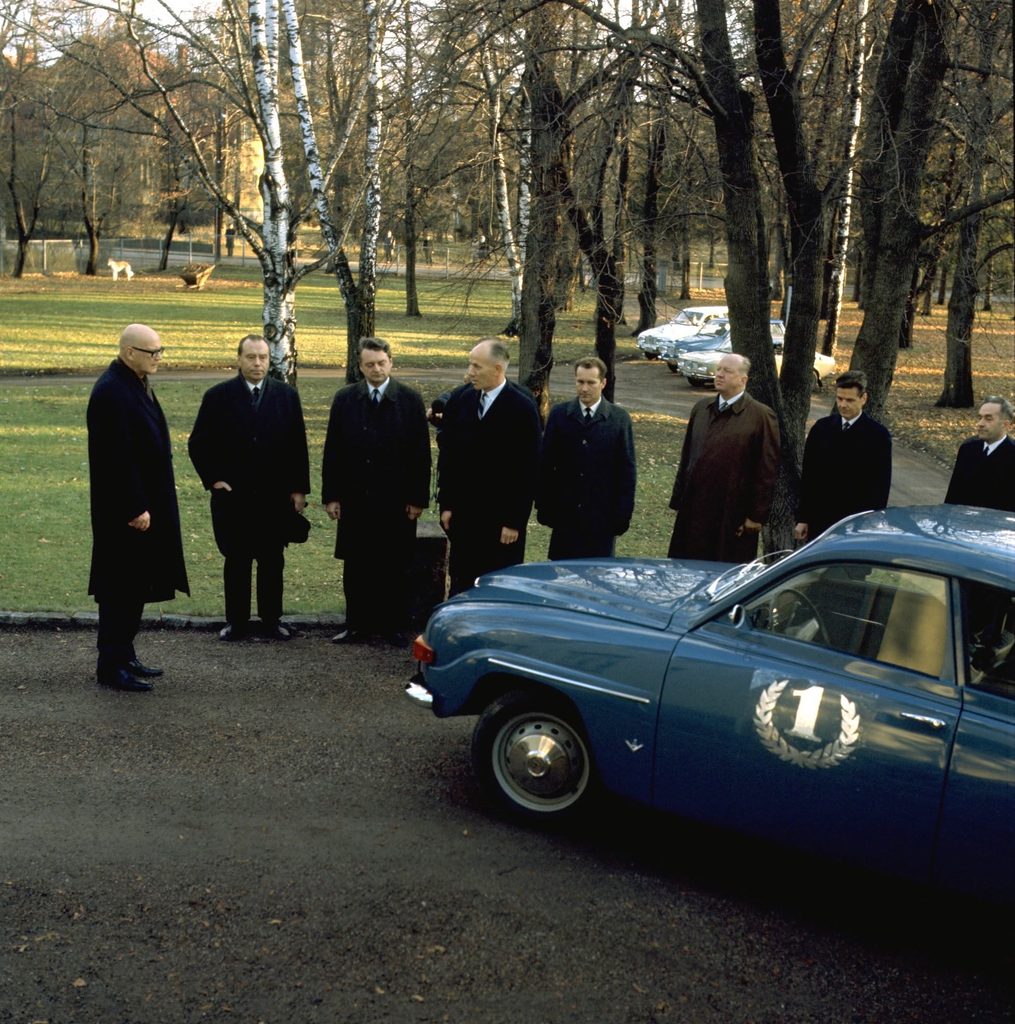
The first car had registration EKA-96 (“FIRST–96”) and was delivered to President Kekkonen the following day. Kekkonen subsequently used it on a provincial tour during which he met 12 provincial governors. Since the president did not have a driving licence, his wife Sylvi Kekkonen used the car later, instead.
The EKA–96 eventually returned to Uusikaupunki and is preserved in the local automobile museum.
The Police Saabs Came First
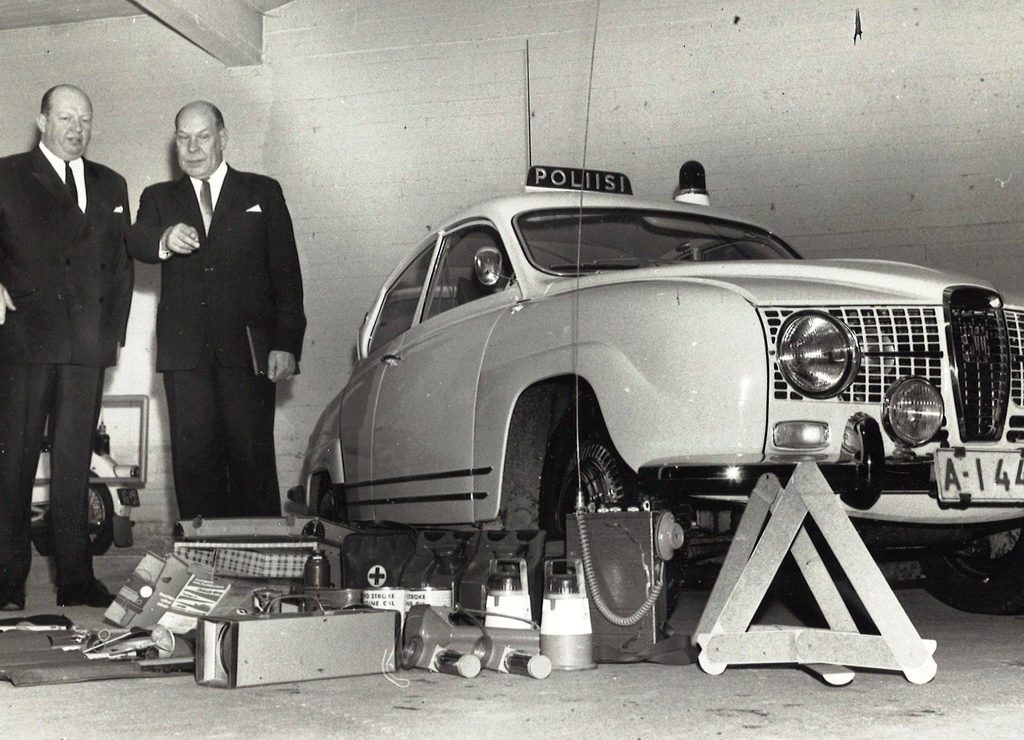
Between 1965 and 1968, Scan-Auto donated a total of four fully equipped Saab police cars to the Finnish state. In this photograph, taken on 24 February 1965, Managing Director Claes Rydman (left) presents a “goodwill patrol car” to Chief Superintendent Fjalar Jarva of the National Traffic Police. (Photo: Creative Commons)
Saab had already found another effective route into Finnish public life before Uusikaupunki started production. From 1965 to 1968, importer Scan-Auto donated four police-equipped Saab 96s to the Finnish state. They became known as the Good Will Saabs and were used principally to help motorists in trouble, although some saw ordinary patrol duty.
The first, a 1965 Saab 96 Sport delivered to the Traffic Police in Turku, had Saab’s three-cylinder two-stroke engine. The second, delivered to Vaasa in 1966, was also a two-stroke. Both later received four-stroke V4 engines after engine failures.
The 1965 police car was sent back to Saab in Sweden in autumn 1966 and received a Ford V4 before the V4 officially became a Saab production option for the 1967 model year. The Finnish police therefore acquired one of the early V4 conversions almost by accident. The final two goodwill cars were V4-powered from the outset.
Traditional two-strokes consume lubricating oil during operation. Some Saab versions used premixed petrol and oil, while the Saab Sport had a separate oil reservoir and lubrication system.
The police relationship later grew much larger. Saab became a familiar Finnish official car as well as a family car, rally car and company car.
738,135 Finnish Saabs
Uusikaupunki eventually manufactured 738,135 Saab cars between 1969 and 2003. The Saab 900 was the most numerous individual model, with 238,898 built there.
During its early years, bodies and components still arrived from Sweden. Gradually, the Finnish operation accumulated manufacturing expertise, automation, engineering and product-development responsibility. The factory-built models included the Saab 96, 99, 90, 900, 9000 and 9-3.
Its most distinctive international role came with the convertible. The Saab 900 Cabriolet entered production in Uusikaupunki in early 1986. The factory became its sole manufacturing site. Finnish engineers played an increasingly important role in its development, and Saab-Valmet assumed full maintenance-engineering responsibility from the 1987 model year.
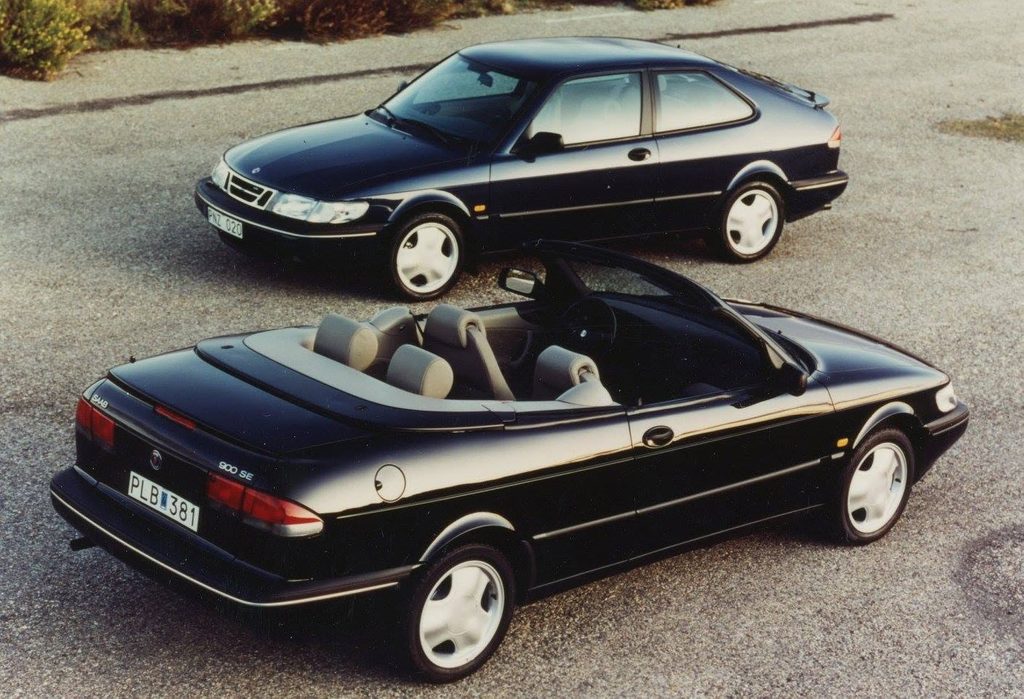
Between 1986 and 2003, Uusikaupunki produced 198,032 Saab convertibles. At times demand was so strong that customers waited close to a year. Production eventually moved to Graz, Austria, in 2003.
That period matters because Finland had progressed from assembling a Swedish product to engineering one of Saab’s most recognisable exports.
The automobile business, Anders Gardberg noted at the Saab anniversary event, “was certainly not always the most profitable part of the group”, adding that Saab owners might therefore consider themselves recipients of a little support from the Wallenberg sphere.
Cars produced enormous brand recognition and engineering prestige for the company. Profitability proved considerably harder.
In 1990 Saab’s aviation and automobile operations were separated. General Motors entered Saab Automobile, while defence and aerospace remained in Saab AB. Valmet took full control of the Finnish manufacturing business in the early 1990s, and the company became Valmet Automotive in 1995.
Part of a Wider Nordic Expansion
Finland occupies an unusually deep place in Saab’s international history, although it was not Saab’s first foreign market. Denmark had Saab car sales from 1950. Local assembly began at Glostrup in 1958, more than a decade before Uusikaupunki, and continued until 1963. An account based largely on material from the Saab Veterans Association puts Danish assembly at 9,630 cars. Denmark was Saab’s largest export car market in 1961 and 1962.
Norway also became a substantial Saab military customer during the 1950s. Norwegian authorities bought 25 Saab 91B-2 Safir trainers in the middle of the decade. Jærmuseet, a regional museum and science centre for South-West Norway, records 30 Safirs in Norwegian military use overall, serving from 1956 until 1982.
Modern local corporate structures came later. The present Saab Technologies Norway AS dates from 2006. In Denmark, Saab made a major local defence-industry acquisition that same year when it bought Maersk Data Defence, with around 210 employees.
Safir and Draken Brought Saab into the Finnish Air Force
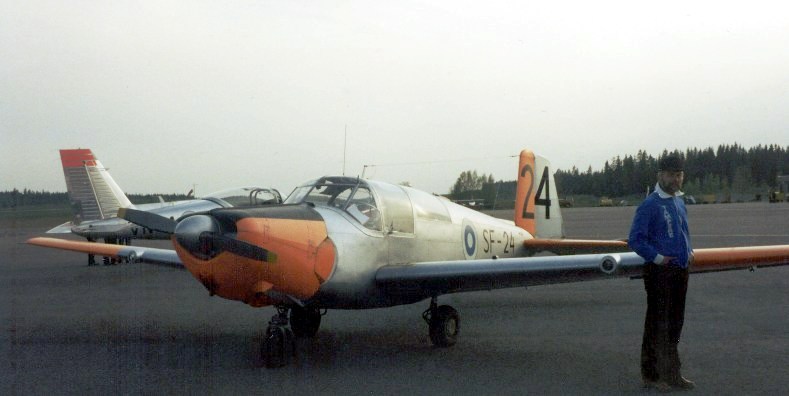
Cars may have been more visible, but military aviation maintained the original connection. The Finnish Air Force operated 36 Saab 91D Safirs from 1958 to 1982. The small trainers became known affectionately as Sähvä. The decisive step came with the Saab 35 Draken.
Finland confirmed its first order for 12 Drakens in April 1970. They arrived in components and were assembled by Valmet. The Air Force ultimately operated 48 Drakens, with the type serving from 1972 until its final Finnish flight in August 2000.
The aircraft represented a major advance with its radar and weapons system, which provided a genuine all-weather interception capability. Finnish pilots also had to master the Draken’s demanding double-delta aerodynamics, including the danger of deep stall, for which they received specialised training with the Swedish Air Force.
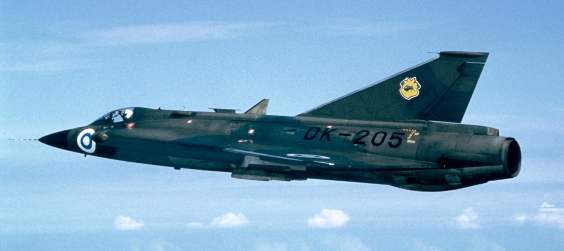
The industrial relationship extended beyond purchasing finished equipment. Twelve Saab 35S fighters were assembled in Finland. That pattern became characteristic of Saab’s Finnish relationship: procurement, local skills, maintenance and eventually domestic engineering.
From Bofors to Celsius to the modern Saab
The Saab known today took shape through consolidation during the 1990s and 2000s. Bofors became part of Celsius. In November 1999 Saab launched its offer for Celsius, describing the combination as the creation of a leading Nordic defence company. By February 2000 Saab controlled about 99 per cent of Celsius. The businesses were then reorganised, with missiles and light weapons becoming part of Saab while major Bofors artillery activities went elsewhere.
The Finnish organisation followed those changes. The Saab history records the Bofors defence company becoming SaabTech Finland in 2000 and later Saab International Finland, before the present Saab Finland name was adopted.
Saab also acquired 49 per cent of Finnish defence company Elesco in October 2004 and the remaining 51 per cent in January 2005. Elesco employed 35 people and specialised in systems integration for the Finnish Defence Forces.
Saab and TietoEnator then created TietoSaab Systems. The original ownership was 60 per cent TietoEnator and 40 per cent Saab. TietoSaab combined Elesco with TietoEnator’s defence activities and began operating in 2006. It later became Saab Systems and, in 2014, part of Combitech.
Combitech remains a separate Saab-group presence in Finland, with roughly 130 employees.
The Tampere Turn
The decisive transformation of Saab Finland itself began around 2015. When Anders Gardberg took over that year, Saab described its Finnish operation as a three-person marketing and sales organisation. When he retired in 2024, it was approaching 200 employees and had developed its own high-technology products. Two large Finnish competitions were approaching during his early years: the Navy’s Squadron 2020 programme and the Air Force’s HX fighter replacement.
Saab also began a long-term research relationship with Aalto University. The first ten-year agreement was signed in 2017. The collaboration now covers areas including antennas, microwave technology, radar signal processing, microelectronics, artificial intelligence, quantum technology, acoustics and sensing.
The scale is unusual for a corporate-university partnership. Aalto’s September 2026 figures record 10 completed doctorates, 16 master’s degrees, ten patent applications, around 70 scientific articles and roughly 40 programme alumni now working at Saab. A second ten-year agreement extends the cooperation to 2036. Saab’s investment across the two periods exceeds €30 million.
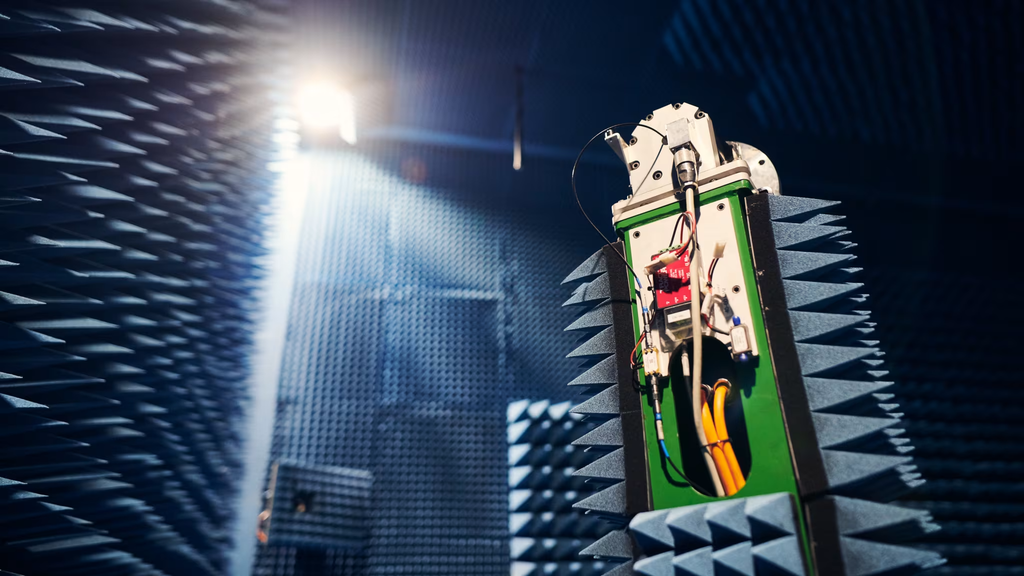
The city of Tampere offered something else Saab needed: engineers. The collapse and downsizing of Nokia’s and Microsoft’s Finnish mobile-phone activities had released an extraordinary pool of specialists in radio frequencies, microwave engineering, antennas, signal processing and miniaturised electronics.
Saab opened its Tampere Technology Centre at the end of 2017. By 2020 it had 50 engineers and had added a 9LV naval software unit.
Saab was simultaneously competing to sell Gripen E and GlobalEye to Finland under the HX programme. Management understood that the Finnish operation needed a future independent of the result.
“We needed to have achieved sufficient critical mass in Finland by the time the decision was made,” Gardberg recalled, so that the operation could “survive and continue developing”.
Finland selected the F-35A on 10 December 2021, but Saab kept expanding in Finland. The technology centre had acquired a purpose beyond the fighter campaign.
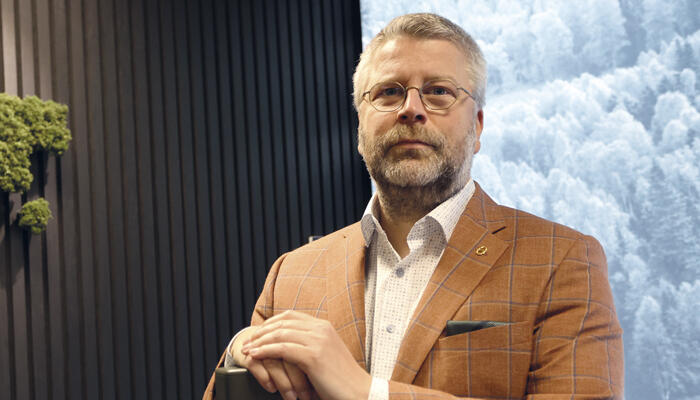
“We have built an agile organisation and ecosystem in Finland producing new products from research at record speed. This allows us to bring disruptive technology to the modern battlefield,” Saab Finland’s current managing director, Kristian Tornivaara, said.
Saab’s role is defined through local research and technology, industrial partnerships and Finnish-Swedish bilateral cooperation. The university research at lower technology-readiness levels, demonstration projects supported by organisations such as Business Finland and the European Defence Fund, are followed by product development and industrialisation.
Four Kilograms Changed Saab Finland
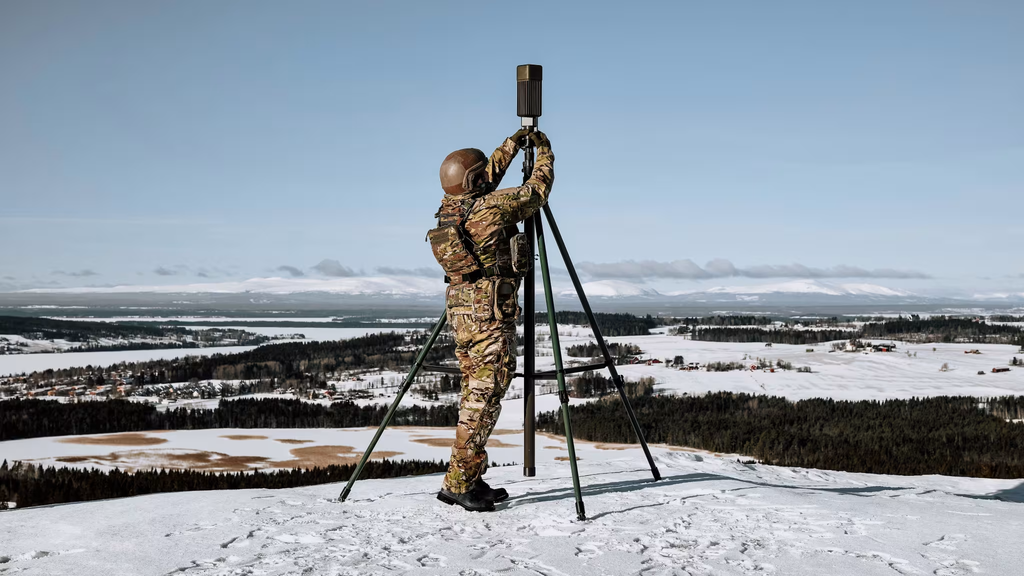
Sirius Compact weighs about four kilograms in the configuration Saab highlights. It is a passive electronic warfare sensor that listens for electromagnetic emissions such as radar and data-link signals, classifies them and can help determine where they originate. Because it is passive, it does its work without transmitting its own radar signal. Several sensors can cooperate as a network, including from vehicles, vessels, masts or drones.
Sirius Compact was developed largely at the Tampere Technology Centre and introduced in 2022. In 2025 Saab opened new Tampere production facilities and began serial manufacture, with the first deliveries from the production line scheduled for April.
It is Saab Finland’s first own product to enter serial production. According to Anders Gardberg, Saab Finland’s managing director at that time, engineers coming from the mobile-phone industry were accustomed to making each generation of equipment smaller and more capable. “Miniaturisation is the key,” he said.
Tampere now combines research, product responsibility and serial manufacturing. “Almost all production is exported,” the current managing director, Tornivaara, said. “Around half the workforce are military reservists, giving product developers direct familiarity with the conditions and users for which they design equipment,” he said. The industrial property rights for its locally developed products are held in Finland, and their exports are licensed by Finnish authorities. Giraffe radars remain a major part of Saab’s Finnish defence relationship, particularly in air surveillance and naval systems. Tampere’s contributes Sirius and electronic warfare, alongside 9LV development, to that system.
From Missile Boats to Corvettes
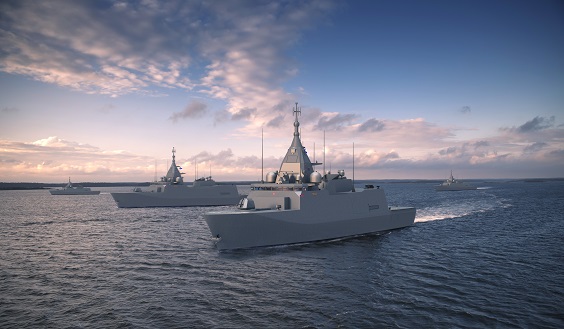
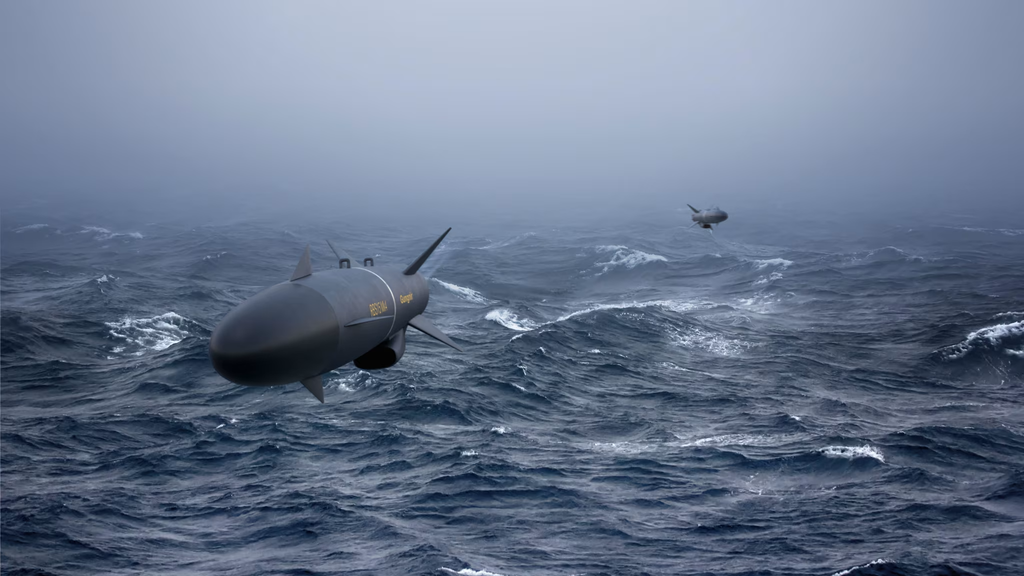
The Finnish Navy provides another major pillar of Saab’s presence in the country. Finnish vessels have used Saab technologies including RBS15 anti-ship missiles, known locally as MTO 85 and MTO 85M, Sea Giraffe radars, CEROS fire-control systems, 9LV combat management, Trackfire weapon stations and Double Eagle remotely operated underwater vehicles.
The largest single step came in September 2019, when Saab received a €412 million contract to supply and integrate the combat system for the four new Pohjanmaa-class corvettes under Squadron 2020.
The package includes 9LV, Sea Giraffe 4A Fixed Face and Sea Giraffe 1X radars, TactiCall communications and Trackfire. Work is spread across Saab operations in several countries, with Finland taking an increasingly important share of software, integration and long-term support.
The Finnish 9LV Operations Centre and its software and combat-system-to-ship integration teams specifically support Squadron 2020.
The relationship is also still producing new orders. On 28 August 2026, Finland placed an initial order worth SEK 1.2 billion, about EUR 108 million, for Saab’s RBS 70 NG short-range air-defence system. The framework allows later orders for additional systems, training, spares and maintenance equipment. Finland has operated the earlier RBS 70 since 2008.
The Old Saab Car Factory is Returning to Defence
There is a final connection between the car era and the present defence boom. The car plant on the Finnish Western coast, in Uusikaupunki, stopped manufacturing Saabs in 2003. The factory survived through contract manufacturing for brands including Porsche and Mercedes-Benz and through engineering and battery businesses.
Now defence vehicles are entering the site. Patria and Valmet Automotive agreed in December 2025 to transfer Patria 6×6 manufacturing technology to Uusikaupunki and make the first vehicles there. In June 2026, they expanded the arrangement into a multi-year agreement with planned annual production capacity measured in hundreds of armoured vehicles. Patria said the first vehicles would be manufactured at Uusikaupunki during the second half of 2026.
Saab has no role in the Patria 6×6 programme, but Saab’s industrial inheritance made the transition possible. The factory established by Saab and Valmet in 1968 created decades of competence in vehicle production, welding, manufacturing engineering, automation, quality control and international supply chains. Almost six decades later, that infrastructure and know-how are being redirected partly towards defence.
From a Swedish Supplier to a Finnish Export Base
The Saab group recorded SEK 79.1 billion (EUR 7 billion) in sales in 2025, up 24 per cent, while order bookings reached SEK 168.5 billion (EUR 15 billion) and the backlog ended the year at SEK 274.5 billion (EUR 24.3 billion). Organic sales growth reached 29.8 per cent in the second quarter of 2026.
Finland has been growing much faster from a much smaller base. Three employees in 2015 to around 70 in 2021, roughly 275 by the end of 2025 and 320 in the third quarter of 2026.
The organisation itself has also changed character. In the earlier decades, Finland bought, assembled, operated and maintained Swedish technology. Uusikaupunki then became a manufacturing and engineering centre for Saab cars. Tampere now develops Saab technology that originates in Finland, holds local product responsibility and manufactures it for customers abroad.
There have been many Saabs in Finland throughout its 80-year history. There was the Bofors Saab, connected with guns, steel and industrial machinery. There was the Air Force Saab of Safirs and Drakens. There was the family-car Saab, the police Saab and the rally Saab. There was the Saab-Valmet that sent almost 200,000 Finnish-built convertibles into the world.
The latest version of Saab in Finland is less visible. It consists of microwave laboratories, software teams, university researchers, naval systems engineers and a production line in Tampere turning out small passive sensors that listen to the electromagnetic battlefield.
Read More:
- Saab: 80 vuotta Suomessa (in Finnish)
- Saab: Saabin historia Suomessa (in Finnish)
- Saab: Saab Suomessa (in Finnish)
- Saab: Saab Finland saa uuden toimitusjohtajan (in Finnish)
- Uddeholm: Historia Uddeholm Suomessa (in Finnish)
- Ilmatorjuntamuseo: 40 ItK/36-39 Bofors (in Finnish)
- Ilmatorjuntamuseo: TYKIT (in Finnish)
- Yle Elävä arkisto: Saab-Valmetin henkilöautotehdas nousi Suomeen ennätysajassa (in Finnish)
- Yle: Miljoona autoa vajaassa 50 vuodessa – katso kuvat kaikista malleista, joita Uudenkaupungin autotehdas on rakentanut (in Finnish)
- Yle: Uudenkaupungin autotehdas hiljentyi – työntekijöille jaetaan lopputilejä (in Finnish)
- Valmet Automotive: Valmet Automotive celebrates its 50th year of operation
- Valmet Automotive: Valmet Automotive – 50 years of Finnish car manufacturing
- Valmet Automotive: Company
- Central Archives for Finnish Business Records, ELKA: Saab – Koko kansan auto (in Finnish)
- Tommi’s Saab Site: Scan-Auton hyvän tahdon Poliisi Saabit (in Finnish)
- Tommi’s Saab Site: Kolmisylinterinen kaksitahtikone – SAAB (in Finnish)
- Suomen Ilmavoimamuseo: Saab 35FS Draken (DK-223) (in Finnish)
- Saab: Draken – 50 years in the air
- Flyhistorisk Museum Sola, Jærmuseet: Saab 91B-2 Safir
- SaabWorld: Saab assembly at ISIS Motor A/S in Denmark 1957-1963
- Brønnøysundregistrene: SAAB TECHNOLOGIES NORWAY AS
- Saab: Saab buys Denmark’s Maersk Data Defence
- Saab: Saab’s acquisition of Maersk Data Defence complete
- Saab: Saab and Celsius create leading Nordic Defense Company
- Saab: Saab acquires 49 percent of Elesco
- Saab: Saab acquires 51 percent of Elesco
- Saab: Saab and TietoEnator create joint venture in Finland
- Saab: Company in brief
- Saab: The cars: Saab’s ‘little green car’ – a classic in Sweden’s welfare state
- Aalto University: Saab partnership: Building expertise that lasts
- Aalto University: Aalto University and Saab sign a new ten-year collaboration agreement
- Aalto University: Strategic corporate partner Saab
- Tampereen kauppakamarilehti: Tukipalveluista konsernin globaaliksi osaamiskeskukseksi (in Finnish)
- Kouvolan turvallisuus: Saabilla on pitkät perinteet turvallisuuden tekijänä Suomessa (in Finnish)
- Saab: Saab Teknologiakeskus kasvaa vauhdilla – Tampereelle perustettu uusi merivoimien teknologiaan keskittyvä yksikkö (in Finnish)
- Saab: Saabin Sirius Compact tarjoaa uudenlaista joustavuutta elektroniseen sodankäyntiin (in Finnish)
- Saab: Sirius Compact – Hiljaista voimaa (in Finnish)
- Saab: Kun hiljaisuus kertoo enemmän kuin tuhat sanaa (in Finnish)
- Saab: Saab opens new production facility for Sirius Compact in Tampere
- Saab: Saab avaa uuden tuotantotilan Sirius Compact -sensorien valmistukseen Tampereella (in Finnish)
- Saab: Serial production of high-tech sensor as Saab expands in Finland
- Saab: Saab vahvistaa jalansijaa Suomessa aloittamalla korkean teknologian sensorien sarjatuotannon (in Finnish)
- Saab: Saab julkistaa uuden Sirius Compact R-ESM -järjestelmän (in Finnish)
- Saab: Saab sai tilauksen Suomen Laivue 2020 -hankkeesta (in Finnish)
- Saab: Saabille RBS 70 NG -tilaus Suomesta (in Finnish)
- Saab: Saab receives order for RBS 70 NG from Finland
- Saab: Saab Delivers its Best and Final Offer for Finland
- Finnish Ministry of Defence: The Lockheed Martin F-35A Lightning II is Finland’s next multi-role fighter
- Patria: Patria and Valmet Automotive to significantly expand their cooperation in the production of armoured vehicles
- Suomen Asiakastieto: Saab Finland Oy – Taloustiedot (in Finnish)
- Saab: Saab’s Annual Report 2025
- Saab: Saab Q2 results 2026: Strong order bookings reinforce market position
- Marcus Wallenberg Foundation: Foundation
- Saab: The RBS15 family
- Saab: Sirius Compact R-ESM
- The Finnish Navy: Squadron 2020
- The Finnish Navy: Pohjanmaa-class corvettes