
A Ukrainian drone maker born during the full-scale war is preparing to bring its combat-tested technology into partnership with one of the Nordic region’s biggest defence companies. General Cherry brings battlefield feedback, rapid development and production capacity measured in tens of thousands of drones. Patria brings industrial scale, systems expertise and access to Western defence markets. Their deal also reveals how much Europe still has to learn about producing weapons at wartime speed.
When Patria went looking for a partner to accelerate its move into unmanned warfare, it went straight to Ukraine.
There was a simple reason. Ukraine has spent more than four years compressing the normal defence-development cycle from years into months, weeks and sometimes days. Products are built, sent to the front, broken, jammed, modified and sent back again. Manufacturers live inside the feedback loop.
Patria had already made unmanned technologies one of its strategic areas. What it lacked, according to Mikko Leino, Executive Vice President of its Defence and Weapon Systems business, was proven serial-production capability in this particular field.
“We had been developing different kinds of capabilities in that area already for years, but we were missing the real serial production capability,” Leino told Nordic Defence Review at the Kouvola Security Conference in September.
Ukraine was the obvious place to look.
“There are hundreds of drone companies currently in Ukraine,” Leino said. Patria drew up a list of possible partners, held discussions and evaluated candidates.
“We then concluded that General Cherry seemed to be by far the best choice for us.”
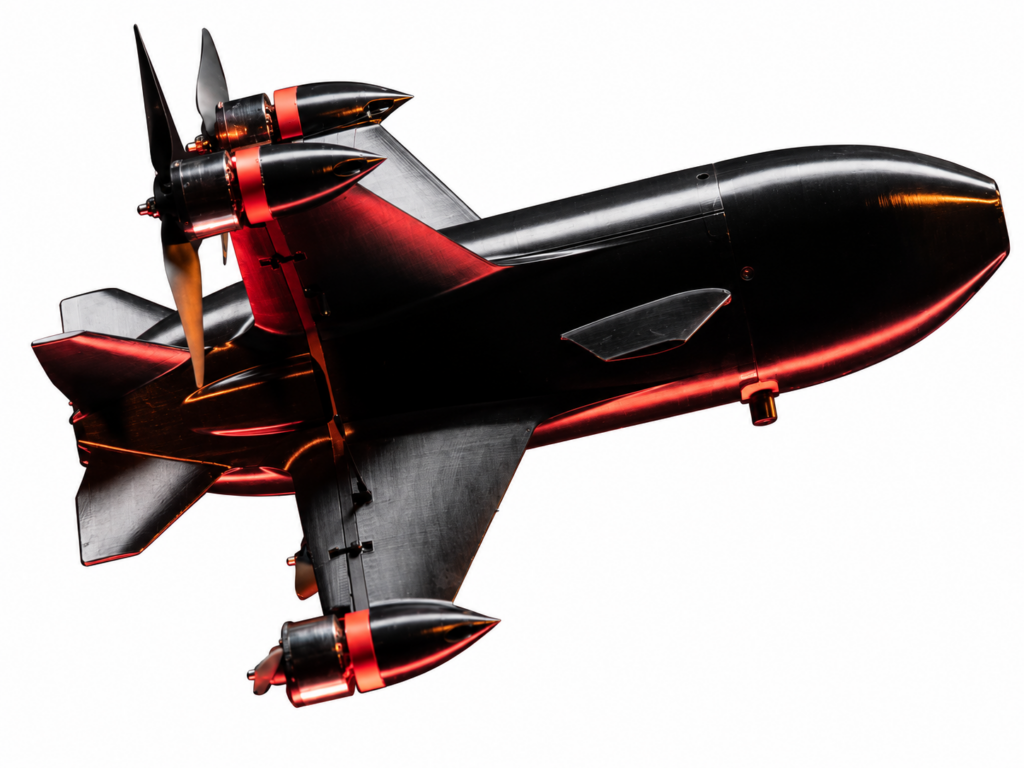
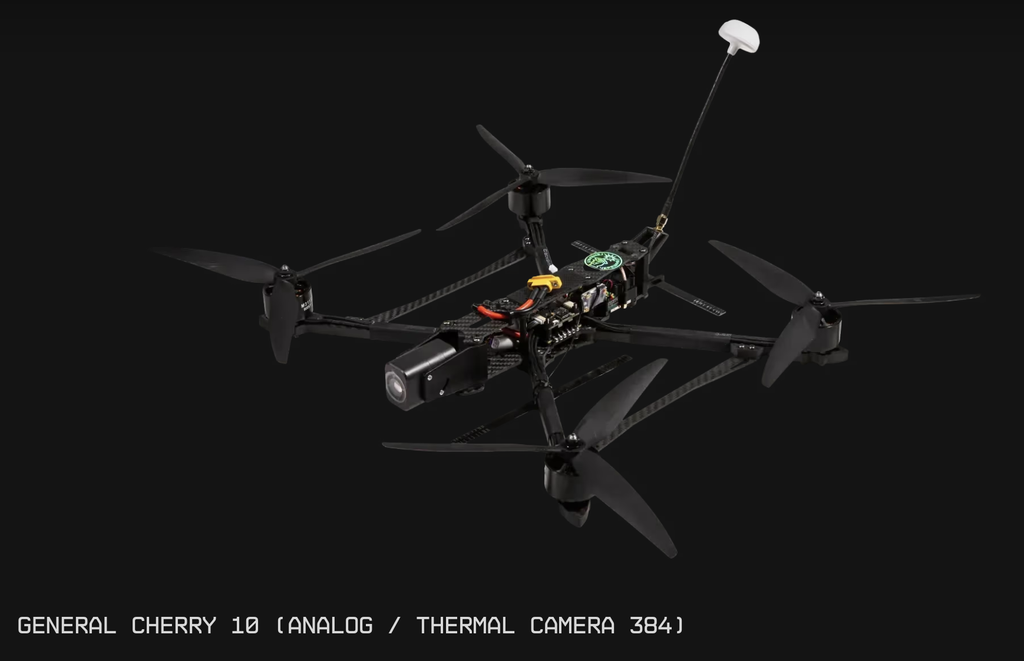
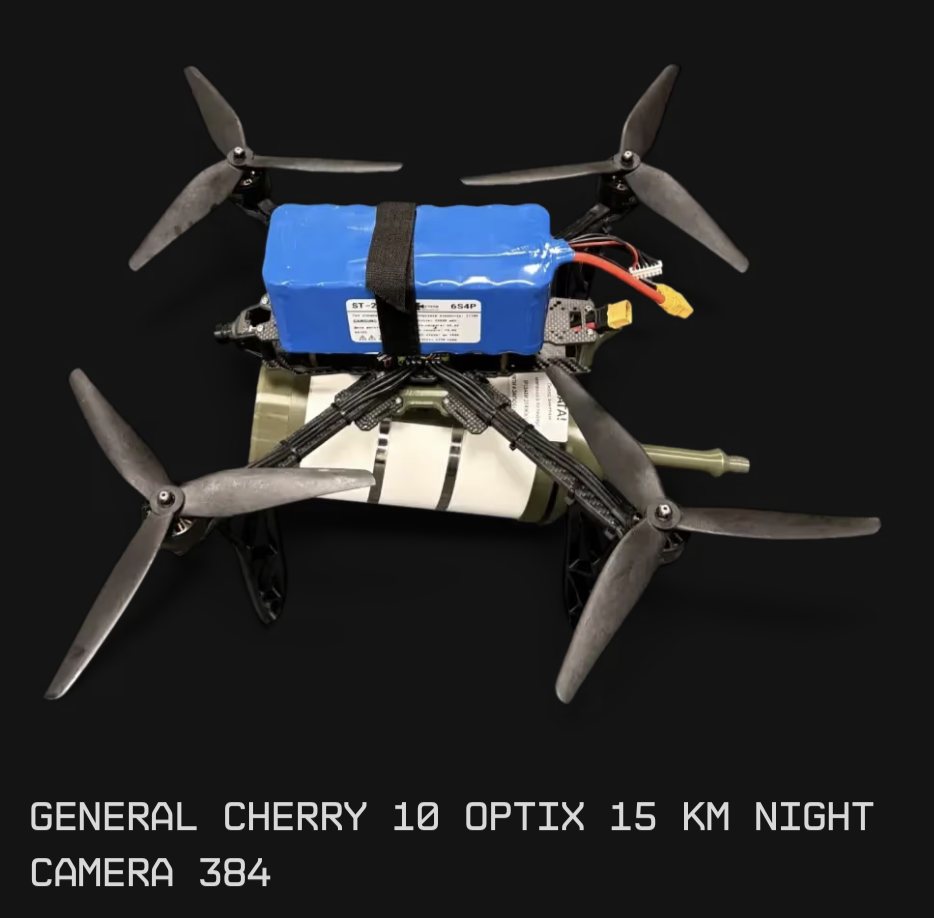
The resulting partnership was formalised on 23 August 2026, when Patria and Center of Unmanned Technologies LLC, better known as General Cherry, signed a Letter of Intent. Patria said the plan was to begin drone production in Finland and jointly develop unmanned systems for Western European defence requirements. General Cherry’s portfolio covers strike FPV drones, fibre-optic drones, aerial interceptors and fixed-wing UAVs.
The setting gave the agreement unusual political weight. The signing took place in Kyiv during Finnish President Alexander Stubb’s visit to Ukraine on 23 and 24 August. Stubb travelled with Finnish Defence Forces Commander General Janne Jaakkola and a business delegation including Patria, Nokia, ICEYE, Insta, Boomeranger, Sensofusion and NestAI. Three Finnish companies signed letters of intent with Ukrainian partners during the visit.
The Patria-General Cherry agreement was signed in the presence of Stubb and Ukrainian President Volodymyr Zelenskyy. Patria’s President and CEO is Panu Routila, who took over the post in April 2026.
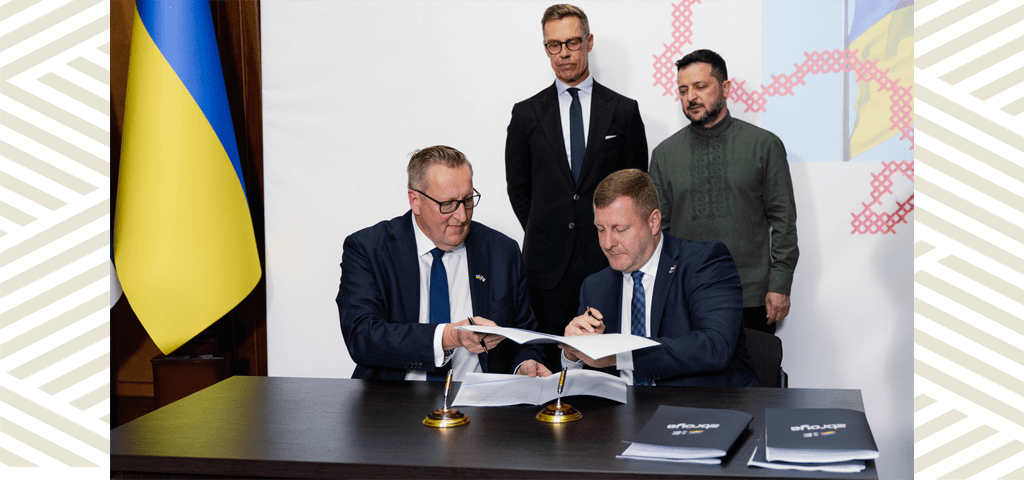
The agreement formed part of a broader Ukrainian-Finnish industrial package. “Defence cooperation has five different domains: maritime, air, land, cyber and space. I think 90 percent of [Finland’s] drone production will go to Ukraine, while ten percent of production will remain in Finland,” president Stubb said in Ukraine. According to the Ukrainian presidency, the documents included cooperation on producing drones in Finland for Ukrainian and European needs, maritime unmanned systems and unmanned ground systems.
Stubb summed up the logic during the visit: in the short term Finland can help Ukraine, while over the longer term Ukraine’s wartime experience can strengthen Finland.
That two-way flow of technology and experience sits at the centre of the General Cherry deal.
A Company Built During a War
General Cherry has followed a development path almost impossible to reproduce in a conventional Western defence company.
Its roots lie in a volunteer initiative created after Russia launched its full-scale invasion in 2022. The team supplied Ukrainian forces with vehicles, protective equipment and other essentials, while developing close links with frontline units. In autumn 2023, Yaroslav Hryshyn, Stanislav Hryshyn, Rudolf Akopian and their team began producing FPV drones under the General Cherry name.
The company says its first batches went directly into combat trials. Feedback from operators drove modifications and the decision to scale production.
By 2024 it had moved into serial production. Manufacturing was dispersed across several regions of Ukraine to reduce the risk from Russian strikes. By 2025, capacity had reached tens of thousands of drones a month. General Cherry now says it has manufacturing capacity for more than 100,000 unmanned systems a month, employs more than 1,000 people and supplies systems used by more than 200 Ukrainian military units. Those figures are company claims, although the scale of its operation is also reflected in its extensive frontline deployment and rapidly growing international partnerships.
“It felt like some kind of continuation of your way, and that you have no other choice but to do something,” Stanislav Hryshyn described the beginnings of the company at Kouvola Security event on 11 September. “You just make some steps and test them, whether they are okay or not, and then scale the best efforts.”
For him, establishing a defence company was part of the wider mobilisation of Ukrainian society.
“We had no other choice but to start doing something. I guess all Ukrainians try to be committed and involved in the army or defence projects.”
The Kouvola Security Conference brought Hryshyn to Finland as a speaker in a session on defence industry and economic growth. Patria CEO Panu Routila was also among the speakers.
How Do You Build 100,000 Drones a Month While Being Bombed?
General Cherry’s production scale raises an obvious question: how does a young company build an industrial operation of that size in a country under continuous missile and drone attack?
“It’s tricky because you have to hire a lot of people and test them and double-check for security reasons,” Hryshyn’s described the physical threats.
“There is no other choice but to split your different locations into very different places and to adjust operational processes and adjust the supply chain and bring components to start the manufacturing process,” he said.
That creates its own problems. Components have to reach several production sites, staff need to be recruited and screened, and quality has to remain consistent while the company expands at speed.
It also requires capital. “It involves a lot of money and a lot of budget,” Hryshyn pointed out.
Ukraine deliberately changed the economics of drone production as the industry expanded. In March 2023, the government simplified contracting, acceptance procedures and approval for operational use, and changed rules that had constrained manufacturers’ profit margins. The stated aim was to allow companies to scale, reinvest and deliver drones to the front more quickly. Import duties and VAT on drone components were also removed during martial law.
Ukraine later created the Defence City regime, offering qualifying defence companies tax incentives, simplified customs procedures, support for relocating production and measures to protect sensitive information about factories.
Hryshyn credits such measures with helping Ukraine’s defence sector grow.
“When we started in 2023, we can say that the Ukrainian government supported a lot,” he said, pointing to tax benefits and special rules for defence companies designed to boost production.
The contrast with European peacetime procurement is stark. Ukraine has accepted that delay can kill soldiers. Its system has therefore been repeatedly changed around one question: how quickly can equipment reach the battlefield?
Why General Cherry wanted Patria
The attraction with Patria and General Cherry runs both ways. General Cherry can manufacture at wartime speed. Patria offers something a Ukrainian start-up cannot easily build overnight: more than a century of industrial history, established relations with Western armed forces, systems integration expertise and access to European defence procurement.
Asked why General Cherry chose a Finnish company, Hryshyn pointed to Patria’s position in the Nordic defence industry.
He described Patria as one of the region’s established defence companies, with deep industrial experience and technology from which General Cherry could learn.
“We may learn a lot from this kind of enterprise,” he said.
The longer-term aim is also commercial. Hryshyn expects NATO countries to prefer suppliers with a domestic industrial base and established national defence relationships.
“You cannot just go to any country and try to sell your products,” he said. “NATO countries prefer to work with their national companies with an industrial base.”
His solution is partnership: bring Ukrainian technology into a country through an established national manufacturer, build local or joint production and then support the equipment with training.
Drones are sold as systems rather than flying objects alone. “You have to do a lot of work in order to train staff, to bring training programmes, educational programmes,” Hryshyn explained. “Drones cannot be controlled without tactics, without trained pilots who are specially educated for that.”
Patria adds the industrial structure around the technology. General Cherry adds knowledge accumulated under conditions no Finnish manufacturer can replicate in peacetime.
The Bullet and the Economics of Interception
General Cherry’s best-known products include conventional FPV strike drones, fibre-optic systems and interceptors.
The company’s Bullet is designed specifically to attack Shahed-type long-range attack drones and similar aerial targets. General Cherry lists the Bullet as a codified system and markets versions with day and night sensors. Its published specifications give a maximum speed of about 310 km/h and flight time of up to 25 minutes.
Europe faces an increasingly awkward air-defence equation. A relatively cheap drone can force a defender to consider firing a missile costing vastly more. Ukraine has consequently pushed hard into interceptor drones and other lower-cost counter-UAS systems.
That problem dominates Hryshyn’s view of the post-war market as well. He expects cheap unmanned aircraft to become a permanent threat to airports, infrastructure and civilian society.
“We’re living in a brand new world,” he said. “It’s a very unpleasant world, with huge threats.”
The implication is straightforward: expensive surface-to-air missiles cannot be the routine answer to every low-cost drone. “We have to develop smart, proportional C-UAV solutions,” Hryshyn explained.
For Patria, that opens a market extending well beyond Ukraine.
Long-term Plans with Patria and General Cherry
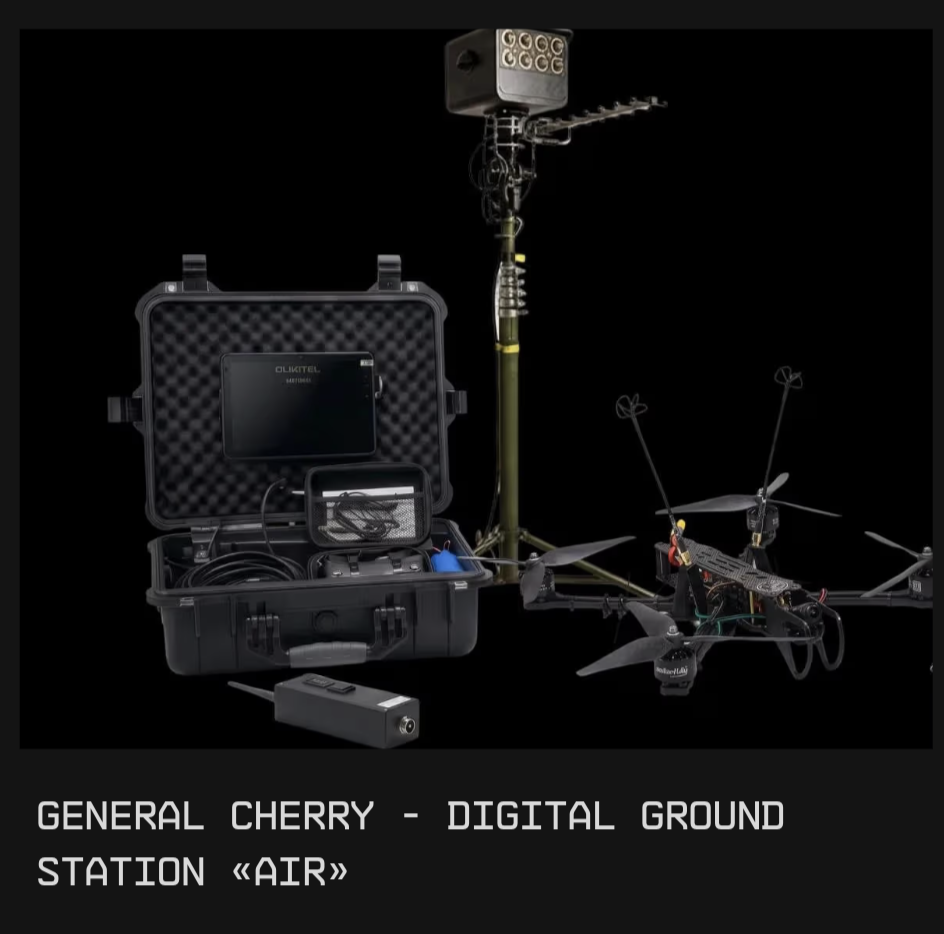
Patria’s August announcement said it plans to initiate drone production in Finland. It did not identify a factory, production volume or specific General Cherry models that would be manufactured there.
Leino told DSEI Gateway in early September that the detailed division of responsibilities was still to be defined and declined to specify individual product designs or production arrangements.
The August agreement was a Letter of Intent, which established the partnership and direction of travel. It was not yet a final large-scale manufacturing contract. In Kouvola, Leino also made clear that Finland will not immediately reproduce Ukrainian volumes.
“Any time soon we are not targeting even close to the volumes that General Cherry is currently producing in Ukraine,” he said.
The purpose is longer-term. Patria wants a production capability in Finland, access to General Cherry’s technology and development culture, and products suited to European customers. General Cherry wants an established Western industrial partner able to turn Ukrainian battlefield technology into systems that NATO countries can buy, maintain and train with.
The Three-week Technology Problem
The partnership also forces Patria to confront an uncomfortable feature of the Ukraine war: parts of a weapon system can become obsolete with astonishing speed. Electronic warfare changes, frequencies change, countermeasures change, and software changes. A successful drone configuration can attract a Russian response within weeks.
Asked how a traditional defence company adapts to technology that can appear to age in three weeks, Leino pushed back slightly.
“I think the whole technology doesn’t grow old in three weeks. It’s just certain parts of that.”
But he readily accepted the larger point. “That’s educational for us. That’s not in the legacy of, I would say, any traditional defence companies, to act fast.”
Patria wants to learn that speed. “We are definitely willing to start moving faster.”
The challenge becomes more complicated once the product leaves Ukraine. Western customers still operate largely under peacetime regulation, certification, procurement cycles and safety rules. A NATO military may have little appetite for changing hardware and software every fortnight.
Leino therefore sees two speeds.
Ukraine needs immediate updates because the enemy is adapting immediately. European customers may be able to freeze a configuration for longer. Patria still needs the capacity to accelerate quickly if the threat changes.
“We also need to have the capability for this kind of fast movement if and when there is a need for that,” he said.
“I really look forward to gradually becoming equally fast as our friends in Ukraine.”
That may be one of the most valuable things Patria is buying into. General Cherry’s real product is partly organisational: the ability to change while already manufacturing at scale.
A Permanent Race with Russia
Hryshyn described drone development as a race that never stops. “We try to be open to new challenges and not to lock ourselves with already existing products,” he said.
The front itself has changed. In some sectors, drones dominate the space between opposing forces to such an extent that traditional movement becomes exceptionally difficult. General Cherry’s own corporate history describes this process as the emergence of a Kill Zone, where drones, electronic warfare and counter-drone technology shape almost every movement.
The result is permanent iteration. “The reality is changing dramatically,” Hryshyn said.
That experience is precisely what Patria cannot obtain from a laboratory or exercise area.
General Cherry builds against a live enemy that studies its products, jams them, copies them and develops countermeasures. Success is temporary by definition.
State Framework by the Presidents
The August agreement in Kyiv was followed one month later by a broader government-to-government framework.
On 23 September, Presidents Stubb and Zelenskyy signed an agreement on enhanced Finnish-Ukrainian defence and security cooperation in New York. The agreement, commonly called the Drone Deal, enables technology and knowledge transfer between the two countries and joint industrial projects, including drone technology. Finland’s Ministry of Defence is responsible for its practical implementation.
This was a separate agreement from the Patria-General Cherry Letter of Intent.
On 23 August, Patria and General Cherry agreed in Kyiv to pursue industrial cooperation, with Stubb and Zelenskyy present. On 23 September, the two presidents signed the wider state-level framework in New York.
Patria immediately linked the government agreement to its General Cherry plans.
“The agreement signed by Finland and Ukraine is an important step also for Patria and our objective to initiate drone production in Finland in collaboration with General Cherry,” Leino said after the presidential signing.
The political and industrial tracks are therefore beginning to reinforce each other.
Very Dark Thoughts of the Future
When asked what General Cherry and Patria would do if the war ended soon, Hryshyn gave a startling answer. “I have very dark thoughts on that,” he said.
He expects drones to remain a security problem long after the fighting in Ukraine ends. Cheap unmanned systems have become accessible enough to threaten critical infrastructure and civilian aviation far beyond conventional battlefields. Counter-drone defence will therefore become a permanent requirement.
Leino’s answer showed how Patria sees the commercial horizon. The immediate objective is to build cooperation and production capability. Finnish volumes will remain far below General Cherry’s Ukrainian scale for the foreseeable future.
Then comes the larger market. “Our target for our cooperation is way longer term,” Leino said.
He expects new customers to emerge as European countries invest in drones and, especially, interceptor systems. For Patria, peace in Ukraine would not close the project.
“The end of the war in Ukraine one day is just the starting point for our mutual way forward.”
Read More:
- YLE: Finland and Ukraine reaching drone cooperation agreement
- Patria: Patria partners with Ukrainian drone manufacturer General Cherry
- Office of the President of the Republic of Finland: President Stubb in Ukraine: We Finns understand Ukraine’s fight for freedom
- President of Ukraine: Ukraine and Finland Signed Three Documents on Cooperation in Developing Land, Maritime, and Air Capabilities
- Office of the President of the Republic of Finland: Finland and Ukraine deepen defence and security cooperation
- Patria: Finland and Ukraine sign Drone Deal to boost their defence and security cooperation
- DSEI Gateway: Patria, Ukrainian SME partner to develop new drones
- General Cherry: About
- General Cherry: General Cherry BULLET – Anti Shahed
- Kouvola Security Conference: Programme 2026
- Cabinet of Ministers of Ukraine: Start of mass production: Government has adopted a resolution creating better conditions for UAV manufacturers in Ukraine
- Ministry of Defence of Ukraine: How defense manufacturers can obtain Defence City resident status and the key benefits of such status