China

Railway bridge between Finland and Sweden across the Torne river, photographed on the Swedish side in the city of Haparanda, Sweden. (Image: Shutterstock, by Tommy Alven)

Ripping Up the Rails of Empire: Baltic and Finnish Railways Turn Westward

The Baltic states and Finland are racing to redraw their rail networks on European terms. Soviet-gauge tracks – once binding these countries to Moscow – are being supplanted by European standard-gauge lines in a strategic shift with echoes of the Cold War. This grand infrastructure push is driven by hard security logic: NATO troop movement,

Ripping Up the Rails of Empire: Baltic and Finnish Railways Turn Westward Read More »

Trump’s Saudi Visit: $142 Billion Arms Bonanza and a Nuclear Gambit

Modernising its military and flexing its muscle in the Middle East, Saudi Arabia has signed $142 billion worth of arms deals with the U.S. It’s also pledged to pour $600 billion into American investments over the next four years. The deals may open the door for defence firms from elsewhere — including Nordic companies —

Trump’s Saudi Visit: $142 Billion Arms Bonanza and a Nuclear Gambit Read More »

The New Arms Race Is Underground: Responding to China’s Resource Blackmail

China’s recent imposition of export restrictions on seven critical rare earth elements has significant implications for global defence industries, particularly affecting the United States and its European allies. These elements are essential for advanced military technologies, including fighter jets, missile systems, and electronic warfare equipment. To mitigate the risks, Europe must develop domestic capacities, invest

The New Arms Race Is Underground: Responding to China’s Resource Blackmail Read More »

Trade War

Trade Wars Batter Defence Industry – And Sometimes Lead to Real Wars

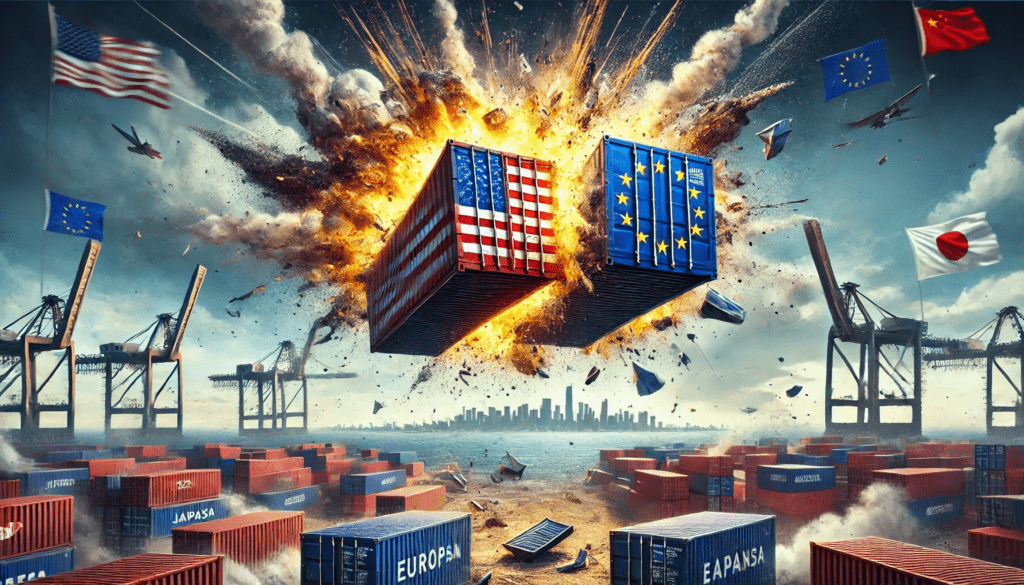
The USA’s ‘Liberation Day’ tariffs are a recurring pattern throughout history. These trade barriers have struck the defence industry hard, disrupting imports and exports. In 2024, American defence exports were valued at over $300 billion. Nations have long used trade barriers as instruments of power, and in some cases, these economic skirmishes have spiralled into

Trade Wars Batter Defence Industry – And Sometimes Lead to Real Wars Read More »

Soviet tank in Afghanistan.

The Kremlin’s Gambit: Understanding Soviet Motivations in the Cold War

What really drove the Kremlin during the Cold War—wild-eyed dreams of global communism, or cold-blooded fear for its own survival? The answer matters because the same instincts may still shape Moscow’s next moves. According to Melvyn P. Leffler, the binary view of ideology versus security is overly simplistic. Understanding the Kremlin’s motivations is crucial to

The Kremlin’s Gambit: Understanding Soviet Motivations in the Cold War Read More »

The Royal Danish Navy frigate HDMS Triton passes an iceberg in the waters around Greenland. (Image: NATO)

Denmark Boosts Defence Spending Amid U.S. Pressure Over Greenland

Denmark has significantly enhanced its defence capabilities recently, particularly in the Arctic and North Atlantic regions. This move comes in response to escalating geopolitical tensions and renewed interest from U.S. President Donald Trump in acquiring Greenland. In October 2024, the U.S. Department of State approved a potential sale of up to 203 advanced missiles to

Denmark Boosts Defence Spending Amid U.S. Pressure Over Greenland Read More »

China’s DeepSeek AI: A Digital Power Play with Serious Security Risks

China has launched DeepSeek-R1, a highly advanced artificial intelligence model, positioning itself as a direct challenger to Western AI dominance. This open-source system, developed by Chinese startup DeepSeek, is designed to rival technologies like OpenAI’s ChatGPT. But its emergence is as alarming as it is impressive, particularly for NATO countries concerned about security threats, espionage,

China’s DeepSeek AI: A Digital Power Play with Serious Security Risks Read More »

A Financial Times newspaper with the headline Trump is back.

Predictable Incoherence: Understanding Trump’s Foreign Policy

For decades, American foreign policy has been a cornerstone of global stability—a steady framework within which allies and adversaries alike have navigated their international relationships. Under President Donald Trump, however, this framework took on a markedly unpredictable character, or so it appeared. Trump’s first-term foreign policy was less unpredictable than incoherent—a critical distinction that reveals

Predictable Incoherence: Understanding Trump’s Foreign Policy Read More »

×