
A growing body of evidence suggests that financial markets may be doing more than reacting to geopolitical shocks. In several recent cases, they appear to have anticipated them. That raises a harder question than legality. If trading activity reveals patterns ahead of military decisions, it may also be revealing those plans to adversaries.
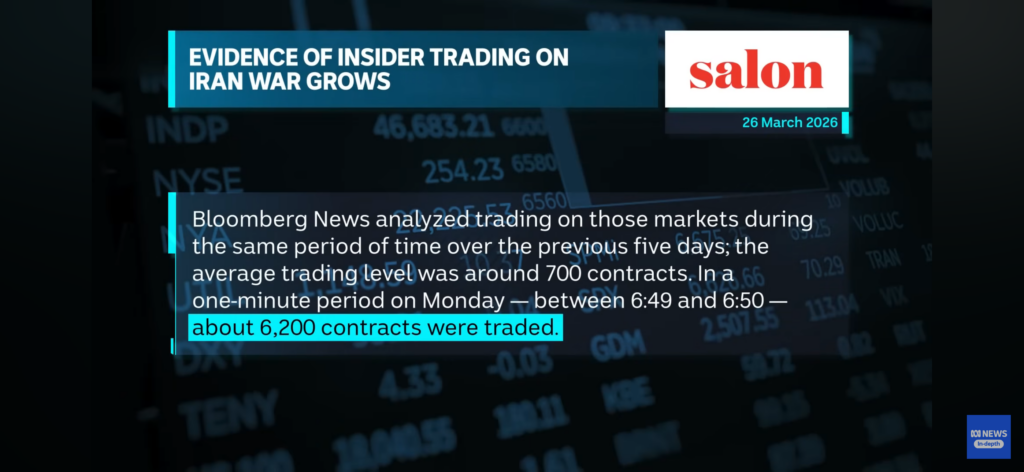
Recent reporting has identified a series of unusually well-timed trades placed ahead of major U.S. policy decisions, including those tied to military action and regime-level outcomes.
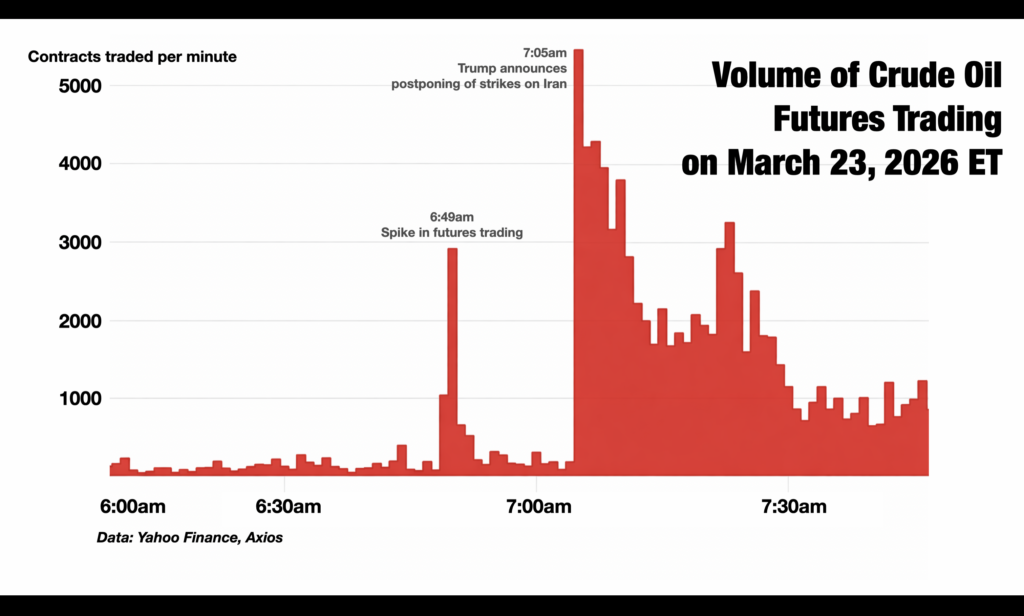
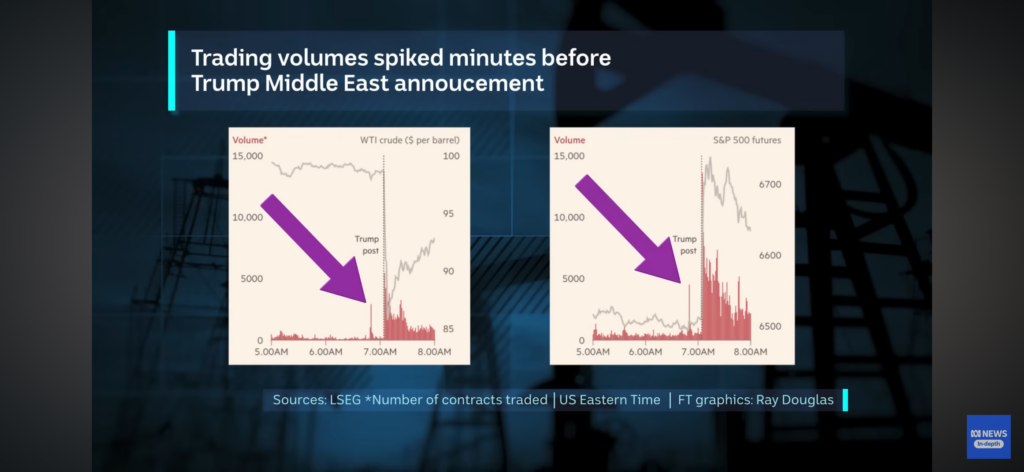
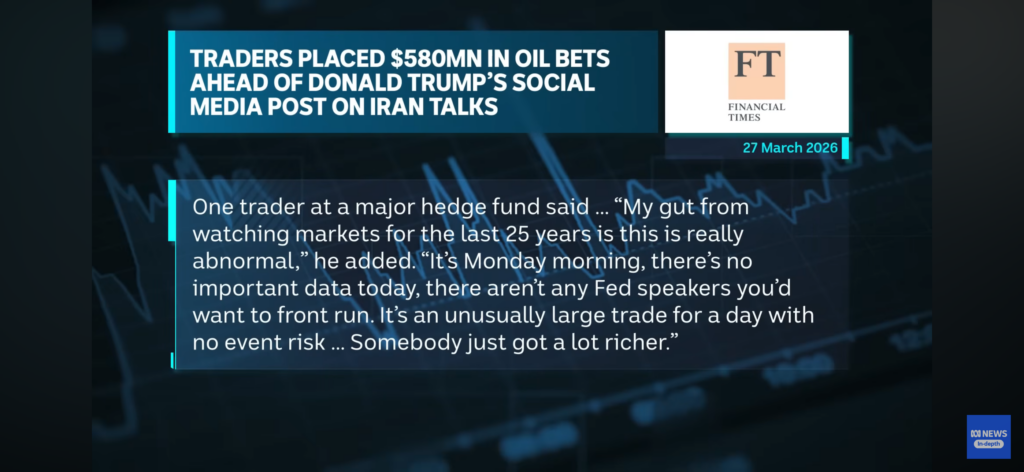
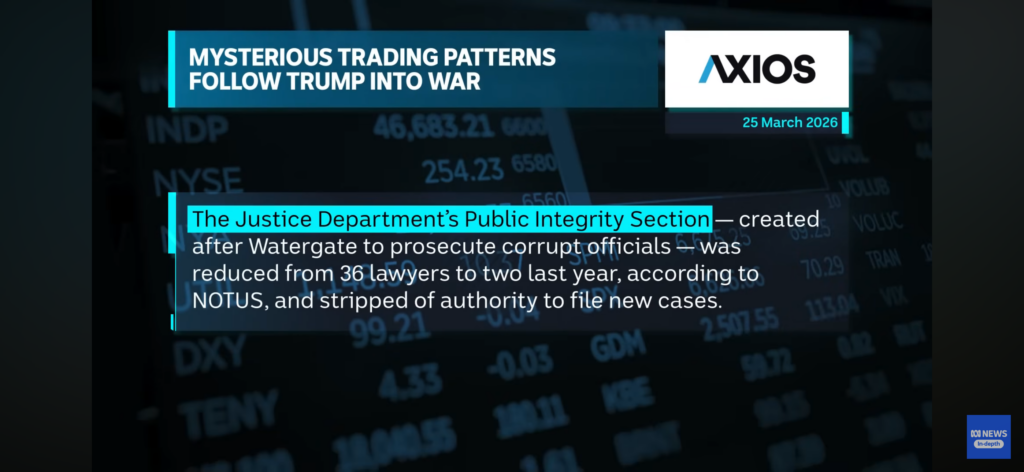
According to Reuters data and exchange records, more than $500 million in oil trades were placed just minutes before President Donald Trump announced a delay to the attack, triggering a sharp price collapse. In others, prediction markets saw concentrated bets ahead of major geopolitical events, including developments involving Venezuela and Iran. In one case, a small number of accounts reportedly made over $1 million in profits by predicting the timing of an attack. There is no public proof that these trades were based on leaked government information. That threshold remains high and difficult to meet. But the pattern itself is consistent enough to raise concern among regulators, lawmakers and analysts.
Suspected Informed Trades Surfaced Ahead of Iran Strikes
On 28 February 2026, the United States and Israel carried out coordinated airstrikes against Iran, an operation that resulted in the death of Supreme Leader Ayatollah Ali Khamenei and marked a dramatic escalation after months of rising tensions following the June 2025 Israel–Iran conflict.
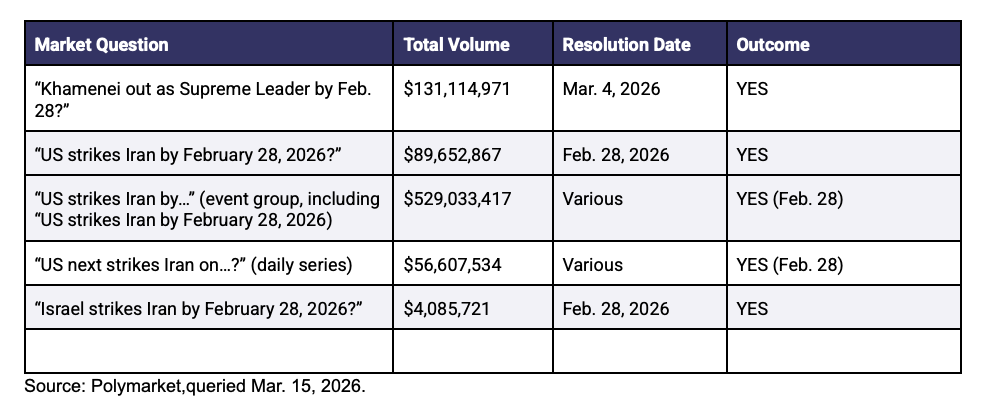
The strikes were treated as one of the most tightly held military operations in recent years. Yet, according to From Iran to Taylor Swift: Informed Trading in Prediction Markets, trading activity on prediction markets had already built up at scale well before the first reports emerged.
Since December 2025, Polymarket contracts tied to potential strike scenarios had generated more than $529 million in trading volume, making the episode one of the largest single-event markets in the platform’s history.
The study highlights a specific case that unfolded shortly before the news broke. At around 05:15 UTC on 28 February, roughly 71 minutes before the first wire reports, an account operating under the name “Magamyman” began aggressively buying “Yes” shares in the contract “US strikes Iran by February 28, 2026?”. At that point, market pricing implied only a 17 per cent probability of an attack.
The account had previously traded both sides of the market, but not at comparable levels or speed. Within 90 minutes, it had built a large, directional position across several Iran-related contracts. Once the strikes were confirmed and markets settled, the account recorded profits of approximately $553,000.
The researchers argue that the timing and scale of the trades point to a pattern consistent with informed positioning, adding to broader concerns that prediction markets may reflect more than public expectations in high-stakes geopolitical events.
From Financial Anomaly to Intelligence Signal
Financial markets are designed to aggregate information. When traders act on privileged or inferred knowledge, that information does not remain hidden. It becomes visible through abnormal volumes, concentrated positions and unusual timing
Large trades leave footprints. Exchanges see them. Counterparties see them. Analysts see them. In aggregate form, they are visible to anyone watching closely.
A hostile state does not need to identify the trader. It only needs to recognise that certain types of market activity repeatedly precede U.S. action.
Once that link is established, markets become an informal early-warning system.
The Silent Indicators of Conflict
A target country seeking to anticipate military action could monitor a combination of signals:
- Energy markets
Sharp, concentrated bets in oil futures ahead of escalation or de-escalation - Defence equities
Unusual buying in major contractors tied to expected operational demand - Shipping and insurance
Changes in tanker rates or war-risk premiums - Prediction markets
Spikes in contracts tied to:
– military strikes (e.g. assassination, coup, foreign intervention. Will the U.S. strike country X?, Will there be an attack in region Y?
– leadership survival (e.g. Will Iran’s Supreme Leader remain in power? Will Venezuela’s president be removed?)
– geopolitical outcomes (e.g. war starting, ceasefire, invasion, sanctions) - Cross-asset Coordination
Simultaneous positioning across commodities, equities and derivatives
Individually, these signals are ambiguous. Together, they can form a pattern. In the Iran-related case, the time gap between trading and announcement was measured in minutes. That is enough for profit. It is also enough to create a detectable signal.
The market was warned about the invasion of Ukraine
Before Russia’s full-scale invasion of Ukraine in 2022, the United States and its allies publicly signalled that an attack was likely. Intelligence was deliberately declassified to shape expectations and deter escalation.
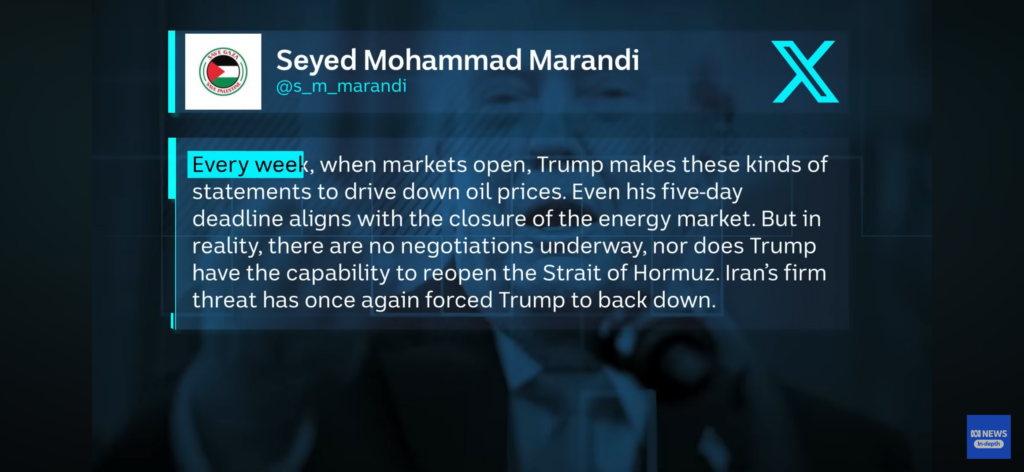
The recent cases operate in reverse. Decisions were not widely signalled, announcements were abrupt and yet markets appear to have moved in advance.
Unofficial signals may reach markets before official ones reach allies or even parts of the government itself.
Prediction Markets and the Leakage Problem
The rise of prediction markets has intensified the issue. These platforms allow participants to bet directly on geopolitical outcomes, including military events. That creates a direct financial incentive to obtain or infer privileged information.
U.S. regulators have begun to respond. The Commodity Futures Trading Commission has stated that misuse of confidential information in such markets can fall under insider trading rules. Lawmakers have gone further, warning that betting on military operations creates national security risks. If military decisions become tradable events, they become targets for exploitation.
Modern military planning operates in a world of real-time data, global financial markets, high-frequency trading and open-source intelligence
A small leak, a conversation, a fragment of planning, can be converted into a financial position. That position, once large enough, becomes visible. Markets amplify information. They do not contain it. If adversaries learn to read those signals, they gain early warning of operations, confirmation of internal decisions and potential time to adjust defences or messaging. It only requires probability.
Regulation is Not Designed for This Problem
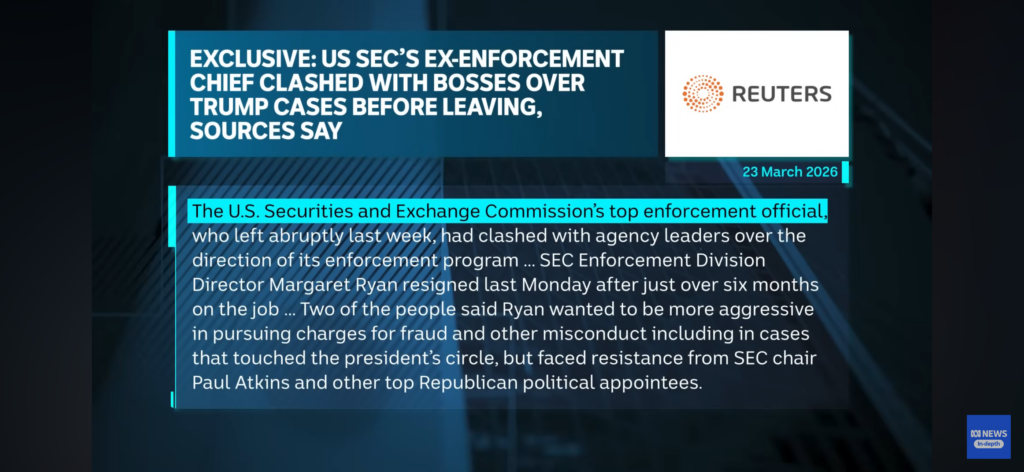
Traditional insider trading enforcement is retrospective. It focuses on identifying wrongdoing after profits have been made. Operational security requires something else: real-time monitoring across asset classes, coordination between financial regulators and security agencies and restrictions on markets directly tied to military events. At present, those systems are only partially in place.
Read More:
- Reuters: Lucrative bets that anticipated Trump’s policy surprises warrant scrutiny, experts say
- Reuters: Traders bet $500 million on oil price just before Trump’s post on delay to Iran attack
- Reuters: Some trades ahead of Trump policy moves raise questions
- Axios: Suspicious oil trades ahead of Trump Iran decision raise insider trading concerns
- The Washington Post: Taking a gamble: prediction markets and national security risks
- CFTC: CFTC Enforcement Division Issues Prediction Markets Advisory
- Journal of Peace Research (Oxford Academic): Market anticipations of conflict onsets
- Finance Research Letters (ScienceDirect): War discourse predicts stock market volatility
- Finance Research Letters (ScienceDirect): Herding in stock markets during the Russia-Ukraine war
- Business Insider: ‘Informed’ traders on Polymarket netted $143 million in ‘anomalous’ profit since 2024, researchers find
- SSRN: From Iran to Taylor Swift: Informed Trading in Prediction Markets
- ABC News: Who’s cashing in on Trump’s Iran war strategy? | Planet America
- Slate: Economist Paul Krugman Has a Dark Theory About the Iran War