

Explosions and suspected drone activity were reported near Russia’s principal Baltic Fleet naval base in Baltiysk on Saturday evening, 21 November, hours after a Russian military-linked cargo ship was struck by drones in the Gulf of Finland. The two incidents raise the prospect of a widening Ukrainian campaign against Russian military logistics in the Baltic Sea. Russian authorities have acknowledged air-raid alerts across Kaliningrad, although damage to naval facilities remains unconfirmed. Lithuania has rejected suggestions that its airspace was involved.
Russia’s heavily militarised Kaliningrad exclave was placed on alert on the evening of Saturday, 21 November, following reports of explosions, drones overhead and Russian air-defence activity near the Baltic Fleet’s main naval base at Baltiysk.
Air-raid sirens sounded across several towns in the Russian territory, which lies between NATO members Poland and Lithuania. Kaliningrad’s Khrabrovo airport temporarily restricted flights, mobile network operators warned customers of possible service disruptions, and ferry operations in Baltiysk were suspended.
Russian regional media confirmed the alerts and transport restrictions. Ukrainian military-monitoring channels reported explosions near Baltiysk harbour and circulated videos apparently showing Russian air-defence activity. However, independent verification of a successful strike against the naval base, the destruction of military equipment or casualties was unavailable as of early Sunday.
The developments followed a separate and substantially better documented incident in the Gulf of Finland. Earlier on Saturday, two drones struck the Russian-flagged cargo vessel Sparta II, which was sailing towards Kaliningrad. The ship caught fire, subsequently drifted into Finnish territorial waters and became the subject of a multinational maritime rescue operation.
Finnish authorities confirmed the attack, while the Finnish Defence Forces assessed Ukrainian responsibility as likely. Ukraine had not publicly confirmed conducting the strike.
Together, the incidents pose a strategically important question: whether Ukraine has begun extending its attacks on Russian military logistics into the Baltic Sea, potentially threatening a region that Moscow has traditionally regarded as a secure rear area.
Explosions Reported Near the Naval Base
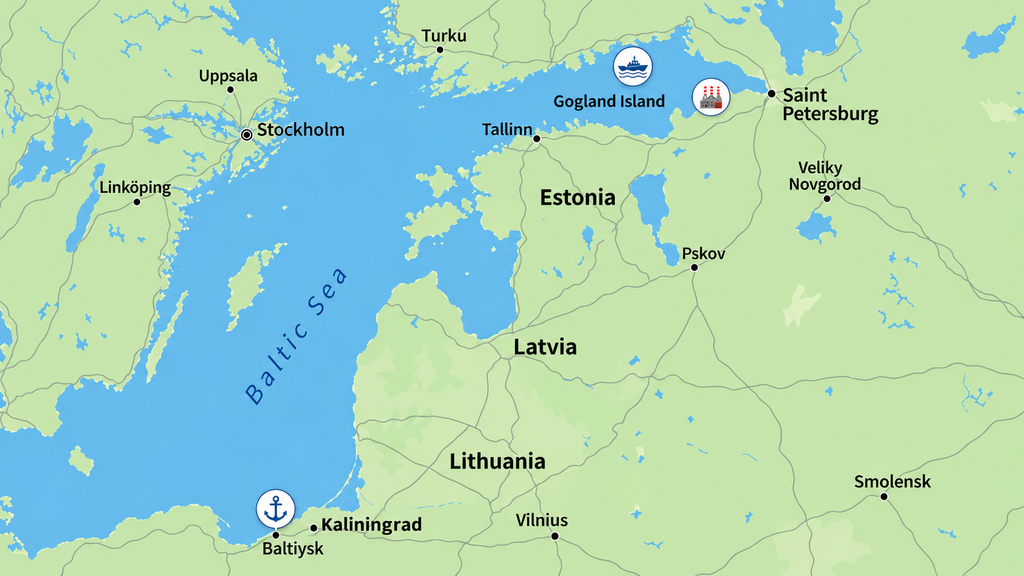
The first reports of trouble emerged on Saturday evening when Russian authorities activated the drone-warning system in the Neman district, close to the Lithuanian border.
Kaliningrad governor Alexey Besprozvannykh said the alarm had been triggered by a suspicious aerial object approaching from the direction of Lithuania. He subsequently announced that the authorities had investigated the incident and found no immediate threat.
However, the sirens reportedly sounded again less than an hour later. Residents in Baltiysk reported explosions and the sound of drones, while Ukrainian monitoring channels Exilenova+ and Dnipro OSINT circulated footage described as showing active Russian air defences.
Dnipro OSINT claimed to have geolocated footage of the activity to Baltiysk, near the port. Exilenova+ suggested that the Russian Baltic Fleet’s naval facilities could be the intended targets.
Geolocating a recording can establish where it was filmed, provided the analysis is correct. It cannot independently establish what was being attacked, whether a drone reached its target or whether any damage occurred.
Independent Russian-language outlet Radio Svoboda confirmed that residents reported explosions and air-defence activity. Russian regional news service RBC documented alerts in several towns, including Baltiysk, and reported that restrictions at Khrabrovo airport were lifted at 19:43 local time.
One widely circulated photograph presented as evidence of an explosion in Baltiysk was subsequently identified as an image from Iran’s Qeshm Island. The misidentification was acknowledged by Ukrainian commentator Serhii Sternenko and reported by Ukrainian and Russian media. Russia’s TASS news agency also quoted Kaliningrad regional authorities describing the photograph as unrelated to the region. The discovery undermines that particular piece of supposed evidence. It leaves the separate video recordings and eyewitness accounts requiring independent verification.
Lithuania Rejects Russian Claims About an Approaching Drone
The incident also produced an immediate diplomatic response from Lithuania.
Following the Russian governor’s statement about an object approaching from Lithuanian territory, Lithuania’s National Crisis Management Centre said its military air force had detected no drones.
The centre emphasised that Lithuania had neither authorised nor permitted its airspace to be used for attacks on Russian targets.
It also warned that reports suggesting Lithuanian or NATO involvement could be intended to create a misleading impression of Western participation in attacks against Russia.
This raises another unresolved question concerning the Ukrainian monitoring channels’ suggested flight path.
Some accounts proposed that drones observed over the Gulf of Finland earlier on Saturday could have continued westwards across the Baltic Sea towards Kaliningrad.
There is currently no independently established flight track connecting the morning’s drone activity with the evening reports from Baltiysk. Nor has evidence emerged confirming that the drones crossed Lithuanian or Polish airspace, or that they were launched from a vessel in the Baltic. The possibility of an operation launched from the sea remains speculative.
A Russian Military Logistics Vessel Hit in the Gulf of Finland
The confirmed strike on Sparta II adds a potentially significant dimension to Saturday’s events.
The 121-metre cargo ship belongs to Oboronlogistika, a Russian shipping company involved in logistics for the Russian Defence Ministry.
It has previously transported military equipment, including S-300 air-defence systems from Syria to Russia, according to information compiled by Ukrainian military intelligence. The ship has been under US sanctions since 2022.
On Saturday morning, the vessel was attacked while travelling from St Petersburg towards Kaliningrad. Finnish and Estonian authorities confirmed that the ship caught fire and subsequently required emergency assistance.
The Finnish Border Guard reported damage to the bridge and surrounding structures. Its 16 crew members were evacuated to another Russian vessel, while Finnish, Estonian and Russian authorities cooperated in the maritime response.
The cargo being carried at the time of the attack remains unverified. Russian state media subsequently reported that the vessel was carrying paint and varnish products, citing a source.
The attack also prompted a significant Nordic security response.
Swedish fighter aircraft were deployed under Finnish command to help protect Finnish and NATO territorial integrity. Estonia issued an early-morning drone warning in its northeastern counties, while Finnish authorities restricted air and maritime traffic in parts of the Gulf of Finland.
Sweden’s Defence Minister Pål Jonson confirmed that Stockholm was following the incident in close contact with Finland and Estonia.
The two episodes, the morning strike against Sparta II and the evening alerts in Baltiysk, share a geographic and strategic connection through Russia’s Baltic naval logistics. Whether they were coordinated operationally has yet to be established.
Baltiysk: The Principal Naval Base of Russia’s Baltic Fleet
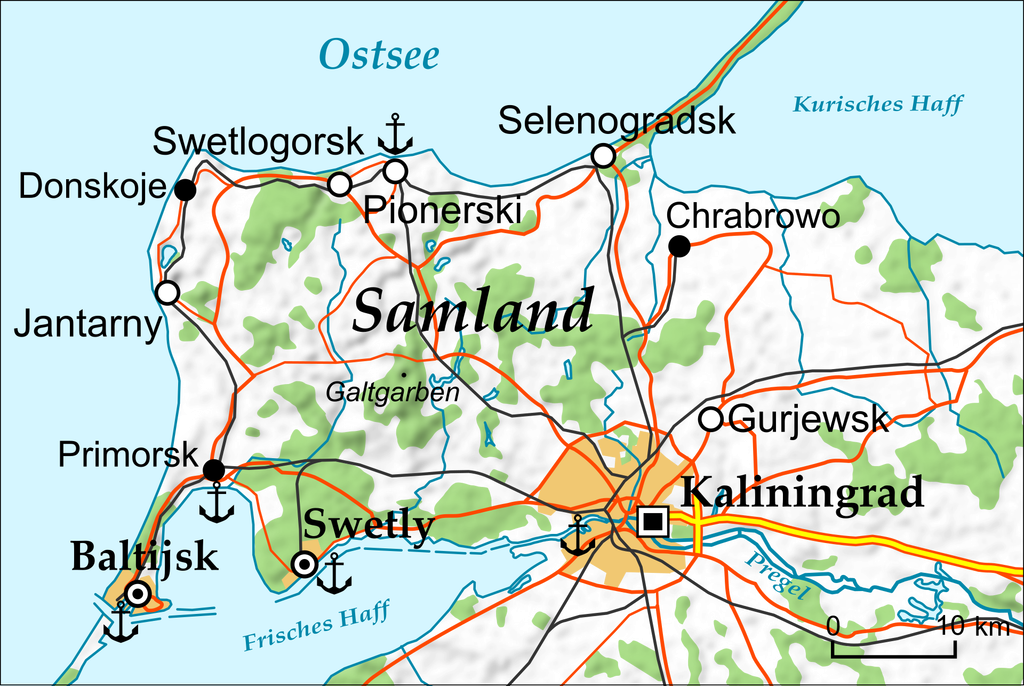
Baltiysk is one of Russia’s most important military ports. Located at the western end of the Kaliningrad exclave, it provides the Russian Baltic Fleet with its principal naval base and access to the central and southern Baltic Sea.
Russia’s Baltic Fleet also operates from the St Petersburg and Kronstadt area, but Baltiysk offers a forward position close to Poland, Lithuania and the maritime approaches to the Danish Straits.
The port supports warships, naval logistics, maintenance and military transport. Kaliningrad itself also hosts Russian missile, air-defence and coastal-defence capabilities, making the region central to Moscow’s military posture towards NATO.
Studies by the German Council on Foreign Relations and the International Institute for Strategic Studies have emphasised the strategic role of Kaliningrad in Russia’s Baltic defence arrangements. The territory helps Moscow project military power into the Baltic, while its isolation from mainland Russia creates logistical vulnerabilities.
A successful Ukrainian attack on Baltiysk would therefore have significance beyond the immediate destruction of equipment.
It could force Russia to divert additional air-defence assets, expand protective measures around naval facilities, disperse ships and reconsider how it supplies its most strategically exposed western territory.
The operational impact would nevertheless depend on what was actually hit. Damage to a warehouse, fuel storage site or pier would have different consequences from the destruction of a warship or a major naval maintenance facility.
For now, there is insufficient evidence to assess such damage.
Ukraine Has Already Attacked Russia’s Baltic Fleet
The reports from Baltiysk follow an important escalation in Ukraine’s Baltic operations earlier this month.
On 11 November, Ukrainian drones struck the Russian missile corvette Naro-Fominsk in the Gulf of Finland, according to Ukrainian accounts subsequently supported by observations from Finnish authorities.
The vessel belongs to the Buyan-M class of missile corvettes, capable of carrying Kalibr cruise missiles.
At an Estonian Defence Ministry briefing on 13 November, Colonel Aron Kalmus, deputy commander of an Estonian Defence Forces division, said the warship had sustained multiple drone hits, suffered casualties and had been unable to continue under its own power.
Kalmus described the incident as part of a broader Ukrainian operation against Russia’s Ust-Luga port infrastructure.
First came the attack on the Russian naval vessel near Ust-Luga on 11 November. Then, on 21 November, Sparta II was struck while transporting cargo towards Kaliningrad. Hours later, explosions and air-defence activity were reported around the Baltic Fleet’s main base.
The pattern is consistent with an expanding Ukrainian effort to put pressure on Russia’s Baltic maritime assets. However, the available evidence does not yet establish that Baltiysk was successfully attacked, or that all three episodes form part of a single coordinated campaign.
A New Problem for Nordic Security
The military implications extend beyond Russia’s losses. Ukraine has demonstrated that long-range unmanned systems can threaten Russian military infrastructure far from the immediate front lines. Attacks in the Baltic create operational complications for Russia while introducing additional risks for neighbouring NATO countries.
A damaged vessel drifting into Finnish waters is one example. Another is a drone crossing the airspace of an uninvolved state while travelling towards a Russian target.
The recent attacks have already required Finnish, Swedish and Estonian military and civilian authorities to respond to situations originating in the Russia-Ukraine war.
That development brings together several difficult questions for Baltic security: airspace surveillance, protection of civilian shipping, management of maritime emergencies and the risk of unintended escalation.
It also creates a political opportunity for Moscow to portray Ukrainian operations as NATO-backed attacks, even in the absence of evidence supporting such allegations.
The Lithuanian government’s rapid rejection of claims about drones approaching from its territory reflects the sensitivity of that issue.
Meanwhile, the impact on Russian logistics remains an open question.
Kaliningrad depends on maritime transport for part of its supplies, but a single damaged cargo vessel does not establish that the exclave faces a serious supply crisis.
Governor Besprozvannykh has already sought to reassure residents that Sparta II‘s difficulties will not endanger the region’s supplies. Russia retains alternative vessels and transport arrangements, although their availability, cost and capacity would determine its ability to compensate for sustained disruption.
The larger question is whether Russia will increasingly have to defend its Baltic shipping with the same intensity previously associated with operations in the Black Sea.
If Ukrainian strikes become sustained and effective, protecting naval transport, merchant vessels and military ports could require significant additional resources.
For Russia, that would undermine one of the assumptions behind Kaliningrad’s military value: its ability to function as a protected forward stronghold in the Baltic.
For NATO’s Nordic and Baltic members, it would mean adapting to a maritime environment in which Ukrainian operations against Russia increasingly take place immediately beyond allied territorial waters.
The events of 21 November have already demonstrated how quickly a strike on a Russian vessel can become a Finnish maritime rescue emergency and a wider NATO air-security concern.
Whether Baltiysk itself has now suffered a successful Ukrainian attack remains the central unanswered question.
Read More:
- The Kyiv Independent: Explosions reported near Russian Baltic Fleet base in Kaliningrad Oblast amid drone alerts
- Radio Svoboda: В Калининграде воздушная тревога, возможна атака БПЛА на Балтийск
- Kaliningrad: В Калининградской области сработали сирены воздушной тревоги
- TASS: В Калининградской области назвали фейком фото взрыва в Балтийске
- LRT / BNS: NKVC apie pranešimus dėl dronų Kaliningrade: Lietuvos karinės oro pajėgos dronų nefiksavo
- Rzeczpospolita: Alarmy w obwodzie królewieckim. Miało dojść do eksplozji
- The New Voice of Ukraine: Sirens sound in Kaliningrad Oblast for first time as blasts reported in Baltiysk and Baltic Fleet sites come under attack
- Yle: Analyysi: Ukrainan isku venäläislaivaan vaikuttaa Suomenlahdella ainakin neljällä tavalla (in Finnish)
- Yle: Tällainen alus on Naro-Fominsk, johon Ukraina iski Suomenlahdella (in Finnish)
- SVT Nyheter: Drönarattack mot fraktfartyg i Finska viken
- ERR News: Officer: Russian warship hit multiple times in Baltic, with casualties
- ERR News: Russian cargo ship on fire in Gulf of Finland after reported drone strike
- International Institute for Strategic Studies (IISS): NATO and maritime security in the Baltic
- German Council on Foreign Relations (DGAP): Russia’s Strategic Interests and Actions in the Baltic Region
- Exilenova+: Telegram reporting on alleged Baltiysk drone activity, 21 November 2026
https://t.me/exilenova_plus/35006
https://t.me/exilenova_plus/35007
https://t.me/exilenova_plus/35009 - Dnipro OSINT: Telegram reports and geolocation claims concerning Baltiysk, 21 November 2026
https://t.me/DniproOfficial/8431
https://t.me/DniproOfficial/8432 - Drone Bomber: Telegram eyewitness footage and maps, 21 November 2026
https://t.me/dronebomber/42866
https://t.me/dronebomber/42869 - DW: Russian Cargo Ship Sparta II Loses Power After Baltic Sea Drone Strike, Navy Says
- BBC: Russian warship hit by Ukrainian drone in Gulf of Finland