
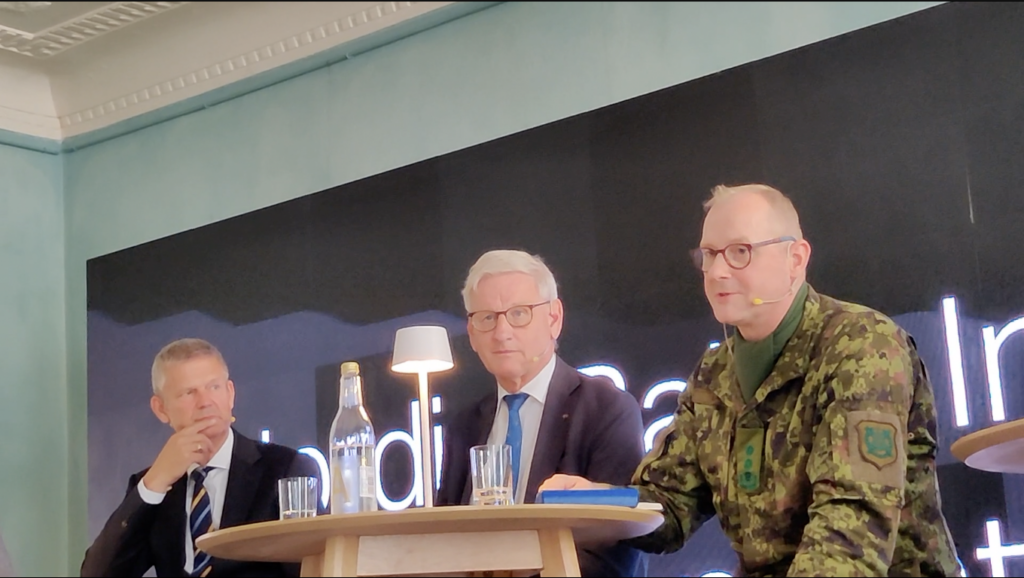
Russia may not need a large-scale invasion to challenge NATO. Instead, it could deliberately occupy a small piece of allied territory for only a few days, forcing the Alliance into a politically divisive crisis while exploiting nuclear deterrence to complicate any military response, Estonia’s Chief of Staff warned.
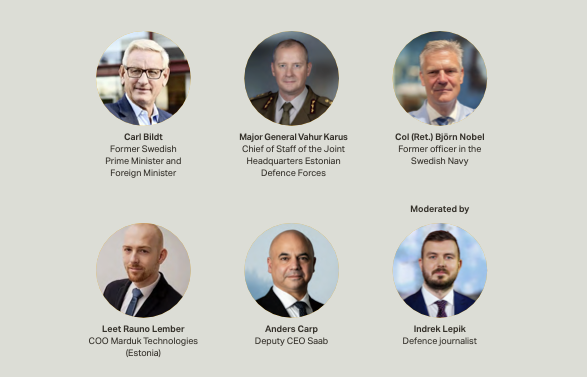
TALLINN — Russia could deliberately seize a tiny piece of NATO territory. Not to hold it permanently, but to undermine the Alliance’s credibility and political cohesion, according to Major General Vahur Karus, Chief of Staff of the Estonian Defence Forces Joint Headquarters.
Speaking during a security panel following former Swedish Prime Minister Carl Bildt’s keynote address at the Swedish Embassy in Tallinn, Karus argued that Moscow no longer needs a conventional invasion to achieve strategic effects against NATO.
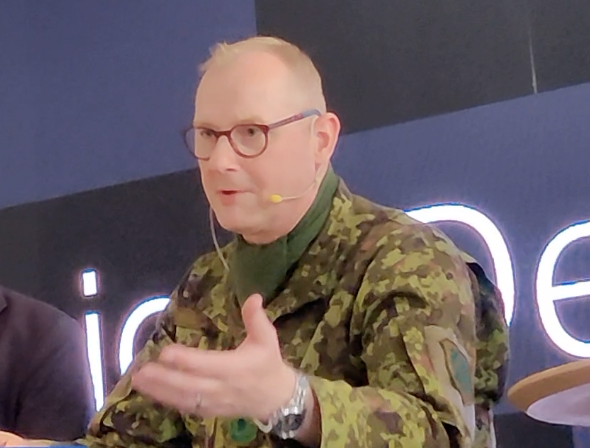
Instead, Russia could exploit ambiguity.
Using Estonia’s Piirissaar island on Lake Peipus as a hypothetical example, Karus described a scenario in which Russian forces briefly occupy a small NATO territory before withdrawing after several days or weeks.
“The Russians have never withdrawn their December 2021 ultimatum demanding NATO return to its 1997 borders,” Karus said. “Imagine now that with a small force they conduct a limited operation. It doesn’t even have to happen in Estonia. It could happen in Latvia or Lithuania.”
According to Karus, the objective would not be territorial conquest.
Instead, Russia could create a political crisis inside NATO by forcing member states to decide whether to escalate militarily over a very small piece of territory while Moscow simultaneously threatened nuclear escalation.
“They could withdraw two weeks later,” Karus said. “But by then Russia would already have achieved its strategic goal. NATO would have failed in its primary task of defending every member state.”
The scenario reflects growing concern among Baltic military planners that future Russian operations may rely less on large, armoured offensives and more on carefully calibrated actions designed to exploit political divisions inside Western alliances.
Drone Incidents Are Only Symptoms
Karus argued that the growing number of drones crossing into NATO territory should be viewed in a wider strategic context.
He noted that Estonia has experienced several drone incidents over the past year, including debris found in southern Estonia and another drone that struck a chimney only seconds after crossing the border.
Intercepting such drones is often technically impossible because NATO countries cannot simply fire into another state’s airspace, leaving defenders with only seconds to react.
“The military failed society,” Karus said of one earlier incident, arguing that Estonia had to adapt rapidly to a completely new threat environment.
But he cautioned against viewing stray drones as isolated military problems.
Instead, repeated incidents create political pressure, public frustration and societal divisions. These are precisely the conditions Russia seeks to exploit through hybrid warfare.
Bildt: Russia Remains Dangerous Despite Military Setbacks
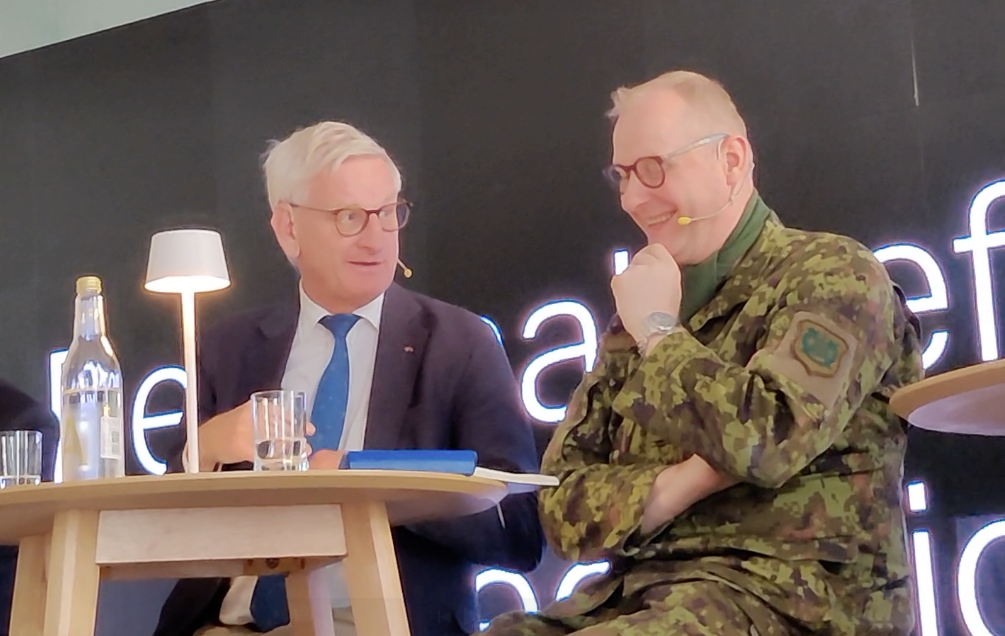
Former Swedish Prime Minister Carl Bildt broadly agreed that Russia currently poses no immediate threat of a major conventional attack against Northern Europe.
Russia remains heavily committed in Ukraine, which Bildt described as a strategic failure.
However, he warned that Moscow remains unpredictable and that Europe’s security ultimately depends upon ensuring Ukraine survives as an independent state.
“The defence of Ukraine is the defence of Europe,” Bildt said.
Later, Bildt added that Russia may still be capable of carrying out what he described as “small, stupid stuff”, limited operations that fall below the threshold of a full-scale invasion but nevertheless create dangerous political crises for NATO.
Europe’s Race Against Time
Although the panel ranged across NATO integration, defence procurement and industrial cooperation, participants repeatedly returned to one conclusion: Europe is no longer primarily constrained by money.
It is constrained by time. Karus warned that Europe’s most dangerous period extends until around 2030, when Russia could still retain sufficient military capability to create regional crises.
Deliveries scheduled for the early 2030s therefore fail to address today’s security challenge.
“If delivery comes in 2032, I cannot wait until 2032,” he said.
Commenting as an outside observer with a close view of Sweden, Karus said the country’s adjustment to NATO would inevitably take time.
“How quickly can you change a mentality shaped by 500 years of independent decision-making, and suddenly hand over part of your independence and sovereignty to an organisation?” he asked. “I would expect it to take at least a generation. Sweden is only in the first three years of that first generation.”
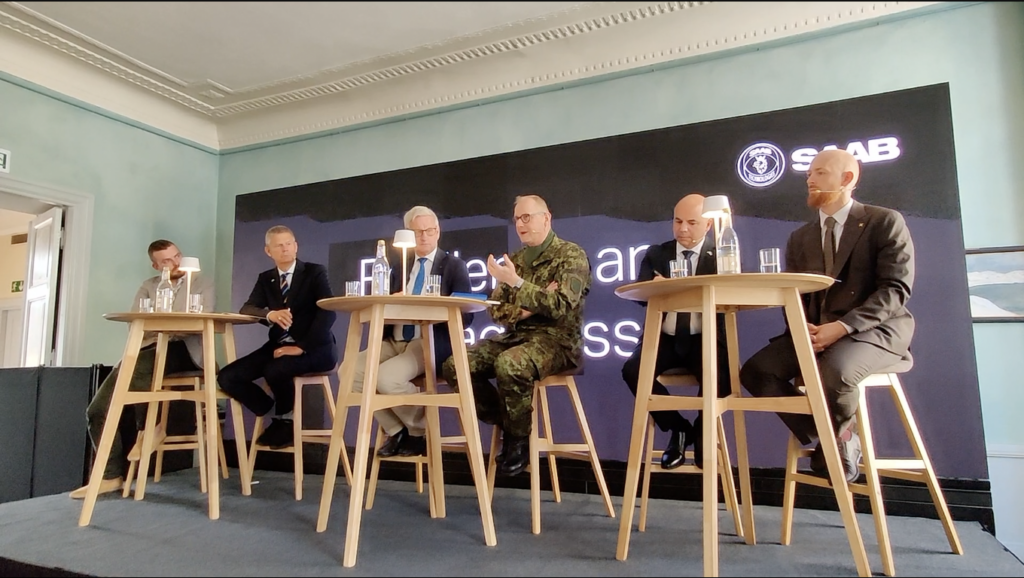
Saab Deputy CEO Anders Carp argued that procurement processes must become dramatically faster, while retired Swedish Colonel Björn Nobel proposed a “distributed NATO factory” capable of sustaining production even if individual industrial sites came under attack.
Rather than preparing solely for another large-scale invasion, Northern European military planners increasingly focus on ambiguous operations, hybrid pressure and political resilience. In these scenarios, the greatest challenge may not be defeating Russian forces on the battlefield but preserving NATO’s unity under pressure.