
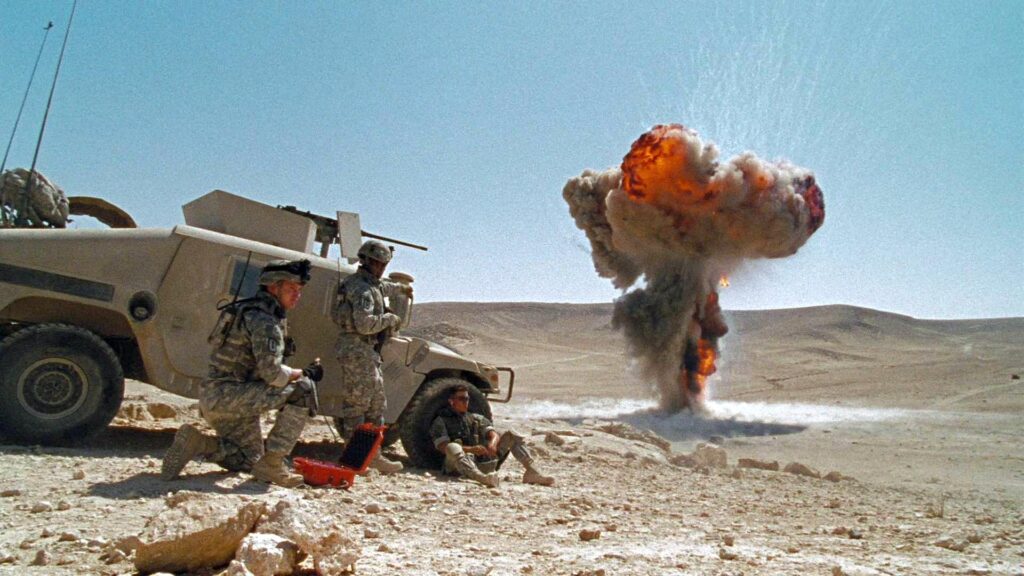
During demining operations, explosive ordnance disposal (EOD) operators’ legs and lower extremities are exposed to blast and fragmentation injuries. Personal protective equipment (PPE) is essential in such operations, as it can significantly reduce the severity of injuries sustained.
Unexploded anti-personnel mines remain a major threat to civilian populations long after a conflict has ended. These devices must be cleared by EOD specialists who risk their lives to protect others. They therefore deserve the best personal protective equipment that money can buy. Such equipment must undergo the most rigorous testing before entering operational service.
When it comes to anti-mine footwear, it is not enough for the sole simply to resist perforation by the blast wave. The forces and accelerations transmitted to the foot by the explosion must also remain within tolerable limits. If an incident results in a traumatic amputation, the anti-mine footwear, or blast boot, has failed against that particular threat. This is unacceptable and represents a personal tragedy for the EOD specialist involved. It changes every aspect of life.
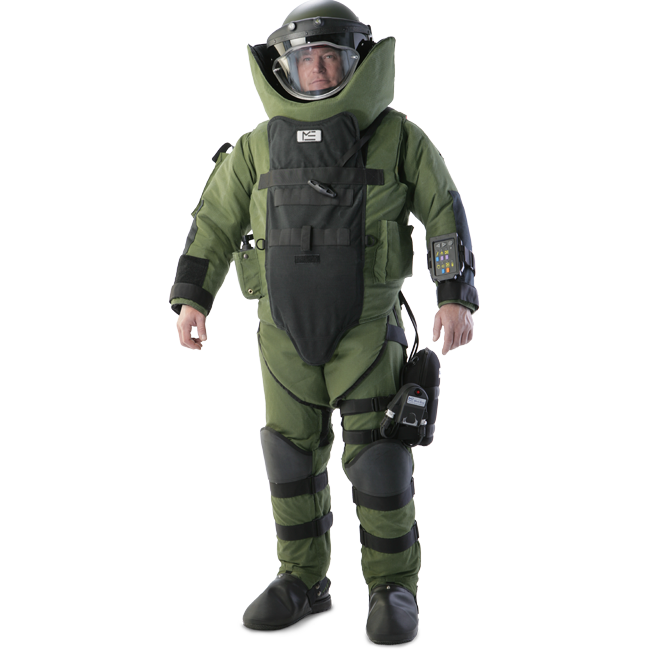
The reality is that no one can protect themselves against every conceivable threat, and death is an ever-present risk in military operations. Nevertheless, everything that can be done to improve a soldier’s chances of survival must be done. There are no excuses.
Blast and Fragmentation
Anti-personnel mines are generally divided into two categories: blast mines and fragmentation mines.
Blast mines affect the target primarily through the shock wave generated by the detonation of the explosive. The explosive material is converted into rapidly expanding hot gases, which displace the surrounding air. Detonation generates two propagating components: a supersonic static overpressure wave and slower-moving blast winds.
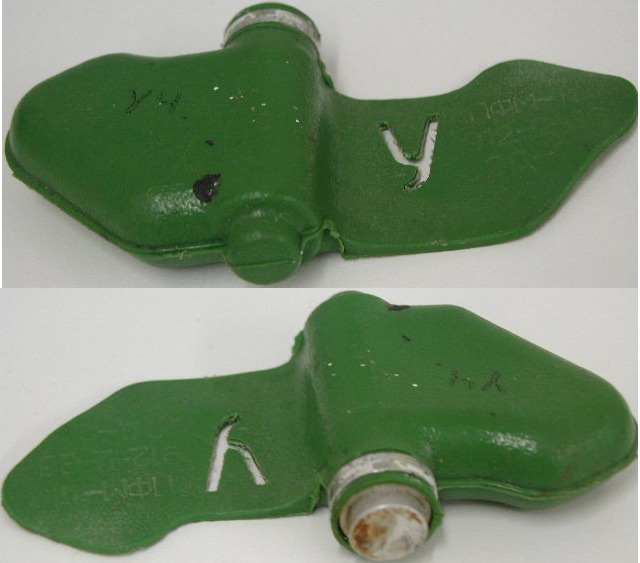
Anti-personnel blast mines are usually buried close to the surface. The force exerted on the victim’s foot depends on several factors, including burial depth and soil moisture content. The deeper a mine is buried, the greater the amount of soil ejected towards the victim. This effect has practical limits, however. Excessive burial depth dampens both the blast wave and the soil ejecta, reducing their impact on the target.
Soil moisture content also influences the pressure transmitted to the foot. Higher moisture levels generally increase the force experienced by the victim. Wet soil is less compressible and therefore absorbs less of the explosive energy. As a result, more blast energy is directed upwards towards the foot.
Fragmentation mines, by contrast, affect the target through high-velocity metallic fragments. Blast mines may also generate fragments if they contain metallic components, or when the mine casing ruptures and gains velocity during detonation.
There are three principal methods of producing fragmentation.
- Natural fragmentation occurs when the casing breaks apart irregularly during detonation. Fragment size, shape and velocity vary considerably because there is no deliberate design controlling the break-up process. This mechanism relies on the material properties of the casing, such as cast iron or steel, and produces a mixture of large, medium and small fragments. Some may remain lethal at considerable distances, while others have little practical effect.
- Controlled fragmentation involves engineering the casing to break into fragments of predictable size and number. This can be achieved through internal or external grooves, scoring, serrations, or metallurgical treatments such as zone embrittlement. The result is more consistent lethality and fewer excessively large or ineffective fragments.
- Preformed fragmentation uses ready-made projectiles embedded within the munition, such as steel balls or cubes. A classic example is the Claymore mine, which projects a dense pattern of steel balls towards its intended targets.
Blast Physics
When a blast mine detonates, a supersonic combustion front propagates through the explosive material. Large quantities of rapidly expanding hot gases are produced, generating an air shock wave that travels at supersonic velocity. Pressure levels close to the detonation point are immense. The most effective form of protection is distance from the explosion.
Explosions generate two pressure components: static pressure and dynamic pressure. The combined effect of these two components constitutes the total pressure. Dynamic pressure is commonly referred to as blast wind. Blast winds can cause tertiary blast injuries by propelling objects, including people, into surrounding structures or surfaces.
Test Methods
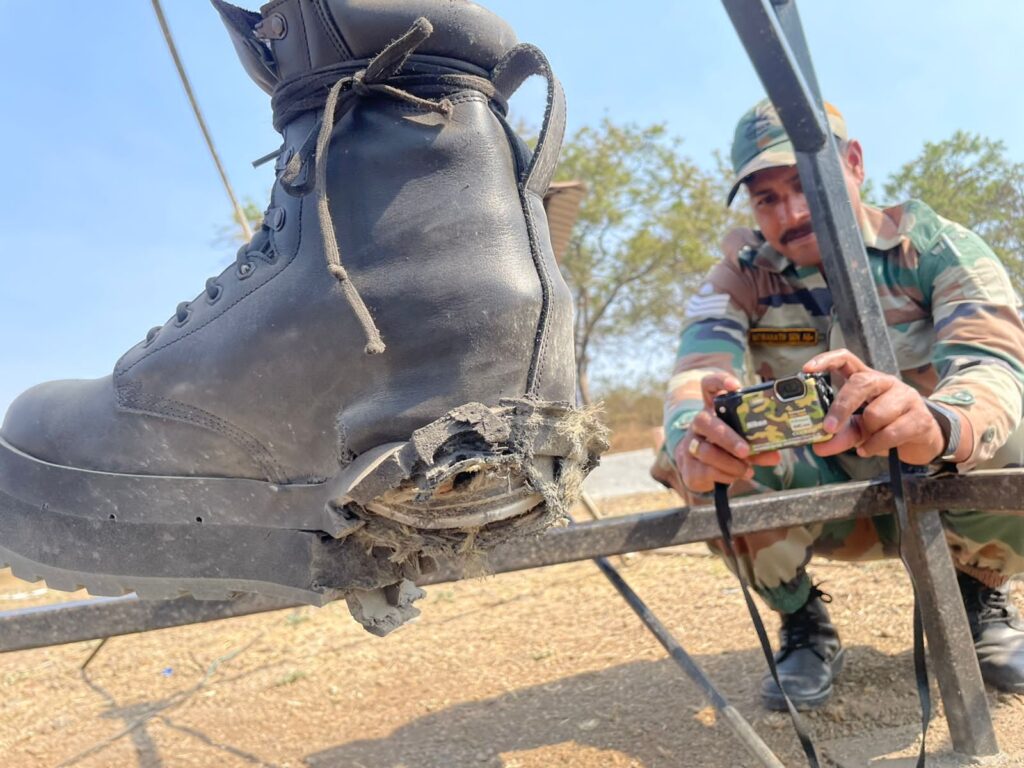
Anti-mine footwear is evaluated using a variety of test methods. In general, the more information required from a test, the more complex and expensive the method becomes.
This article focuses on test methods and injury criteria associated with blast mines. Fragmentation protection is typically assessed using standards developed for body armour testing and is therefore outside the scope of this discussion.
There are four principal methods for testing blast-resistant anti-mine footwear:
- Reusable mechanical legs
- Frangible surrogate legs
- Human cadavers
- Numerical methods (computer simulations)
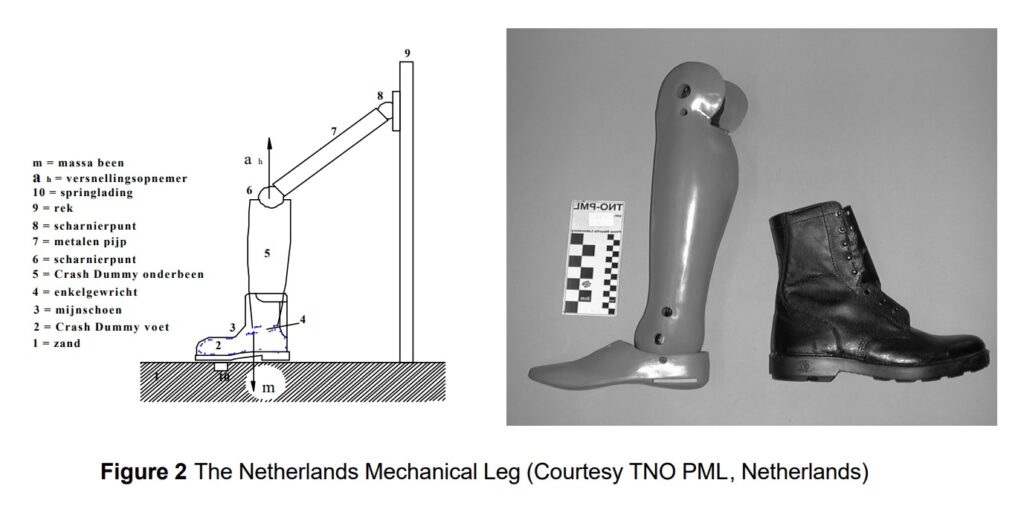
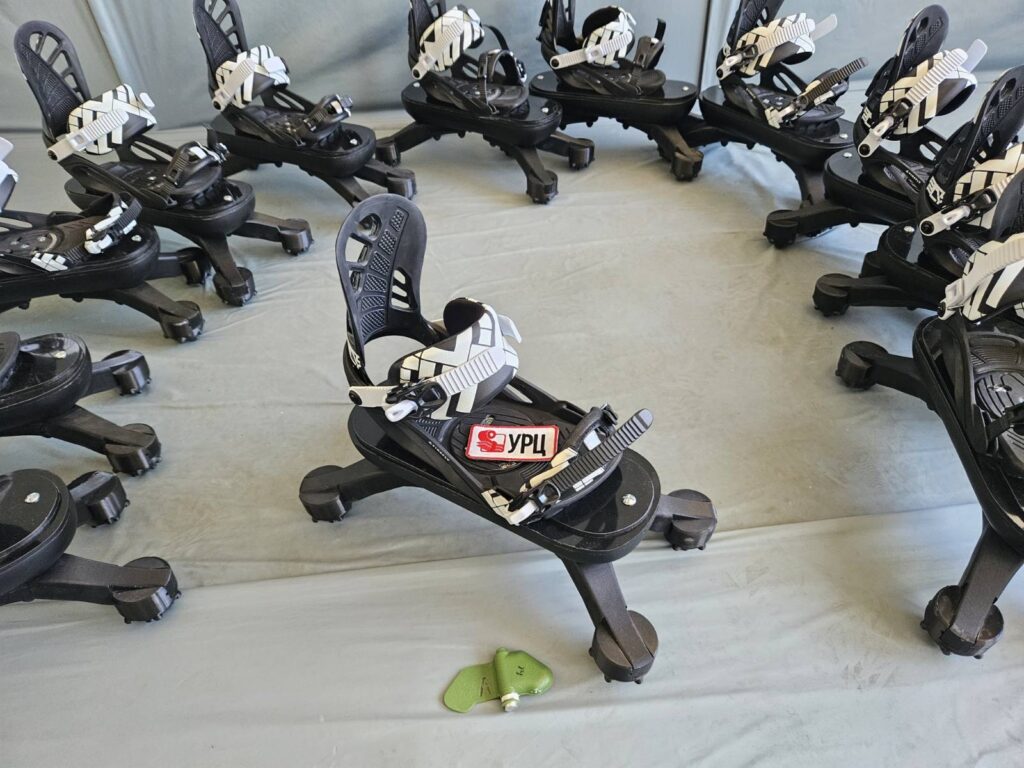
Mechanical legs are designed for repeated use and provide rapid, repeatable quantitative measurements of forces, accelerations and strains. This is the simplest testing approach and is commonly used for screening purposes.
Frangible surrogate legs are constructed from biofidelic materials intended to replicate the behaviour of a human leg as closely as possible. They may incorporate force, acceleration and strain sensors to evaluate injury risk. Such surrogates are typically used to demonstrate the protective capability of anti-mine footwear.
Human cadaver legs, as the name suggests, are obtained from deceased individuals and are used primarily for validation. To ensure realistic results, they must closely replicate living tissue conditions. This includes maintaining appropriate moisture content within the bones and surrounding tissues.
Computer simulations are not physical tests but rely on advanced material models to replicate the behaviour of anti-mine footwear and the human body. They are an invaluable design tool and can significantly reduce development costs and testing requirements.
Injury Risk Scoring and Thresholds
The injury risk associated with anti-mine footwear is commonly assessed using the AFIS-S (Ankle and Foot Injury Scale – Severity) scoring system.
AFIS-S is a specialised scale for evaluating lower-extremity blast injuries. It categorises injury severity from minor injuries, such as sprains (Level 1), to severe injuries including fractures and amputations (Level 4 and above). An AFIS-S score greater than 2 typically indicates moderate injuries, including certain fractures and dislocations that may result in significant functional impairment.
A commonly cited threshold for an AFIS-S >2 injury is a tibial force of 8,600 Newtons.
This value originates from Postmortem Human Subject (PMHS) axial loading studies involving booted foot and ankle complexes subjected to high-rate compressive loads intended to replicate mine-blast conditions. The 8,600 N figure represents approximately a 50% injury risk level, with 95% confidence intervals typically ranging between 7,500 and 9,700 N. It is frequently associated with research conducted by groups such as McKay and Bir, as well as related DTIC and US Army studies during the mid-2000s.
The 8,600 N tibial force threshold represents a biomechanical tolerance value derived from human cadaver data. It is not intended as a direct pass/fail criterion for test devices. The value has been widely cited in injury risk curves used for underbody blast (UBB) and anti-personnel mine protective footwear evaluations.
Operational testing standards, however, often employ more conservative dummy-specific pass/fail criteria. For example, NATO AEP-55 and STANAG 4569 mine and IED protection standards use thresholds derived from anthropomorphic test devices.
For the Hybrid ATD lower leg, an axial tibial force of 5,400 N corresponds to a low risk of AFIS-S >2 or a comparable moderate injury. For the more biofidelic MiL-Lx surrogate leg, the corresponding threshold is 2,600 N.
These limits are derived from, and correlated with, the underlying human injury data represented by the 8,600 N curve. Adjustments are made to account for surrogate biofidelity, safety margins, and operational requirements, often targeting an injury risk of approximately 10% for AIS 2+ injuries.
Stay Safe
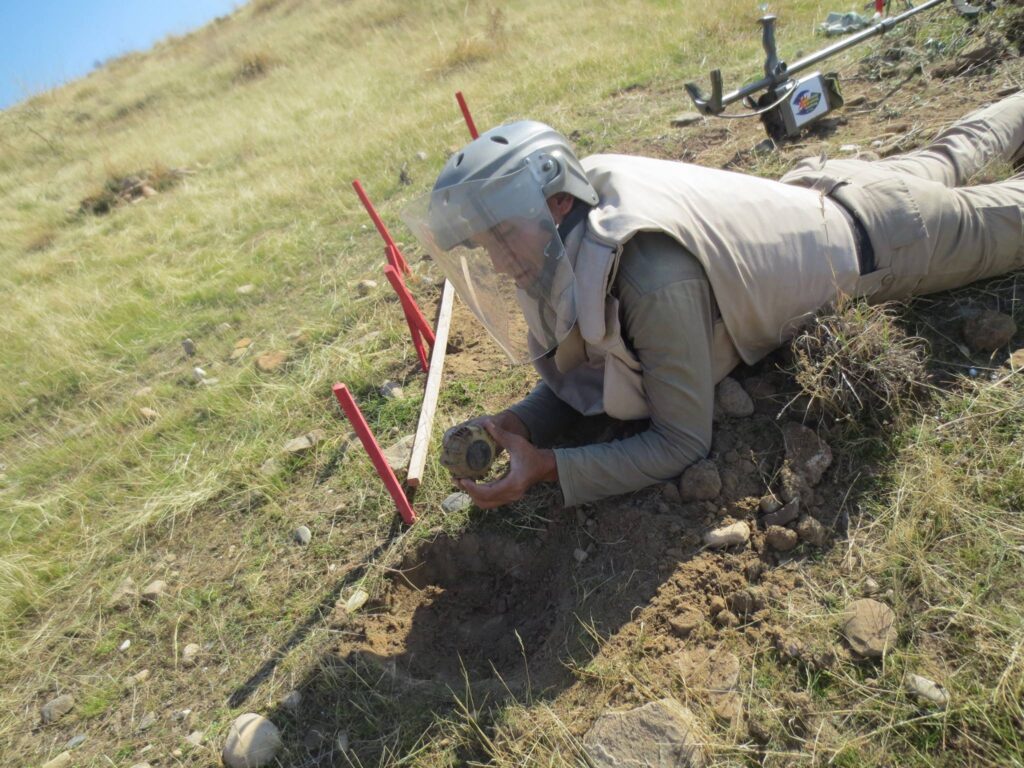
Anti-mine footwear, whether blast boots or spider boots, is essential equipment for deminers. It is far better to accept the discomfort associated with wearing blast boots than to face the consequences of an avoidable injury. Organisations should not procure anti-mine footwear that has not been tested using widely accepted methodologies.
Blast boots alone do not provide complete protection. When a blast mine detonates, fragments from the casing and compressed soil are accelerated to high velocity and can strike the adjacent leg and groin area. These regions also require effective protection.
Gaiters manufactured from soft ballistic fabrics can be worn over blast boots to protect the lower leg up to knee height from fragments and soil ejecta. They can also reduce the risk of burn injuries.
The groin area is particularly important to protect. It is highly exposed to casing fragments and soil ejecta generated by a blast mine. Without adequate protection, injuries can be catastrophic and significantly worsen the casualty’s overall injury profile.
Many coalition soldiers serving in Afghanistan and Iraq during the War on Terror were considered beyond resuscitation when catastrophic groin injuries were sustained during improvised explosive device (IED) attacks. Protection of this area is therefore critical, particularly for male personnel.
Read More:
- Test Methods for Protective Footwear Against AP Mine Blast
- Development of a Test Methodology to Evaluate Mine Protective Footwear
- Test Methodologies for Personal Protective Equipment Against Anti-Personnel Mine Blast
- ENERGETICS Technology Ltd: Anti Mine Boots: PPE 100 New Design
- Zeman AM: Antimine Program
- Wikipedia: Anti-personnel mine