
The meeting rooms at NATO Support and Procurement Agency headquarters in Luxembourg rarely make headlines. Yet decisions taken there shape how NATO countries buy weapons, spare parts and ammunition. This is where a quiet logistics revolution is underway. And the door to the NATO Support and Procurement Agency (NSPA) market has now been opened to Saab.
The model for NATO’s collective procurement engine, NSPA, is simple: One or more nations define a requirement and task the agency to procure on their behalf. Instead of multiple national tenders, NSPA aggregates demand, runs a single process and negotiates terms with industry.
The key instrument is the framework agreement. It locks in prices, conditions and configurations in advance. Once in place, other NATO countries can join without launching their own procurement process. Time shrinks, administrative burden falls, and prices improve through scale.
For smaller allies, this is a useful capability. Limited procurement resources, small order sizes and complex acquisition rules often slow national programmes. NSPA acts as a professional procurement agent, allowing these countries to access large-scale defence acquisition without building heavy domestic structures.
Mechanism for Speed and Scale
The NSPA system has gained urgency since 2022. The war in Ukraine exposed shortages across Europe, from ammunition to maintenance capacity. Governments needed faster ways to rebuild inventories. NSPA offers one of the few mechanisms capable of delivering speed and scale simultaneously.
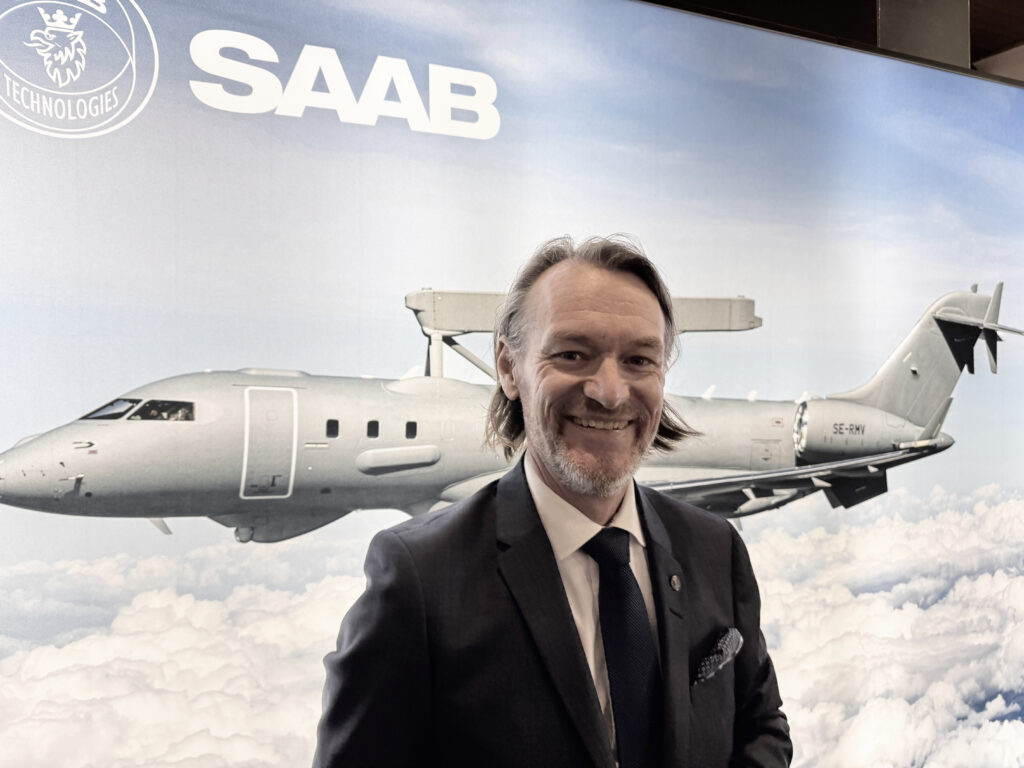
Swedish Saab has long supplied NATO countries with systems ranging from anti-armour weapons to sensors, even before Sweden’s membership in the alliance. Now, after the NATO accession, it is integrating deeper into the NSPA framework structure. This is opening a new route to market.
“What has happened since we became members of the NATO Alliance, and the same goes for Finland, is that it’s easier to access business opportunities via NSPA,” Saab’s NSPA specialist Magnus Larsson described at the BEDEX 2026 event in Brussels.
Before NATO membership, access was limited to specific partnership programmes. Now, national industries can participate across the full procurement landscape. The effect is immediate. More tenders, more visibility, and more opportunities.
“If we have a won a competition via NSPA, then we know that other NATO countries can use the same contract,” Larsson explains.
A single contract, initiated by one country, becomes a shared procurement channel. If another nation needs the same configuration, it can join directly. No new competition, no lengthy process. This can cut procurement timelines from years to months.
“We signed a deal for training and simulation, where Slovakia procured our system via NSPA. By doing so, that contract can also be available for others who are interested,” Larsson explained.
Collective Purchasing Power Improves Pricing
For Saab, this transforms sales dynamics. Instead of negotiating country by country, success in one NSPA framework can unlock access to multiple markets. It is not guaranteed volume, but it is a structural advantage.
For NATO countries, the benefits are equally clear. Collective purchasing power improves pricing. Standardisation improves interoperability. Logistics become simpler when multiple nations operate the same systems.
No Marketing to NSPA
There are some constraints to the model. Competition remains the default. NSPA prioritises competitive procurement unless a single supplier can be justified, for example, in upgrades or spare parts. That limits direct awards and forces the industry to remain competitive.
It also shapes behaviour. Companies cannot openly market to NSPA in the traditional sense.
“We cannot market our products,” Larsson noted. “We try to make them aware of what we have.”
Engagement happens through industry days, presentations and technical exchanges. The system is designed to remain transparent and fair. No backroom deals, no preferential access.
Especially smaller countries use NSPA when scale matters. “Some countries don’t have their own procurement agencies, so they use this instead,” Larsson said. “They’ve done the maths.”
NSPA operates on a “no profit, no loss” basis, funded by service fees. It is an operational, not a political one. That makes it attractive when national capacity is limited or when speed is critical.
Pressure to Increase Industrial Output
The NATO alliance is under pressure to expand production, rebuild stockpiles and deliver capabilities faster. Initiatives such as the Defence Industry Production Board aim to increase industrial output. NSPA provides the procurement mechanism to match that ambition.
For Saab, NSPA framework agreements allow NATO countries to procure proven systems through a shared channel, reinforcing Saab’s position in the alliance’s rearmament cycle.
As a whole, for the Nordic defence industry, integration into NATO logistics structures strengthens European supply chains and reduces reliance on fragmented national procurement. It also creates a pathway for scaling production in crises.
Read More:
- NATO Support and Procurement Agency: About NSPA
- NATO: NATO Support and Procurement Agency overview
- Saab: Saab signs ground combat framework agreements with NATO Support and Procurement Agency
- UK Defence Journal: Saab NATO framework agreements for AT4 and Carl-Gustaf
- Wikipedia: NATO Support and Procurement Agency
- Saab: Saab Secures contract with NSPA for Advanced Live Training System for Slovak Armed Forces