
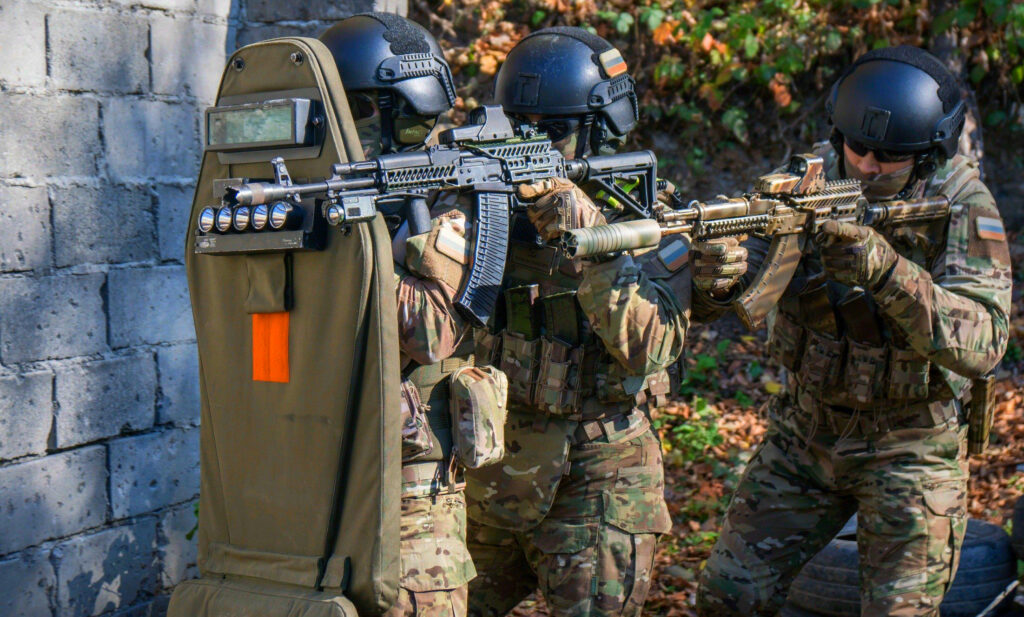
Operators from Russia’s Federal Security Service Special Purpose Centre, the FSB TsSN, use specialised protective equipment and weapons for high-risk counter-terrorism operations. These direct-action missions are typically short, violent and offensive in character. Islamist militancy in the North Caucasus has kept Russian special units busy since the 1990s, although Moscow’s troubled relationship with the peoples of the Caucasus stretches back to the Tsarist era.
Operators from the Russian Federal Security Service’s Special Purpose Centre, the FSB TsSN, have conducted counter-terrorism operations from the mid-1990s to the present day, particularly against Islamist militants in the North Caucasus.
The threat also reached the Russian capital. In 2002, Chechen militants seized Moscow’s Dubrovka Theatre and took around 850 people hostage.
Russia has a long history of repression and human-rights abuses against peoples of the Caucasus, creating grievances that reach far beyond the post-Soviet period. Chechnya has presented Moscow with perhaps its most difficult challenge. Today it is a republic within the Russian Federation, ruled by the pro-Kremlin leader Ramzan Kadyrov, whose authoritarian administration has kept the region firmly aligned with Moscow. Political uncertainty surrounding the succession to Kadyrov has nevertheless raised questions about the future stability of that relationship. Historical grievances towards Russia also remain deeply rooted among parts of the Chechen population.
Four Major Terrorist Attacks
(Image: Jukka Janhunen)
Russia suffered several high-profile terrorist attacks connected with the Chechen conflicts during the 1990s and early 2000s. Four incidents stand out: the Budyonnovsk hospital hostage crisis in 1995, the Kizlyar-Pervomayskoye hostage crisis in 1996, the Dubrovka Theatre siege in Moscow in 2002, and the Beslan school siege in 2004.
These attacks were closely connected with Russia’s wars in Chechnya. Counter-terrorism operations across the North Caucasus continued long after the formal end of the Second Chechen War in 2009.
Dubrovka and Beslan rank among the most demanding hostage crises of modern times. Dubrovka already presented an extraordinarily difficult tactical problem. Beslan came close to being impossible to resolve successfully by force. Negotiation offered the greatest prospect of avoiding mass casualties, although negotiations with terrorist groups present their own profound difficulties.
At Dubrovka, Russian forces used an incapacitating agent based on fentanyl derivatives. The gas, combined with inadequate medical preparation and treatment, contributed to a very high death toll among the hostages. If Dubrovka was exceptionally difficult, Beslan was worse. The hostages were packed into a school gymnasium rigged with explosives. The siege ended in a massacre after explosions were triggered, whether accidentally or deliberately, and Russian forces stormed the building.
FSB Counter-terrorism Operations
Operators from the FSB Special Purpose Centre use heavy protective equipment during high-risk assaults and sieges.
These missions can also be described as counter-terrorism or direct-action operations. Direct action generally refers to short-duration offensive missions that may involve killing or capturing targets, rescuing hostages, gathering intelligence or destroying critical infrastructure.
During the 2000s and 2010s, the FSB conducted numerous counter-terrorism operations against Islamist militants in the North Caucasus, particularly in Dagestan and Ingushetia. Both are republics of the Russian Federation.
Operations of this type can involve extreme risks, including improvised explosive devices. Specialised protection is therefore important for operator survivability. The requirement extends beyond body armour. Weapons must also be suited to close-range combat in confined environments.
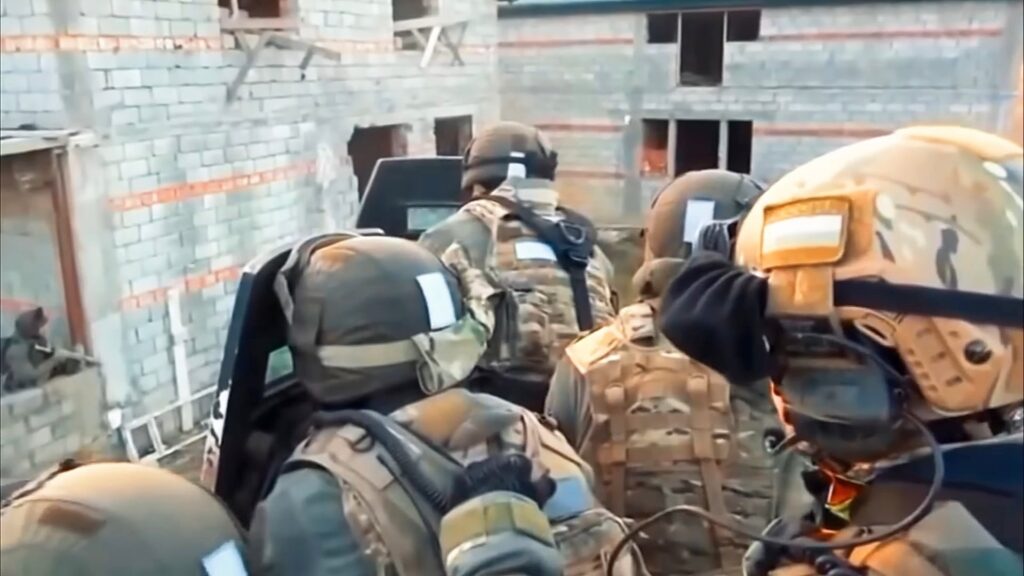
Russian counter-terrorism operations in the North Caucasus have often followed a broadly similar model designed to minimise casualties among the assault force.
Once suspects are located, the surrounding area is sealed off. The targets frequently barricade themselves inside a building. Russian forces then bring in substantial firepower, including thermobaric weapons and various types of armoured vehicle carrying different weapons systems.
Those inside are normally offered the opportunity to surrender. Prisoners captured in such operations have historically faced extremely harsh treatment, which has encouraged some suspects to fight rather than surrender.
A fortified position may then be subjected to overwhelming firepower. Only afterwards comes one of the most dangerous tasks for the assault operators: entering the site and discovering who, if anyone, is still alive.
This is precisely the stage at which relatively heavy protective equipment and specialised close-quarter weapons become valuable. Militants may also have prepared improvised explosive devices and may be waiting for Russian forces to approach.
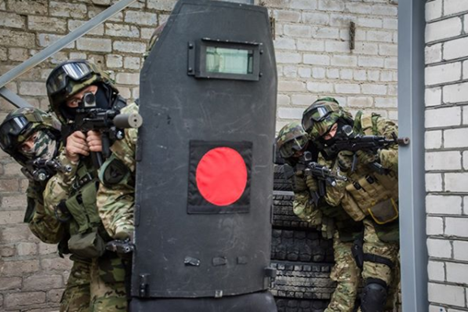
Operators consequently move with extreme caution. Clearing is conducted methodically, often behind a ballistic shield, because an armed opponent may still be alive inside.
Rushing into such an environment lightly equipped in a fashionable Low-drag, High-speed configuration can produce unnecessary casualties. When facing a capable opponent who is waiting for you, speed alone provides little protection. The defender may still fire first.
FSB Assault Protection
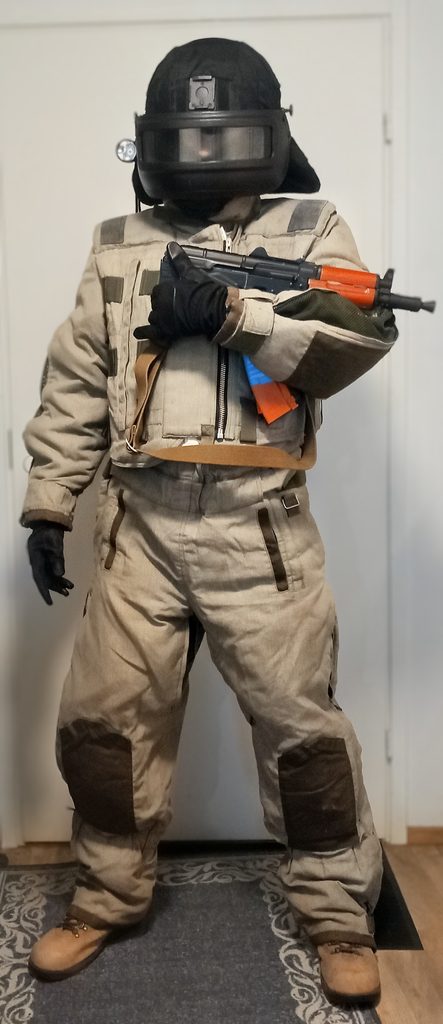
As an example, the protective equipment worn by FSB Special Purpose Centre operators in the North Caucasus during the 2010s can be called Dagestan 2015.
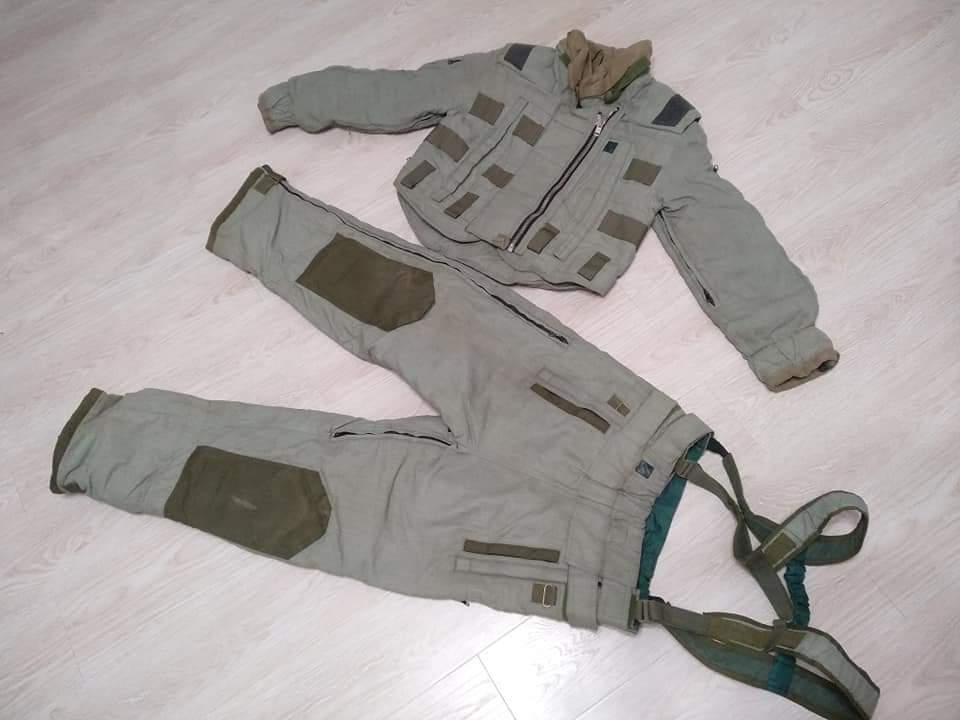
A typical operator of that time is wearing a two-piece Raid-L fragmentation-protection suit manufactured by Fort Technology. The system consists of separate jacket and trousers.
Depending on size, the complete suit weighs approximately 5.5 to 7 kilograms. Its ballistic protection is based on layers of aramid fabric. The Raid-L was widely used by FSB operators, particularly from the beginning of the 2010s until around 2016.
Aramid is inherently resistant to flame. It does not readily ignite or sustain combustion, instead degrading when exposed to intense heat.
A relatively thin, multilayer aramid structure can also resist penetration by droplets of molten metal for a surprisingly long period.
The Raid-L has been claimed to withstand exposure to open flame for 15 seconds. That Image is of limited value without more precise information about the flame and heat-transfer conditions, including heat-flux density. Even so, the suit clearly offers meaningful protection against brief exposure to intense flame.
The Raid-L also provides protection against low-velocity fragmentation.
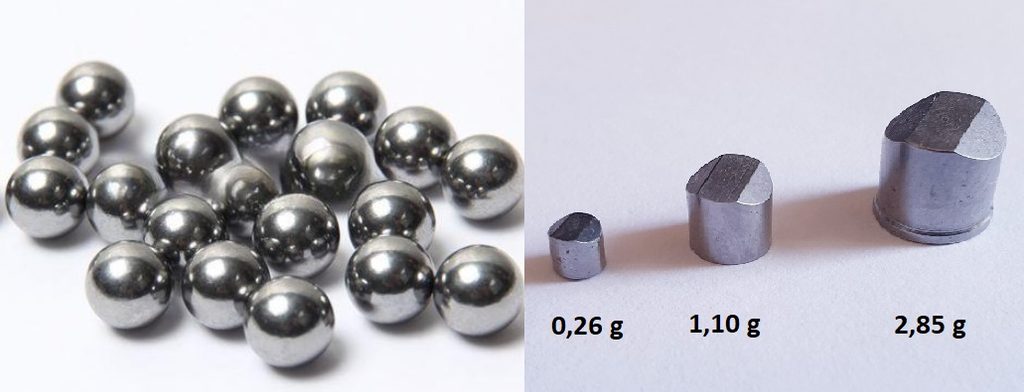
Its ballistic V50 limit is approximately 270 metres per second against a Russian GOST-standard 6.35mm fragmentation simulator.
The GOST fragment simulator differs significantly from its NATO counterpart. The Russian projectile is a very hard, 1.05-gram steel sphere made from ShKh15 bearing steel. Depending on processing, its tensile strength can reach approximately 2,550 MPa, with hardness around 63 HRC. It therefore belongs firmly in the ultra-high-hardness category. The NATO-standard fragmentation simulator is a bevelled cylindrical projectile weighing approximately 1.10 grams. Its diameter is 5.385 ± 0.02mm and it is made from medium-hard steel with a hardness of approximately 30 ± 2 HRC.
Heat is the Enemy
Heat stress inside the Raid-L is considerable. The suit has no liquid-cooling system or active ventilation. Running any significant distance in hot conditions while wearing it would be extremely demanding. Physical exhaustion and overheating can develop rapidly.
Good heat-acclimatisation training is therefore essential for operators expected to work in this type of protective equipment.
The Raid-L does at least incorporate ventilation zips. These should be kept open whenever conditions permit in hot weather.
The zips are positioned along the sides of the suit, meaning they do not directly compromise protection against fragments or projectiles arriving from the front. Ideally, the protected frontal area should face the threat, unless the wearer is running in the opposite direction.
Operating effectively in a Raid-L requires exceptional physical conditioning. FSB special operators are expected to possess exactly that level of fitness.
The suit also includes mounting points for hard ballistic plates. In principle, this means separate body armour is not always necessary, although additional ballistic vests have often been worn.
The Vulkan Assault Helmet
Standard plates include ASP-M3 steel armour for the chest and back, with additional protection available for the elbows and knees. The plates themselves are rated to GOST Class 3, rising to GOST Class 5 when used in conjunction with the suit’s soft ballistic protection. At GOST Class 3, the system is intended to stop 7.62×39mm 57-N-231 and 5.45×39mm 7N6 ammunition using mild-steel-core projectiles. At GOST Class 5, protection extends to comparable ammunition using much harder steel penetrators.
Our Dagestan 2015 operator is wearing an LShZ-2DTM Vulkan composite assault helmet. Its ballistic shell is made from aramid composite.
The helmet is fitted with a heavy assault visor of the type associated with breaching operations, together with neck protection and a rear counterweight. In this configuration, total weight exceeds five kilograms.
That creates substantial dynamic loads on the wearer’s neck, especially during rapid movement.
The Vulkan is rated overall to GOST Class 2. It is designed to stop steel-core handgun ammunition including 7.62×25mm Tokarev TT and 5.45×18mm PSM rounds.
Western 9mm ammunition and .357 Magnum rounds should also be comfortably within its protective envelope, while producing relatively limited deformation of the rear surface of the ballistic shell. Reduced back-face deformation lowers the potential for blunt-force head injury.
The Vulkan’s aramid shell is almost two centimetres thick. It is therefore plausible that it could stop some relatively low-energy rifle projectiles with soft cores, including certain 7.62×39mm lead-core rounds.
FSB operators have used assault helmets made from almost every major ballistic material, including aluminium, composite materials, steel and titanium.
Shields at the Front
One of the most important protective systems in counter-terrorism operations is the ballistic shield.
The shield is normally carried by the lead operator, who uses it to provide protection for the rest of the assault team.
Russian special units have employed numerous ballistic shields over the decades. Early examples include the BZT-75 titanium shield and BZT-75S steel shield, both familiar sights from the early 1990s.
During the 2010s, FSB operators in the North Caucasus frequently used Fort Technology’s VANT-VM shield. It is rated to GOST Class 5 and remains in service. A newer design is the Veer-6. This shield combines a ceramic strike face with an aramid-composite backing. It weighs a formidable 25 kilograms and provides approximately 0.6 square metres of protected surface area.
Special Weapons for FSB Operators
FSB operators have also used specialist weapons designed for close-quarter combat in built-up areas.
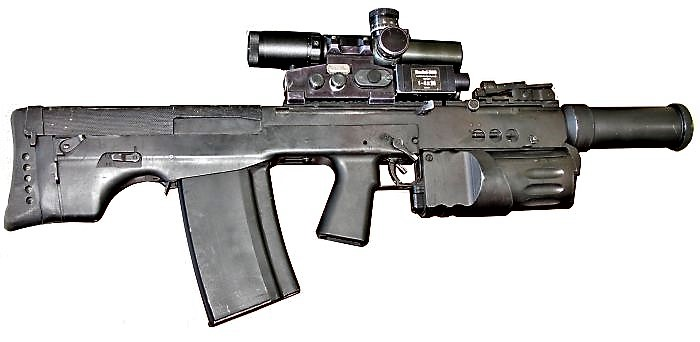
One example is the ASh-12.7, later incorporated into the ShAK-12 weapon system. This is a bullpup assault rifle chambered for the 12.7×55mm cartridge and designed specifically for assault operations. Its intended engagement range is below approximately 150 metres.
The ShAK-12 entered service in 2011. Its development was influenced by lessons drawn from earlier hostage crises, including Dubrovka and particularly Beslan.
The suppressed AS Val assault rifle, chambered for 9×39mm subsonic ammunition, was judged to have limitations in stopping effect and in penetrating certain barriers and forms of personal protection.
The ShAK-12 was developed in part to deliver considerably greater terminal effect.
Stopping Power remains a notoriously imprecise term. It has generated decades of argument over what the concept actually means in scientific terms, and researchers have proposed numerous physical models intended to describe it.
The ShAK-12 commonly fires heavy subsonic projectiles, although supersonic loads are also available. A wide range of ammunition has been developed for the 12.7×55mm cartridge family, including armour-piercing rounds.
The purpose of the slow, heavy projectiles is generally to transfer substantial energy into the target rather than passing straight through with relatively little energy transfer.
One particularly unusual projectile uses a lightweight aluminium core and weighs approximately seven grams. It leaves the barrel at a high supersonic velocity of roughly 900 metres per second.
Because of its limited penetration, the projectile can dissipate energy rapidly inside the target. The aluminium projectile fragments quickly, releasing a large proportion of its kinetic energy over a short penetration depth. Its terminal effect can consequently be extremely violent. Various suppressors can be fitted to the ShAK-12. Reduced muzzle blast and sound signature may provide an important tactical advantage during hostage-rescue operations, particularly by preserving surprise during the initial assault.
The RSh-12 Revolver
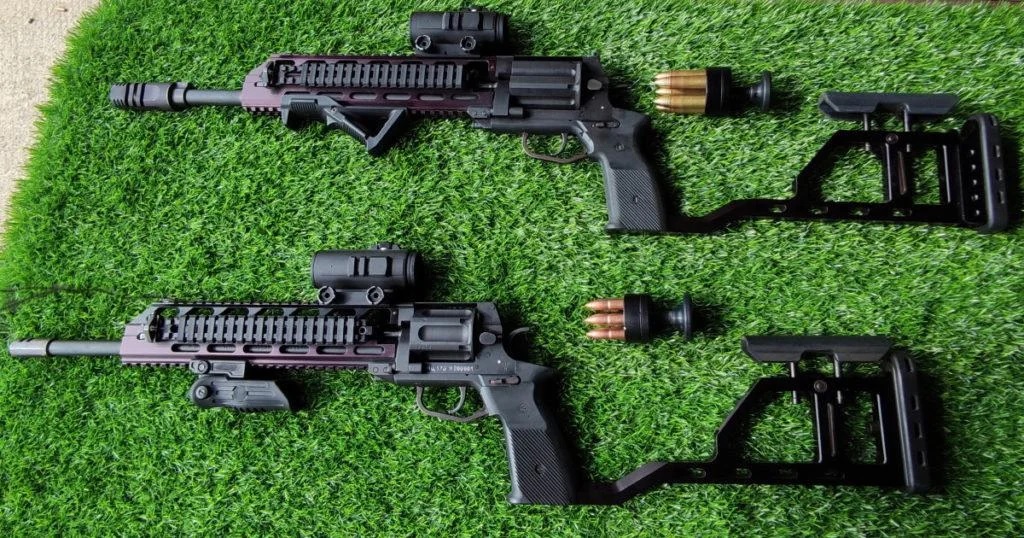
The same 12.7×55mm cartridge family is also used in the RSh-12 assault revolver. The weapon was developed at the request of the FSB Special Purpose Centre for counter-terrorism operations. With its range of accessories and extraordinary dimensions, the RSh-12 is a substantial weapon by almost any standard.
GM-94 Grenade Launcher
One other weapon used by FSB operators deserves particular attention: the pump-action GM-94 grenade launcher. Development began at KBP Instrument Design Bureau in Tula in 1993, with the weapon entering service in 2005.
The GM-94 has a three-round tubular magazine and fires 43×30mm grenades. Thermobaric ammunition is among the most frequently associated rounds.
Such grenades can be highly effective in urban combat, particularly when fired into enclosed spaces where the pressure effects of the detonation can be amplified. The GM-94 has also been documented in the war in Ukraine.
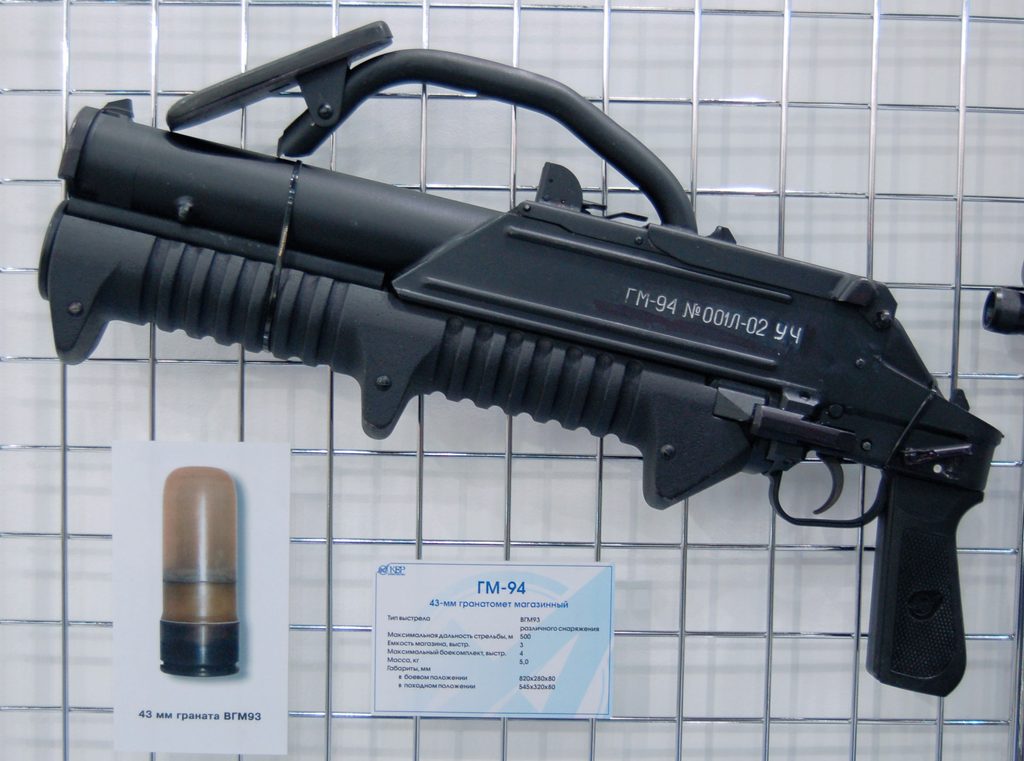
(Image: Wikimedia Commons, user Allocer, Creative Commons Attribution-ShareAlike 3.0 Unported licence)
Today’s FSB Equipment
Modern FSB Special Purpose Centre operators increasingly use updated one-piece assault suits rather than the older two-piece configurations.
Fort Technology’s Gladiator family is frequently used for ballistic protection. Fort has supplied ballistic protective equipment to FSB special units for many years and has effectively become one of their established preferred suppliers.
A more recent Fort fragmentation-protection system is the Voin Mod-T one-piece suit, weighing approximately 6.8 kilograms. It is frequently worn underneath ballistic armour from Fort’s Gladiator series.
The Gladiator is available in three main configurations, A, B and C, offering progressively greater coverage, from relatively minimalist plate-carrier arrangements to comprehensive tactical armour.
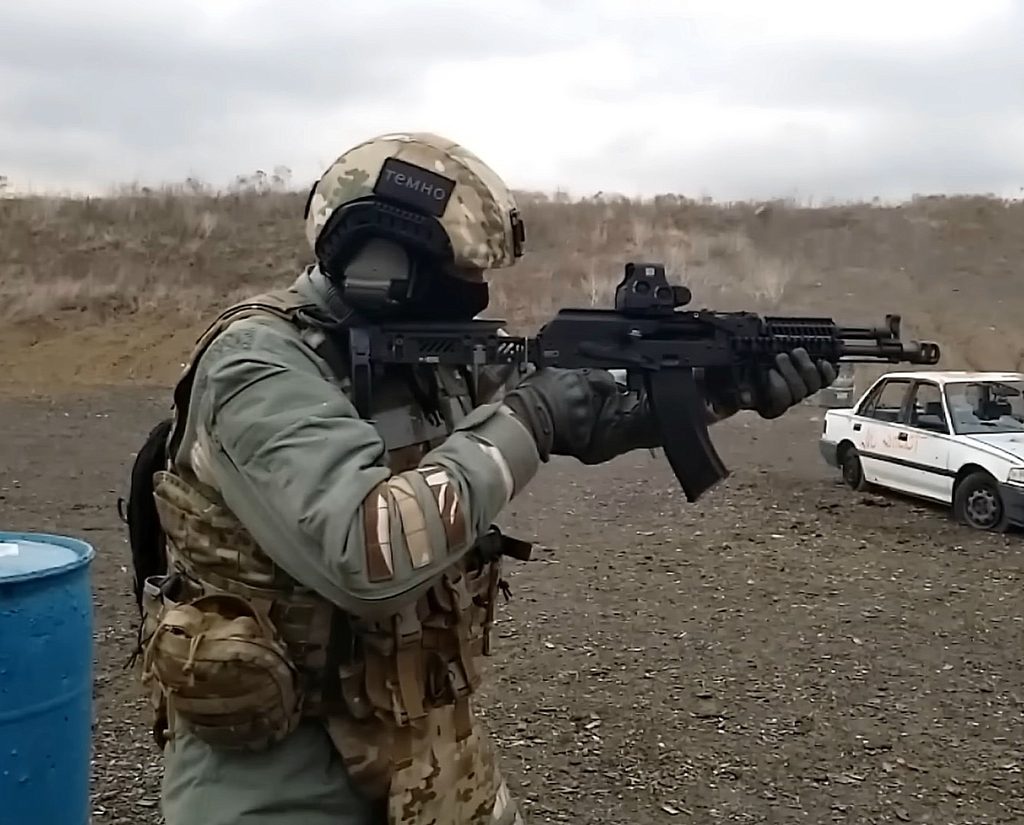
Modern FSB operators have also moved towards the high-cut helmet designs now common among Western special operations forces.
As a result, contemporary Russian special operators can sometimes be difficult to distinguish visually from their Western counterparts.
One helmet frequently associated with the FSB is Armokom’s LShZ 1+, a high-cut aramid ballistic helmet. Heavier assault helmets remain in service, although they are seen less frequently than before. Other Russian security organisations continue to use heavy assault helmets extensively, including SOBR and OMON units under the National Guard, Rosgvardiya. SOBR specialises in high-risk operations including hostage incidents and operations against organised crime.
Read More:
- European Court of Human Rights: Tagayeva and Others v. Russia, Beslan school hostage crisis
- European Court of Human Rights: Information Note on the Court’s case-law 206, Tagayeva and Others v. Russia
- Journal of Analytical Toxicology / PubMed: Analysis of clothing and urine from Moscow theatre siege casualties reveals carfentanil and remifentanil use
- Annals of Emergency Medicine / PubMed: Unexpected “gas” casualties in Moscow: a medical toxicology perspective
- The Lancet / PubMed: Moscow theatre siege and anaesthetic drugs
- Human Rights Watch: Three Months of War in Chechnya
- Human Rights Watch: Swept Under: Torture, Forced Disappearances, and Extrajudicial Killings During Sweep Operations in Chechnya
- Human Rights Watch: Widespread Torture in the Chechen Republic
- Human Rights Watch: Joint NGO statement on the Beslan Hostage Tragedy
- Amnesty International: Russian Federation: Brief summary of concerns about human rights violations in the Chechen Republic
- Amnesty International: Russian Federation: Failure to protect or punish: human rights violations and impunity in Chechnya
- Amnesty International: Russian Federation: The circle of injustice, Security operations and human rights violations in Ingushetia
- Amnesty International: Russian Federation: Accountability is key to normalization in North Caucasus
- OSW Centre for Eastern Studies: More than life at stake: the uncertain future of the Kadyrov regime in Chechnya
- Royal United Services Institute, RUSI: Ramzan Kadyrov: The Kremlin’s Messenger to the Islamic World
- Rostec: Rostec to Demonstrate ShAK12 Assault Rifle Abroad for the First Time
- Rostec: ШАК-12: оружие контртеррора
- Armament Research Services, ARES: Russian GM-94 thermobaric grenade launcher documented in Ukraine (2022)
- GOST / Bronegilet.ru: GOST R 55623-2013, Armored Clothing: Test Methods
- GOST / Bronegilet.ru: GOST 34286-2017, Armored Clothing: Classification and General Specifications
- Polymers / PubMed Central: Influence of the Accelerated Aging Process on the Fragment-Resistant Properties of Para-Aramid Body Armor
- Fibers: Modeling and Experiments on Ballistic Impact into UHMWPE Yarns Using Flat and Saddle-Nosed Projectiles
- Nordic Defence Review: When Weight Equals Survival: Inside Russia’s Heavy Assault Helmets
- International Association of Alpha Counter-Terrorism Unit Veterans: Центру специального назначения ФСБ России — 27 лет
- Agentura.ru: Центр специального назначения ФСБ