
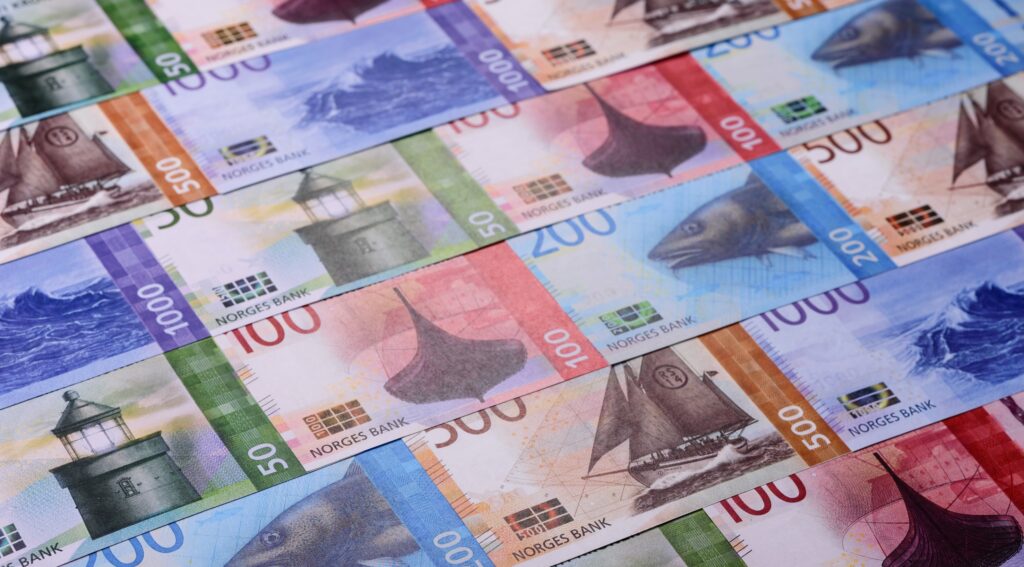
Oslo is preparing to use state-backed investment capital to help Ukrainian defence companies expand. The initiative could give Norwegian investors and manufacturers access to some of Europe’s fastest-developing military technologies, while establishing a new model for financing Ukraine’s defence-industrial base. The former secretary-general of NATO Jens Stoltenberg is now the Norwegian finance minister.
Norway is taking another step towards integrating Ukraine into Europe’s defence industry. The Norwegian government’s proposal to allocate NOK 1 billion, approximately €85 million, to investments in Ukrainian defence companies over three years could mark an important change in how European governments support Kyiv’s war effort.
The initiative, announced on 3 November 2026, would use Norway’s state-owned investment company Investinor to mobilise private capital for Ukrainian defence manufacturers. Funding would come from the military component of Norway’s Nansen Support Programme for Ukraine.
Ukraine has developed a substantial defence-technology industry under wartime conditions, particularly in drones, electronic warfare, autonomous systems and battlefield software. Many companies have products that have been tested and refined in combat, yet face severe constraints on investment capital, production capacity and access to international markets. Norway has capital, an established defence industry and experience in public-private investment. The proposed mechanism seeks to connect these advantages with Ukraine’s industrial requirements, which would simultaneously strengthen Ukraine’s military capabilities and generate commercially valuable technology partnerships for NATO countries.
A New Investment Model for a Changing War
According to the government’s announcement, Investinor will manage the state-backed scheme under the Ministry of Trade, Industry and Fisheries. The public money will be invested in funds operating in Norway that invest in Ukrainian defence companies. Investinor will select the funds and determine the amounts allocated to them, while private fund managers will choose the companies receiving investments.
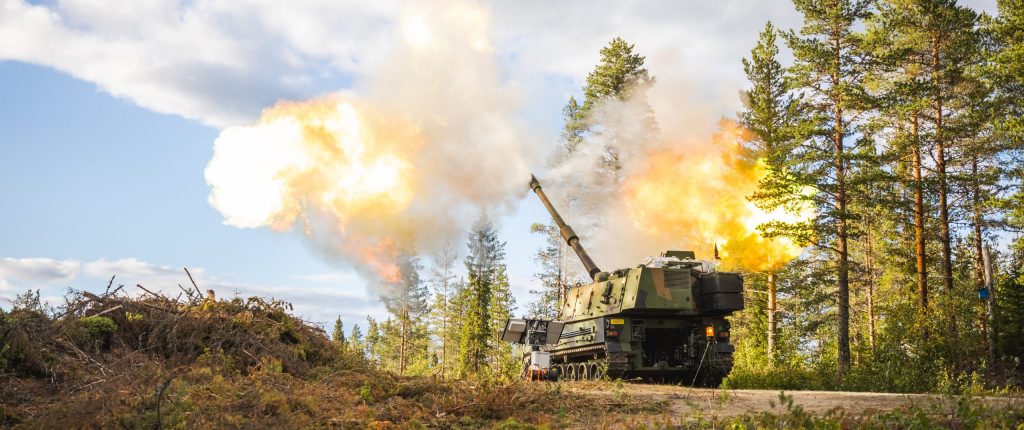
(Photo: Norwegian Armed Forces / Torbjørn Kjosvold)
The arrangement could eventually allow direct investments in Ukrainian businesses alongside investment funds.
This division of responsibilities is intended to combine public financing with private-sector investment decisions. It also introduces commercial considerations into a field traditionally dominated by military procurement and government grants.
Finance Minister Jens Stoltenberg, the former secretary general of NATO, described the proposed arrangement as a means of mobilising private Norwegian capital for Ukrainian industry and technology.
Industry Minister Cecilie Myrseth emphasised the opportunity for Norwegian businesses to become more closely connected to Ukraine’s technological development.
Defence Minister Tore O. Sandvik presented the initiative as a contribution to European deterrence, including after a possible ceasefire.
Norway is proposing to become a financial participant in the development of Ukrainian defence companies, potentially gaining exposure to their future growth. The eventual returns, investment terms and risk-sharing arrangements have yet to be established publicly.
For Norwegian defence manufacturers, the initiative could create opportunities to acquire minority stakes, form joint ventures, license technologies or establish longer-term industrial partnerships. None of these outcomes is guaranteed by the announcement.
There is also an important limitation to the funding figure. The NOK 1 billion is a proposed three-year framework, financed from military support already allocated under the Nansen programme. It should therefore be understood as a new investment instrument within Norway’s Ukraine assistance, rather than an additional NOK 1 billion on top of previously announced military funding.
Towards This Investment Model Since 2024
The November proposal builds on a series of Norwegian decisions that have progressively linked military support for Ukraine with industrial production, technology transfer and investment.
One of the earliest important changes came in March 2024, when Norway opened the possibility for Norwegian arms manufacturers to transfer defence technology to Ukrainian companies under export licences.
Previously, Norway’s assistance had largely concentrated on donating military equipment, financing purchases and supporting allied deliveries. The licensing decision created a framework for Norwegian technology to be manufactured in Ukraine, subject to government approval and end-user restrictions.
The most prominent early example involved Nammo, the Norwegian-Finnish ammunition manufacturer.
In autumn 2024, Norway facilitated the licensing of Nammo’s NM28 artillery ammunition for production by a Ukrainian company. The government’s 2027 defence budget subsequently described this initiative as successful and important for Ukraine’s production capacity.
The arrangement demonstrated an important principle: Norway could help Ukraine manufacture weapons locally using Norwegian industrial technology. This reduced reliance on transporting every finished round from Western Europe and supported the development of Ukrainian production capabilities.
Meanwhile, Norway was expanding production capacity at home.
In January 2024, the government announced NOK 2 billion in support for increased ammunition production, including substantial funding for Nammo. In July, a further agreement committed more than NOK 1 billion to expanding production at Raufoss.
Nammo undertook to maintain the additional capacity for at least 15 years. The investment was intended to increase production of advanced artillery shells tenfold, while also expanding capacity for other ammunition and rocket motors.
These investments served Norwegian, NATO and Ukrainian requirements simultaneously. They also established a precedent for public financing of defence-industrial capacity that might otherwise have been too expensive or risky for manufacturers to develop independently.
The government’s October 2024 industrial roadmap made the approach more systematic. It identified access to capital, regulatory obstacles, vulnerable supply chains and shortages of skilled personnel as major barriers to expanding defence production.
Among its measures were NOK 342 million for Norwegian small and medium-sized companies developing advanced technologies for Ukraine, support for additional Nammo production and investment in explosives manufacturing. The November 2026 proposal represents a further evolution. Norway is now considering deploying investment capital into Ukrainian companies themselves, using commercial funds as intermediaries.
From Ammunition Production to Joint Drone Development
By 2025, Norwegian-Ukrainian industrial cooperation had moved beyond traditional ammunition and missile production.
In October 2025, the two countries established BraveNorway, a joint defence-technology programme with approximately NOK 115 million allocated to procure innovative technologies and equipment for Ukraine.
The programme was designed to connect Norwegian and Ukrainian defence companies, accelerate technological development and bring useful products into Ukrainian military service more quickly.
The following month, Norway and Ukraine signed a letter of intent under Ukraine’s Build with Ukraine initiative to establish Ukrainian drone production in Norway.
This was an important reversal of the traditional relationship between Western arms suppliers and Ukraine. Ukrainian manufacturers would bring technology and wartime expertise to Norway, while Norwegian industrial infrastructure would provide a secure location for production and future development.
On 27 April 2026, the two defence ministries signed the first formal agreement for a Norwegian-Ukrainian drone manufacturing project.
The agreement envisaged joint production in Norway, subject to the necessary export licences, together with cooperation on supply chains, research and product development.
Norwegian authorities withheld the identities of the companies involved and details of the systems on security grounds.
The industrial significance is considerable. Ukraine has become a centre of rapid development in low-cost drones, electronic warfare and autonomous battlefield systems. Norway offers access to advanced electronics, sensors, industrial quality assurance and established European defence supply chains.
Combining the two could help Ukrainian technologies reach larger production volumes while allowing Norwegian companies to develop products shaped by real battlefield requirements.
In April 2026, Prime Minister Jonas Gahr Støre and President Volodymyr Zelensky agreed to strengthen defence-industrial cooperation, including Ukrainian drone production in Norway and closer collaboration on air defence and ammunition.
Ukraine also committed to sharing operational knowledge, data and lessons with Norway.
The relationship was subsequently formalised further through a strategic partnership signed in Kyiv in August 2026.
Defence, energy and national resilience became its three principal pillars. The agreement reflected the growing recognition that Norwegian and Ukrainian security interests are linked over the long term.
The Norwegian Model has Already Mobilised Billions
Norway’s financial support for Ukraine’s defence industry is much larger than the new NOK 1 billion investment proposal.
The government’s 2027 defence budget reports that approximately NOK 12.8 billion was committed to drones and autonomy in 2025. These funds supported purchases from Ukrainian, Norwegian and international manufacturers.
A further NOK 9.6 billion was used for artillery ammunition procurement initiatives, while approximately NOK 4.7 billion supported maritime capabilities.
These are allocations to different military-support activities, and should not be confused with direct equity investment in Ukrainian companies.
Norway has also used European industrial programmes to strengthen its domestic manufacturing base.
In March 2024, Nammo, Kongsberg Defence & Aerospace and Chemring Nobel secured support through the EU’s Act in Support of Ammunition Production, known as ASAP. Norwegian government co-financing helped support projects involving ammunition, rocket motors and explosives.
In May 2026, Oslo announced participation in the EU’s European Defence Industry Programme, allocating approximately €29 million, or NOK 315 million, for the 2026–2028 period. This gives Norwegian defence manufacturers opportunities to compete for European industrial funding while supporting Ukraine’s access to critical military equipment.
Norway is using public money to accelerate industrial production, support technology transfer and create closer relationships between its own defence sector and Ukraine’s.
The proposed Investinor scheme would add a further instrument: investment funds capable of taking commercial stakes in Ukrainian businesses.
Norway Already has a Ukraine Investment Fund
An important precedent comes from outside the defence sector. In December 2024, Norway established a dedicated Ukraine Investment Fund managed by Norfund, the state-owned development finance institution.
Its mandate is to support commercially viable Ukrainian businesses and infrastructure projects that struggle to attract private investment because of wartime risks.
The fund began with NOK 250 million and subsequently received additional allocations.
Its first investment, announced in November 2025, committed approximately NOK 100 million to expanding the M10 industrial park in Lviv. The investment, made alongside Ukrainian investment company Dragon Capital, was intended to increase warehouse capacity and strengthen trade links with the European Union.
In December 2025, Norfund committed USD 15 million to Dragon Capital’s Rebuild Ukraine Fund, supporting small and medium-sized Ukrainian businesses.
Further investments followed in 2026, including renewable energy infrastructure in the Odesa region and the Yarych food manufacturing business near Lviv.
By October 2026, Norfund reported four Ukrainian investments worth more than €46 million, approximately NOK 500 million. The government also outlined plans to expand the fund substantially between 2027 and 2030.
Norfund’s Ukraine fund is designed to sustain economic activity, employment and reconstruction across civilian industries. The proposed Investinor programme would apply a related investment model specifically to defence technology and manufacturing.
Norfund has an established record of investing in challenging international markets. Investinor has primarily developed expertise in Norwegian growth companies, venture capital funds and co-investment arrangements.
Investinor’s existing mandates also include managing Norway’s participation in the NATO Innovation Fund, providing a relevant institutional connection to defence-related venture investment.
The new programme will nevertheless require additional expertise in Ukrainian defence companies, wartime financial risk, export controls and military technology.
Ukrainian Defence Companies Struggle With Compressed Development Cycles
Ukraine’s defence industry has undergone an extraordinary transformation since Russia’s full-scale invasion in February 2022.
The war has generated intense demand for technologies that can be manufactured relatively quickly, modified in response to enemy countermeasures and deployed in large numbers.
Drones are the clearest example. The Ukrainian battlefield has become an environment in which manufacturers continually adapt aircraft, sensors, communications equipment and electronic countermeasures. Development cycles that traditionally take years can be compressed into months or weeks for particular components and software changes.
The Norwegian government’s revised long-term defence planning documents note the enormous quantities of drones being produced in Ukraine and the need for scalable manufacturing capacity in a prolonged industrial war.
A Ukrainian defence start-up may have a working product, an experienced engineering team and direct feedback from military users. Yet it may lack the working capital needed to purchase components, expand production facilities or build a reliable supply chain.
Foreign investors face additional obstacles, including the possibility of physical destruction, disrupted electricity supplies, currency risks, corruption, ownership disputes and restrictions on exporting military technology.
A conventional venture capital fund might regard these risks as unacceptable. Norway’s proposed scheme could help bridge the financing gap by bringing public capital into investment funds alongside private investors.
The investment case, however, depends on more than technological performance. Manufacturers must demonstrate that they can protect intellectual property, comply with export regulations, scale production and retain customers after the war. Their technologies must also remain useful as battlefield requirements evolve. A drone design that performs exceptionally well today may require substantial redesign within months. Investors will need to evaluate engineering capability and adaptability as carefully as existing product sales.
Kongsberg Explores Ukrainian Technologies
A development announced on 19 November, more than two weeks after the investment proposal, provides a particularly relevant example of the industrial relationships Norway is seeking to encourage.
Kongsberg Defence & Aerospace signed a memorandum of understanding with Brave1, Ukraine’s government-backed defence-technology cluster, joining its Brave Prime initiative.
The agreement will allow Kongsberg to explore Ukrainian technologies, cooperate with local developers and test relevant systems through Brave1’s Test in Ukraine framework.
It also creates opportunities to integrate Ukrainian technologies and components into Kongsberg systems and undertake joint research and development. Kongsberg became the third foreign defence company to join the initiative.
The agreement contains no disclosed financial investment or production contract. Nevertheless, it illustrates how Norwegian defence manufacturers can establish relationships with Ukrainian innovators before committing to larger industrial projects.
Kongsberg is already an important supplier to Ukraine through NASAMS air defence systems. Its expansion into direct technology cooperation could create opportunities in sensors, autonomy, communications and other areas where Ukrainian operational experience is particularly valuable.
The Investinor scheme could eventually complement such partnerships by financing Ukrainian companies that require capital to commercialise or expand their technologies. There is currently no confirmed connection between Kongsberg’s Brave Prime agreement and any investment under the proposed NOK 1 billion programme.
A Warning From Norway’s Earlier Industrial-support Programme
The Norwegian government’s experience with another Ukraine-related industrial initiative provides a useful caution. In November 2024, the Ministry of Defence established an industrial portal through which Norwegian companies could propose equipment and technologies for Ukrainian military support.
On 19 November 2026, the Norwegian Defence and Security Industries Association, FSi, reported that the ministry had changed the portal’s role. The portal would continue as a market overview, but individual proposals submitted through it would no longer receive earmarked Nansen programme funding.
According to the ministry’s explanation reported by FSi, the portal had provided a useful common contact point for companies. However, there had been weaknesses in the handling of individual proposals and the overall administrative arrangements.
Public money can attract industrial proposals, but the process must be capable of distinguishing commercially viable technology from projects that are interesting primarily because government funding is available.
The proposed Investinor arrangement seeks to address part of that problem by delegating company selection to professional fund managers.
Whether it succeeds will depend on the quality of those managers, the investment criteria and the transparency of the results.
Political and Commercial Risks Still Exist
The programme presents several questions that the government has yet to answer publicly. The first concerns risk-sharing between the Norwegian state and private investors.
The announcement does not specify how losses would be distributed, whether private investors would receive preferential terms or how much additional capital the NOK 1 billion is expected to mobilise.
These details will determine whether the programme genuinely attracts additional private investment or primarily subsidises investments that companies might otherwise have undertaken.
The second concerns commercial ownership and technology transfer.
Ukrainian companies may welcome Norwegian investment while seeking to retain control over intellectual property developed during the war. Norwegian investors, meanwhile, will want enforceable ownership rights, commercial protections and opportunities to market technologies internationally.
Ukraine’s security requirements could also restrict exports or technology licensing. The third concerns governance and corruption risk.
Norway’s own defence budget acknowledges that procurement and industrial support in Ukraine carry higher administrative risks than conventional military assistance. Earlier bilateral agreements have therefore addressed export controls, anti-corruption measures and intellectual property protection.
The fourth concerns the balance between Norwegian and Ukrainian industrial interests.
A programme intended to strengthen Ukraine could also encourage Norwegian companies to secure access to technologies and markets. That could be mutually beneficial, provided Ukrainian businesses retain meaningful control over their development and receive fair commercial terms.
The fifth concerns the future of the investment portfolio after a ceasefire.
Some wartime technologies will remain valuable to European armed forces. Others may lose demand or face intense competition as military procurement changes.
Investors must therefore consider the commercial future of companies beyond their immediate wartime usefulness.
Next: European Defence-industrial Integration
Norway’s approach is particularly interesting because it combines several instruments that European governments have often treated separately: military assistance, public procurement, industrial subsidies, venture capital, technology licensing and joint manufacturing.
The new scheme also comes at a time when Norway is expanding its role in European defence-industrial cooperation.
On 19 November, Britain announced that it and Norway would jointly fund two advanced fast attack boats for Ukraine, with an investment exceeding £100 million. The vessels will be built in Britain. The two governments also announced plans to deepen cooperation on defensive artificial intelligence.
This latest initiative illustrates the breadth of Norway’s approach. Oslo is helping Ukraine acquire equipment, build its own industrial capacity and develop military technologies that may eventually benefit European defence forces.
For Norway, the economic opportunity is substantial even if individual investments remain relatively small.
Kongsberg, Nammo and established Norwegian suppliers already operate in international markets. Smaller companies specialising in autonomous systems, sensors, software, communications and electronic warfare could potentially benefit from closer links with Ukrainian manufacturers.
The new investment mechanism could help create those relationships, particularly if venture capital funds are willing to finance Ukrainian technology companies at an early stage.
Denmark has developed its own model of financing Ukrainian defence production through direct purchases from Ukrainian manufacturers. Norway’s proposed investment mechanism could add a complementary instrument by helping those manufacturers obtain capital for expansion.
If successful, the Norwegian model could be replicated by other European governments seeking to combine defence assistance with industrial development.
Yet its success will ultimately be measured by practical results: the amount of private capital mobilised, the number of Ukrainian companies financed, the additional production capacity created and the extent to which the investments generate lasting industrial cooperation.
The government has announced the financial framework. The investment decisions, participating funds and eventual beneficiaries remain to be established.
The deeper significance is already apparent. Norway increasingly sees Ukraine as a defence-industrial partner whose technological capabilities could strengthen European security for decades.
The NOK 1 billion proposal is another step towards turning that relationship into a permanent industrial and financial partnership.
Read More:
- Regjeringen.no: Regjeringen styrker norske investeringer i Ukraina med 1 milliard kroner
- Regjeringen.no: Norge og Ukraina inngår tettere forsvarssamarbeid
- Regjeringen.no: Signering av avtale om å bygge ukrainske droner i Norge
- Regjeringen.no: Etablerer ukrainsk droneproduksjon i Norge: – Akkurat det Ukraina ønsker
- Regjeringen.no: Norsk-ukrainsk samarbeid om nye forsvarsteknologier
- Regjeringen.no: Norway and Ukraine establish strategic partnership
- Regjeringen.no: Milliardstøtte til norsk forsvarsindustri
- Regjeringen.no: Agreement will significantly expand production of Norwegian artillery ammunition
- Regjeringen.no: Roadmap for expanding production capacity in the defence industry
- Regjeringen.no: Prop. 1 S (2026–2027) – For budsjettåret 2027 under Forsvarsdepartementet
- Regjeringen.no: Prop. 68 S (2025–2026) – Forsvarsløftet – Økte rammer og prioriteringer i Langtidsplanen for forsvarssektoren
- Regjeringen.no: Revidert nasjonalbudsjett: Regjeringen tar Norge inn i EUs nye forsvarsprogram, EDIP
- Norfund: Ukraine Investment Fund
- Norfund: Ukraina-fondet med første investering
- Norfund: Norfund invests in Dragon Capital’s Rebuild Ukraine Fund to support Ukrainian SMEs
- Norfund: Investing to strengthen Ukraine’s energy security
- Norfund: Scale-up of the Ukraine Investment Fund
- Investinor: Vedtekter
- Investinor: Eierstyring og selskapsledelse
- KONGSBERG: KONGSBERG joins Brave Prime to strengthen collaboration with Ukrainian industry
- Forsvars- og sikkerhetsindustriens forening (FSi): Regjeringen endrer industriportalen for Ukraina-støtte
- UK Government: UK and Norway further boost Ukrainian Navy at Coalition of the Willing meeting